



With online resources like Airbnb, TurnKey, Uber, and Lyft, traveling has never been easier.
It’s the way of the future — forget travel agencies, Kayak or car rental companies.
But as travel alternatives make waves across America, some neighborhoods — including ones in James City County — are looking to preserve their community’s culture by restricting short-term rentals like Airbnb.
One of the largest gated communities in James City County, Ford’s Colony, is following suit, proposing to prohibit short-term rentals under the neighborhood’s official Declaration of Protective Covenants.
On Jan. 2, Ford’s Colony opened voting to move a rule restricting short-term occupancy less than 90 days into the Declaration of Protective Covenants, according to an announcement from Drew Mulhare, Ford’s Colony HOA general manager. The announcement was published in the “Talk of the Colony” magazine in December.
The rule was first put into place last fall, but if Ford’s Colony residents vote in favor of the move, the change will “further strengthen our legal standing and reinforce our future enforcement efforts,” the magazine said.
Voting is open to Ford’s Colony homeowners through Feb. 2.
Ford’s Colony officials did not return multiple requests for comment.
Legality
While James City County may allow short-term rentals in certain zoning districts, that doesn’t mean homeowners can operate an Airbnb.
According to Adam Kinsman, county attorney for James City County, neighborhoods with homeowners associations, rules and covenants are able to restrict or allow short-term rentals as they see fit – whether the county has approved it for that zoning district or not.
“When you buy a piece of property in a neighborhood that has covenants and restrictions, you agree to that in your deed,” Kinsman said.
Ford’s Colony has already taken “compliance action” once in 2017 after a renter in Ford’s Colony used the home for an Airbnb overnight rental.
The rental caused concerns with access to the gated community, parking issues and disturbances, the magazine states.
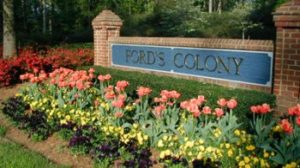
Ford’s Colony lays in the county’s R-4 zoning district, where Airbnb and other short-term rentals are allowed under county code.
Elevating the rule to the Ford’s Colony Declaration of Protective Covenants would give the neighborhood administration more leverage in legal situations.
“Unexpected hardships” such as military transfers may be considered exemptions from the short-term rental restriction.
If the rule is added to the declaration, it will be recorded in the courthouse land records, meaning all new homeowners would receive that information when they join the neighborhood, according to the magazine announcement.
“If you want to have an Airbnb, it’s a private legal matter between the homeowner and the HOA,” Kinsman said. “You need to work with your HOA to make sure it complies with the rules and covenants.”
Airbnb encourages hosts to comply with the rules and regulations of their localities and homeowners associations, and includes a “local laws” information section when hosts choose the location for their listing.
“Airbnb is committed to fostering responsible home sharing in cities and towns throughout the country. Home sharing helps families in Williamsburg, and across Virginia, earn a little extra income while sharing their beautiful and historic hometown with guests,” Airbnb Press Secretary Crystal Davis said.
Airbnb gains traction locally
The Ford’s Colony vote comes as short-term rentals air gaining popularity across the world, including in local communities.
For the weekend of Jan. 12-14, the Airbnb website lists 207 homes in the Greater Williamsburg area. The site claims to have over 3,000,000 worldwide listings online.
Airbnb and other types of short-term rentals gained popularity in 2017, although there have been some provisions for short-term rentals in county code “for years,” according to Christy Parrish, James City County zoning administrator.
In March 2017, Gov. Terry McAuliffe signed a bill for short-term rentals, allowing localities to regulate and tax short-term rental properties – effectively opening the door wider for Airbnb in James City County.
Just before McAuliffe signed the bill, the James City County Board of Supervisors approved a special use permit for a home on Merrimac Trail to function, in part, as an Airbnb. The decision marked the first time a residential property in the county has received a special-use permit for rentals.
The bill was sponsored by Virginia Senate Majority Leader Tommy Norment, R-James City County.
Making things clear
Ford’s Colony is not alone in its desire to clarify rules regarding short-term rentals.
On Tuesday, the James City County Board of Supervisors is set to vote on revisions to the county’s zoning ordinance permitting short-term rentals.
There will also be a public hearing at the meeting for residents to speak on the issue.
The proposed revisions would further clarify different types of short-term rentals, such as a tourist home or rental of rooms, according to a Jan. 9 staff memorandum.
The memorandum reads: “During the course of two public hearing cases, members of both the Planning Commission and the Board of Supervisors expressed a desire for a policy addressing the emerging issue of short-term residential rentals, also known as “homesharing.”
The James City County Board of Supervisors will meet at 5 p.m. Tuesday in the County Government Center Board Room, located at 101 Mounts Bay Road in Williamsburg.

