


WILLIAMSBURG — As data centers continue to expand across Virginia and strain the state’s electric grid, local governments are moving quickly to tighten oversight.
Virginia leads the country in data center development. Gov. Glenn Youngkin has been a strong supporter of the industry, often touting Virginia as the data center capital of the world, and the outgoing governor said the commonwealth will continue to encourage the development of data centers across multiple regions.
What are Data Centers?
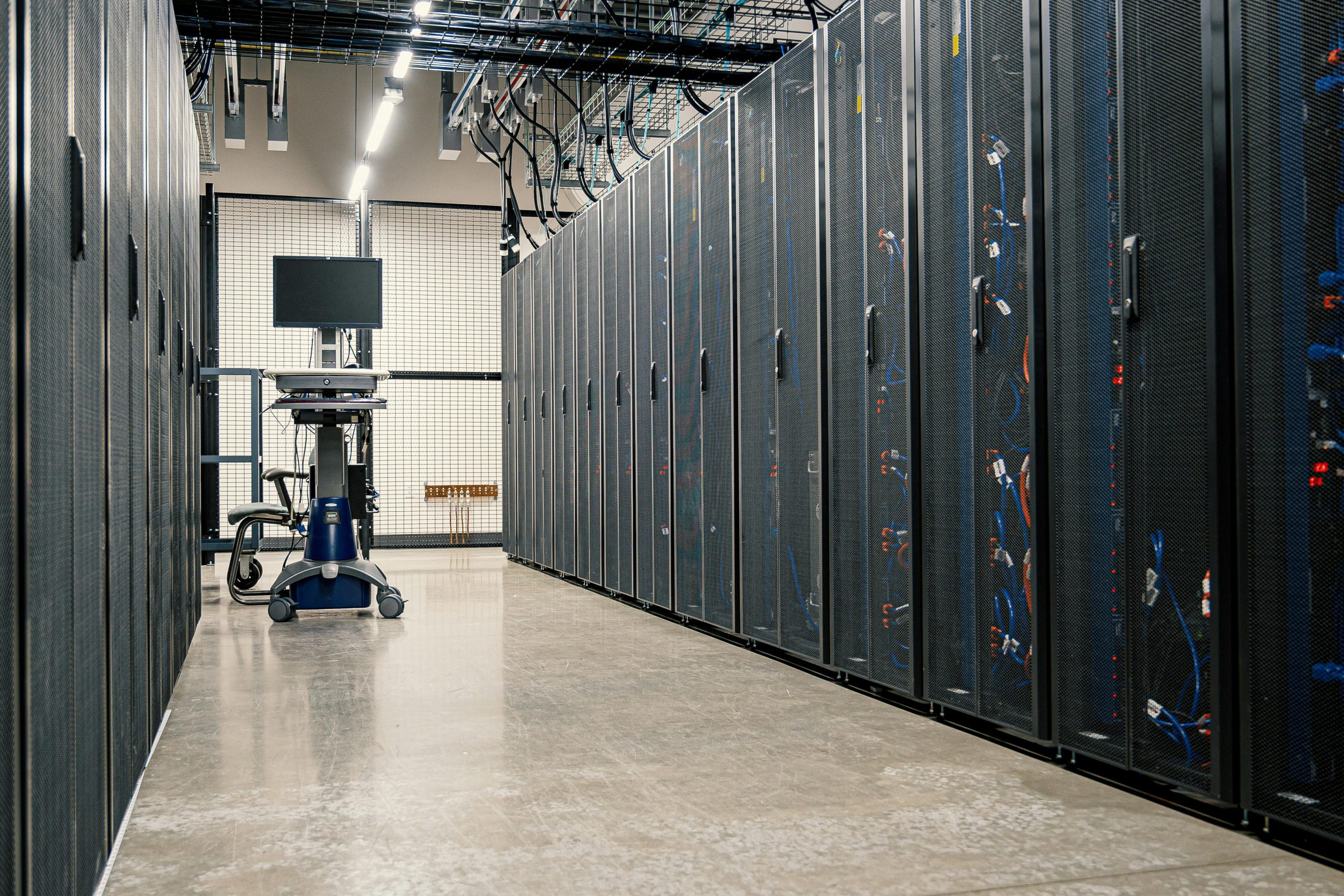
Data centers are large, warehouse-style buildings packed with servers that power cloud storage, streaming services, artificial intelligence and online communication. They have become a major economic driver in Virginia. A recent report from the Joint Legislative Audit and Review Commission found the industry generates substantial capital investment and high-paying jobs while contributing millions in local tax revenue.
But data centers also increase the demand for electricity and need water to cool their servers, which impact residential utility bills.
According to the International Energy Agency notes data centers typically require about 5 to 10 megawatts of power annually for smaller centers, and 100 megawatts or more for larger data centers. By comparison, the Nuclear Regulatory Commission notes one megawatt can power about 400-900 homes for a year.
Indeed, last month, the State Corporation Commission announced it had approved the creation of a new rate class for the biggest users of electricity, including data centers. Beginning Jan. 1, 2027, the new GS-5 rate class will comprise customers demanding 25 megawatts or more.
In addition, to help insulate ratepayers from the costs around the rapid build-out and construction of infrastructure to support businesses such as data centers, the SCC said certain large-scale customers will be required to pay a minimum of 85% of contracted distribution and transmission demand, and 60% of generation demand, among other requirements.
In response to the expansion of data centers across the commonwealth, James City County and York County have been developing some of the region’s most detailed zoning rules aimed at managing where the massive facilities can be built and how they operate, even as Gov. Youngkin urges local flexibility and warns against what he calls heavy-handed regulation.
James City County
During a June 12 policy committee meeting, JCC Zoning Administrator Christy Parrish told members the county’s current ordinance did not define “data centers,” treating them as warehouses, meaning developers could build them in several districts with no special review. Parrish was responding to a Board of Supervisors request in the spring to recommend new rules after concerns mounted about utility demands and land-use impacts.
Under the proposal, JCC would formally define “data centers,” reclassify them as industrial uses, and remove them from the M-1 and Mixed Use districts. They would instead be limited to the M-2 General Industrial and Economic Opportunity districts, and would require a special use permit unless they meet strict performance standards in M-2.
Those standards include noise limits, water and energy use restrictions, setbacks from residential areas, architectural requirements and written guarantees from utility providers confirming sufficient electrical capacity and access to public water. Parrish said the goal was “to reduce the potential for data centers to be located near existing residential or mixed-use areas.”
Committee members also discussed requiring decommissioning plans for batteries, cooling systems and other equipment, and debated whether cryptocurrency mining should be included in the definition due to its similar impacts.
By the end of the meeting, members agreed to recommend requiring SUPs for data centers in both M-2 and Economic Opportunity districts and to develop a county policy outlining conditions such as proximity to transmission lines and decommissioning requirements.
In September, the Board of Supervisors approved an update to the zoning ordinance limiting data centers to industrial districts and requiring permits for anyone looking to build, and in November, the county adopted new standards for reviewing data center applications, including setbacks, design standards, size limitations, buffer zones, and water and energy consumption.
The county has not turned its back on the data center industry, however. CEL Critical Power held a ribbon-cutting ceremony for its first North American manufacturing and assembly facility in the county in November, a $5.2 million investment that state and local leaders say strengthens Virginia’s role in data center infrastructure and advanced manufacturing. The 150,000-square-foot facility on Green Mount Parkway will initially create 250 jobs, with plans to expand to 500 as production ramps up.
York County
During a March 4 work session, York County planners presented zoning amendments that would formally define data centers, add them to the land-use table and create detailed performance standards. Senior Planner Jeanne Sgroi said the changes “will help us better evaluate each proposal and ensure these facilities are placed in appropriate locations.”
Unlike JCC, which may allow some M-2 data centers if they meet strict criteria, York County’s ordinance requires a special use permit in every zoning district, giving the county broader discretion over approvals.
York County’s proposed standards mirrored many of James City County’s concerns, addressing energy use, water consumption, noise level, architectural design, setbacks and fire-safety systems. Facilities would also need written confirmation from utilities showing they have the electric capacity and public water access needed to operate, a safeguard county officials say is essential as the regional grid becomes more stressed. The proposal also includes decommissioning procedures for equipment if a facility closes.
Supervisors expressed early support for the added oversight, with Supervisor Douglas Holroyd stressing that large-scale facilities “must not shift infrastructure costs onto residents.” The Planning Commission has already recommended approval, and the ordinance will advance to a public hearing before a final vote.
York County supervisors unanimously passed new standards for data centers to follow in a June 17 meeting, regulating noise generation, energy consumption and water usage for any proposed data centers. Applications now must include letters from energy and water companies stating whether or not they have the infrastructure in place to meet the needs of the data center, and if they don’t, the board of supervisors has the option to reject the application. The new standards also require setbacks and buffer zones, and a five-year period requiring operators to report energy usage to the board.
The counties’ work comes as Gov. Youngkin rejected statewide rules that would have imposed additional requirements on local data center reviews. In vetoing House Bill 1601, Youngkin said the measure would “limit local discretion” and impose a “one-size-fits-all” approach on communities that understand their own land-use needs. He warned that unnecessary statewide restrictions could “chill investment” and make Virginia less competitive, saying the Commonwealth cannot “allow other states to pass us by.”
He said he offered amendments that would have preserved the “spirit of the bill” while giving localities more flexibility, but after lawmakers rejected them, he chose to veto what he described as a rigid framework.
Together, the actions in James City and York counties reflect a broader shift across Virginia as localities try to balance the economic benefits of the data center industry with its growing demands on land, water and electricity. James City County’s proposal allows some tightly controlled by-right development, while York County favors a stricter, SUP-only model.
Both counties, however, appear to agree on one point: with data centers expanding rapidly and grid pressures mounting, local governments want more authority to decide how these facilities fit into their communities.

