


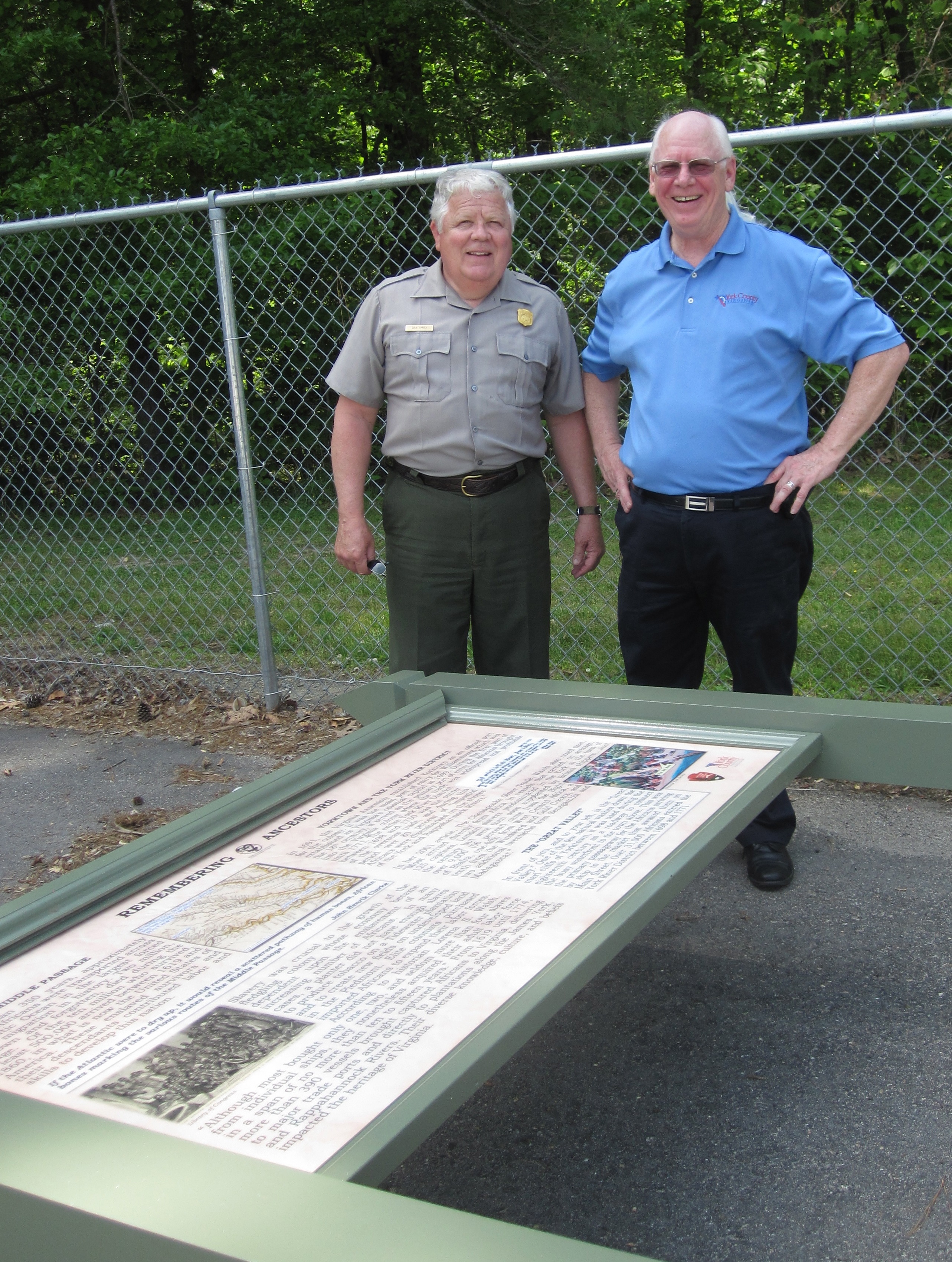
At the corner of Water and Read streets in Yorktown, near the Yorktown Pub and the beach, was once the beginning of the path slaves walked when they were offloaded from ships to be sold at market.
Yorktown was once one of the major port cities in the Virginia slave trade, and beginning Memorial Day, there will be a marker at the intersection of those two streets to remember that cruel history. The marker will be installed at a Memorial Day ceremony.
The Middle Passage Ceremonies and Port Markers Project will install at Yorktown the first in a series of more than 175 markers at ports throughout the world that were involved in the slave trade. Though a few other locations have had ceremonies marking that location’s former status as a port in the trade, Yorktown will be the first to install a marker.
Ann Chinn, the chairperson of the executive board of directors for the project, said the Historic Triangle community and National Park Service “just jumped right in” at the chance to have the 30-by-60 inch marker installed in Yorktown.
“It will have general information about Africans arriving in Virginia and into the Western Hemisphere,” Chinn said.
About 12 million Africans were transported in the slave trade from Africa to locations throughout the Caribbean, Europe and North, Central and South America.
Chinn said despite the common idea that the slave trade was primarily focused in Charleston, S.C., and Savannah, Ga., there were more than 40 ports littered across much of the coastline in the Gulf and Eastern Seaboard involved in the trade.
The markers, which Chinn hopes will be installed by 2020, will seek to educate the public about the role these places played in the trade.
The Yorktown marker is especially relevant to Chinn, who believes her family’s personal history can be traced back to the Yorktown port.
“It dawned on me that I may be standing at the place where my own family arrived,” Chinn said of Yorktown. “I would hope that this project would allow other people to begin to explore where their own family came in.”
The journey across the Atlantic was brutal. In many of the ships, up to 200 to 300 people would be packed into the hot, stuffy holds. The mortality rate ranged from 10 to 25 percent depending on the conditions aboard the ship.
“If you can think about being in a hot, unventilated, filthy place for a month to six weeks, that would be a good trip,” Chinn said, saying that a bad trip on the middle passage could stretch across several months.
In 1691, the Virginia General Assembly designated the port of Yorktown as the main port of entry for Williamsburg, which the capital at the time. From 1698 to 1750, more than 70 percent of Africans who were imported into Virginia were offloaded on the shores of the York and Rappahannock rivers. More than 31,000 slaves arrived at Yorktown between 1698 and 1771.
Dave Meredith, chairman of the York County Historical Committee, said he is happy the marker is going in at Yorktown.
“The middle passage is a part of our history that has been overlooked, and I think it’s way past time that we recognize that,” he said.
Monday’s ceremony is free and open to the public. It starts at 8 a.m. and will last about 90 minutes. Presentations and talks will be given by representatives of the Upper Mattaponi Indian Tribe, historian Russell B. Hopson, Dr. and Mrs. P.B. Welbeck, local clergy and Colonial National Historical Park Superintendent Dan Smith.
Another marker will be dedicated in Jamestown at an Aug. 23 ceremony.
