


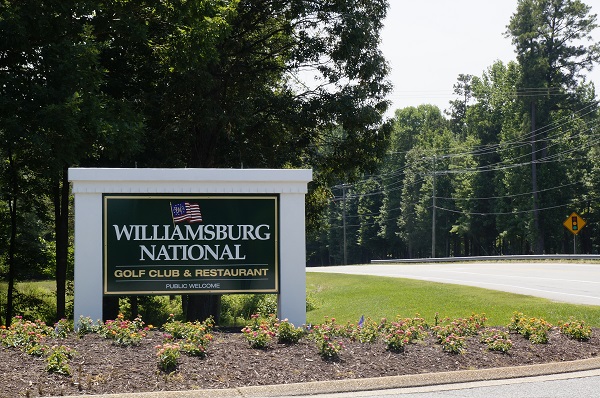
The maintenance center at the Williamsburg National Golf Club is connected to the course by a tunnel. Surrounded by trees and out of the way, it’s among the many things rarely seen by golfers.
The course hides its irrigation pipes, its fungicides, its landscaping equipment.
The mechanics of a golf course are designed to be out of sight and out of mind. That is, until something goes wrong: foreclosure, a disaster destroys the course, or a group of developers buy it all up to make homes on the land.
In the case of Williamsburg National Golf Club, it was bankruptcy — or rather, a feat of financial manoeuvres so impressive even an expert marveled at its craftsmanship.
It happened quickly, but was the product of years of neglect and an industry bust. After owning the club for two decades, the owners lost it in two months.
It ended in something similar to a home foreclosure: the lender that financed the business became the new owner. But in this case the lenders were investors, who gave money to the owners to cover the costs of a golf course that failed over time, according to court documents.
Bankruptcy records and court filings tell a story of how a golf club built at the end of industry boom times went bust. Employees went unpaid. Tax bills from the federal, state, and county governments piled up totaling more than a half million dollars.
The former owners, C. Lewis Waltrip II and John Lowenhaupt, did not respond to multiple requests for comment between October 2016 and June 2017.
Born in a boom
Nearly 23 years ago, a group of Georgia-based investors hired out landscapers to sow grass seeds on their yet unopened golf course, the Williamsburg National Golf Club.
It was the heyday of the sport. For twenty years, between 1980 and 2000, there was enormous growth in the construction of golf courses nationally.
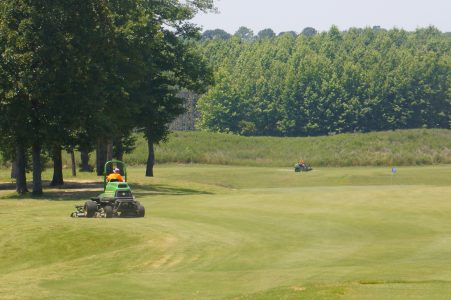
The golf industry attempted to build a new golf course somewhere in the country each day during the boom times, according to Jon Guhl executive director of the Mid-Atlantic section of the PGA. Forbes estimates that 4,000 golf courses opened in the United States between 1986 and 2005.
Meanwhile, the golf courses were appearing nearly as fast as golfers. Tiger Woods was in his prime and by 1997 he’d won the Masters, three PGA tour events, and became the number one golfer in the world — all within a year of turning professional. Companies such as Nike were getting serious about golf and paying stars like Woods big money to wear their apparel and use their equipment.
In 1999 alone, online broadcasts of PGA events were viewed in total more than any single Super Bowl until 2011.
That same year, the Williamsburg National Golf Club formally came under ownership by a new local company: Williamsburg National, LLC.
Eight years later the golf club had doubled in size from an 18-hole course to two 18-hole courses, just as the United States economy began to falter.
“I got here in 1976 and there were two courses in town and now there are 17,” said Jeff Fleishman, president of Golf Business Advisors in Williamsburg and a 38-year veteran of the industry.
The growth in the golf industry ended just as the world entered into the Great Recession in 2008, according to Guhl.
“There certainly was a period of overbuilding,” Guhl said. “Came to discover demand wasn’t that high.”
Today, there are fewer golf courses being built each year and many are closing for good, according to a report by the National Golf Foundation.
“The reality is that not all closures are sad stories, as few industries in sports or entertainment have a spatial footprint comparable to golf,” it read.
By 2016, membership at Williamsburg National was at its lowest point in a decade and the club was held together by a loyal group of employees. Just months before Williamsburg National, LLC had its business license revoked by James City County for delinquent taxes, according to the James City County Treasurer’s office.
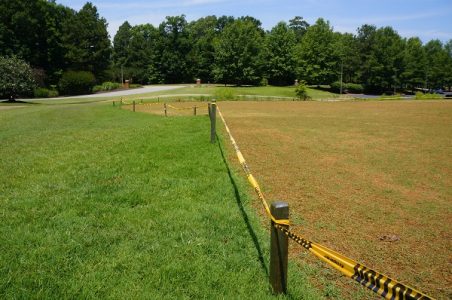
Roughly six months later, the company defaulted on $4.5 million in loans. Two months after that the company declared bankruptcy — disputedly owing more than $5.2 million to creditors, according to federal court documents.
Seventeen of the top 20 creditors — entities to which Williamsburg National, LLC disputedly owes money — to the company were asked for comment on the story and all declined.
Three of the top creditors could not comment on the story: The Internal Revenue Service, Virginia Department of Taxation, and the Treasurer of James City County. The final creditor, “Employee Wages” represents the money owed to employees of Williamsburg National, LLC and does not represent a specific entity to contact.
A financial feat
College of William & Mary Professor Nathan Oman said it’s not an uncommon practice for a business to file for bankruptcy as it forces negotiation with all of its creditors. Doing so can force those creditors to accept a “haircut” — a lesser amount than what is owed.
“Ideally you can restructure your debt by negotiating with all your creditors,” Oman said. “You can force your creditors to take a haircut in bankruptcy.”
Williamsburg National, LLC filed for Chapter 11 bankruptcy Sept. 1, but the lawyers for the company submitted a request to dismiss the bankruptcy filing Sept. 26, and a federal judge in Norfolk dismissed the bankruptcy Nov. 1.
The Williamsburg National Golf Club was sold on the steps of the Williamsburg-James City County Courthouse Nov. 10, 2016. The club, previously owned by Williamsburg National, LLC, was bought there on the steps by WNGC, LLC for $4,225,000.
The lenders that financed the business became the new owners — but in Williamsburg National’s case the lenders are a small group of investors — who lent money to the former owners to cover the costs of a struggling golf course.

Money and property moved so freely it resembled a fair game of Three-Card Monte — the dealers were in control once they entered the game.
The change in ownership is a commonly used method of turning troubled debt into equity for a creditor. The people who owned the most debt became the owners of the golf course.
“Let’s say a debtor owns ABC corporation,” Oman said. “If I wanted to transform debt into equity I would create a new corporate entity XYZ corporation which is owned by the creditor, then what happens is you conduct a sale, all of the assets of ABC Corp are sold to XYZ corp.”
WNGC, LLC was founded nearly two months before Williamsburg National, LLC declared bankruptcy. When the golf course was sold, Williamsburg National, LLC owed WNGC, LLC $4,515,552.16, according to documents filed in federal bankruptcy court.
“The old debts don’t look like they’re going to get paid, so what you do is transform the debt into equity,” Oman said. “They probably filed bankruptcy to bring everyone to the negotiating table, that’s sorta what happens with these stories.”
WNGC, LLC acquired the debt previously owed to the Bush Construction Corporation, Hunter Vermillion, and Larry McCardle. McCardle, Vermillion, and the Bush Construction Corporation own WNGC, LLC. They referred WYDaily reporters to golf club supervisor Chris Hartig, who declined to comment on the bankruptcy.
“The result is that at the end of the transaction is that the previous equity holders hold no equity and an empty corporation, it does not own anything at all,” Oman said. “It’s worthless. The creditors for ABC corp are now the equity holders for XYZ corp.”
Who loses out?
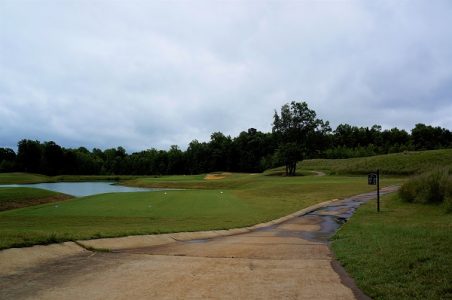
Oman said small area businesses might not be as affected by the bankruptcy or sale because it’s often cheaper to outright pay the bill then to squabble over debts. No area businesses affected by the bankruptcy agreed to comment for this story.
“The small guys will probably just get paid in full,” Oman said. “You pay them to go away. It’s cheaper to just pay those guys in full than it is to go through bankruptcy proceedings.”
But the largest creditor, aside from the company that now owns the club, is the American taxpayer. According to federal court documents, Williamsburg National, LLC owed $281,649.80 to the Internal Revenue Service and $89,000 to the Virginia Department of Taxation as of Sept. 2016.
James City County is the third largest creditor for Williamsburg National, LLC. The company reportedly owed the county $174,363.92, according to court documents.
While James City County Treasurer Jennifer Tomes said she can’t answer most questions specific to Williamsburg National’s situation, she said that the county has plenty of tools to recoup owed money.
James City County could put liens on the owner’s wages or bank accounts, withhold their vehicle registrations, seize the owner’s personal property and sell it publicly if the taxes aren’t paid voluntarily.The county could also ask a judge in either the Williamsburg-James City County General District Court or Circuit Court to extend the collection period to make sure debts get paid.
While James City County never anticipates 100 percent tax collection, when taxes aren’t paid it affects other county residents.
According to County Administrator Bryan Hill, the sum owed — $174,363.92 — could pay for two police officers, eight police vehicles, or 17 students at Williamsburg-James City County Schools,.
“That’s what we can’t do when debtors don’t pay,” Hill said. “There are services we can’t enhance.”
Taxes are still owed by the golf club’s former owners, according to James City County. But, the new owners of the golf club haven’t had a clean slate as they’ve worked to rebuild the business’ relationships and pump hundreds of thousands of dollars in renovations to bring the course up to par.

New lease on life
Bill Fetsko’s been walking the fairways of the Williamsburg National Golf Club for 20 years. On any given day the sprite 77-year-old golfer can be seen on the golf club’s Yorktown course getting 18 holes in before lunch.
Fetsko’s seen the boom and the bust of the neighborhood golf club. His favorite memory of the golf course was the New Year’s Eve party the club threw on Dec. 31, 1999 — he was the first golfer of the new millennium.
After years of decline, Fetsko is convinced the club is on the upswing.
“It’s the last few years when it just started going downhill big time,” Fetsko said. “I always hoped that the course would come back. I think what we’re seeing now is the light at the end of the tunnel.”
Chris Hartig, the supervisor of the golf club, doesn’t quite see it that way.
“We’re setting the foundations,” Hartig said. “We’ve done what we need to do. We just gotta let mother nature keep going here this summer.”
Hartig’s company Carlton Hospitality Group, was hired by the new owners of the golf club to stabilize and revitalize the ailing courses. When he first arrived on site, he said only one word could describe the courses: “apocalyptic.”
“It was obviously significantly neglected,” Hartig said. “It’s decent now. We don’t have anything to be embarrassed about. And we’re only looking to get better.”

To be sure, there’s nothing easy about running a golf course especially when a market is volatile.
Since the course was purchased, Hartig, general manager JR Powell, and Jay Long of Venture Turf Management have been busy fixing irrigation systems, revamping the clubhouse restaurant with a new chef and a new name “The 1607 Grille” and sprigging the Jamestown course’s putting greens with germinated Bermuda grass seeds.
All in all, it’s slow going waiting for the grass to grow, but Hartig and his team are proud of the progress the golf club has made.
“There’s still a lot of surprises out there, and we’re still working through that,” Long said. “We’re definitely on the right path.”

