


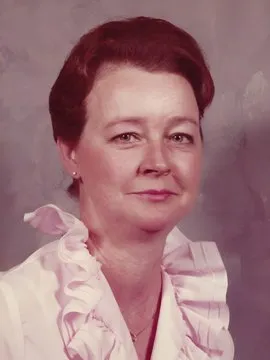
A Life of Quiet Strength, Unwavering Devotion, and Extraordinary Grace
There are some people whose influence is measured not by titles they held or recognition they sought, but by the countless lives they quietly touched through kindness, compassion, and steadfast love. Shirley Ruth Small was one of those remarkable people.
Shirley passed away peacefully on June 29, 2026, in Newport News, Virginia, leaving behind a legacy built on faith, family, service, and an unwavering commitment to caring for others. She now joins the love of her life, her husband of sixty-three years, Major General Harold I. “Hank” Small, whose passing left an immeasurable void in her heart but never diminished the strength with which she continued to live.
Born Shirley Ruth Jernigan on June 4, 1937, in Fayetteville, North Carolina, Shirley’s life was one few could have imagined. Raised with humble beginnings, she developed a resilience, warmth, and practicality that would define her throughout her life. Those early lessons in hard work and compassion never left her, even as her life eventually carried her around the world as the wife of one of the United States Army’s most respected leaders.
Yet Shirley measured people not by position or prestige, but by the content of their character.
That simple philosophy guided every decision she made throughout her extraordinary life.
A Blind Date That Changed Everything
Sometimes the greatest love stories begin in the most unexpected ways.
In the summer of 1952, a young Army Corporal assigned to the 82nd Airborne Division at Fort Bragg agreed to meet a young woman named Jane Jernigan on a blind date. When Jane realized she already had another date that evening, she suggested someone else take her place—her fifteen-year-old younger sister, Shirley.
Neither Shirley nor Harold “Hank” Small could have known that one small change of plans would alter the course of both of their lives forever. The two quickly fell in love.
Only weeks later, on July 9, 1952, they quietly crossed into Dillon, South Carolina, where they were married by a female Justice of the Peace. Shirley was only fifteen years old. Hank was nineteen.
They would spend the next sixty-three years building a marriage grounded in unconditional love, unwavering loyalty, and complete partnership.
As Hank often said throughout his military career, he never accomplished anything alone. Those who knew them understood exactly what he meant.
More Than an Army Wife
When Shirley married Hank, he was a young Corporal serving in the Airborne Infantry. Neither could have imagined the remarkable military career that lay ahead.
Over the next thirty-eight years, Hank would rise through every level of leadership before retiring in 1986 as a Major General and Commander of the Military Traffic Management Command.
For Shirley, those same years meant something different.
They meant raising four children while moving approximately twenty times.
They meant making unfamiliar houses feel like home.
They meant saying goodbye to friends just as deep roots had begun to form.
They meant birthdays celebrated across oceans, holidays interrupted by deployments, and countless nights spent praying for her husband’s safe return from Korea and Vietnam.
Like thousands of military spouses, Shirley accepted every challenge without complaint.
But unlike many, she transformed those challenges into opportunities to serve others.
She understood that military families needed more than housing and paychecks.
They needed someone who cared.
Someone who listened.
Someone who understood.
Someone who would quietly step forward when no one else did.
Throughout every assignment—from company commands to division headquarters and ultimately the highest levels of Army leadership—Shirley became exactly that person.
She devoted herself to supporting military spouses and families, particularly young enlisted families facing many of the same struggles she had experienced herself during the earliest years of military life.
Although her husband’s responsibilities grew with each promotion, Shirley never forgot what it meant to be the wife of an enlisted soldier.
That perspective became one of her greatest gifts.
She remained approachable, genuine, and deeply compassionate, always advocating for enlisted soldiers, non-commissioned officers, junior officers, and their families whenever she believed improvements could be made.
She understood something many leaders sometimes forget:
Taking care of Soldiers begins by taking care of their families.
That belief became the hallmark of her life.
Building a Home Wherever Duty Called
For many military families, a set of orders means packing boxes, saying goodbye to friends, and beginning again somewhere unfamiliar.
For Shirley Small, it meant something much deeper.
It meant another opportunity to create a home.
Over the course of Hank’s thirty-eight-year Army career, the Small family moved approximately twenty times. Each assignment brought a new City, a new house, new schools, new neighbors, and new challenges. While many viewed constant relocations as one of military life’s greatest hardships, Shirley chose to see something else.
She saw possibility.
She believed every move was an adventure waiting to unfold, and she worked tirelessly to ensure her children believed it too.
Long before moving trucks arrived, Shirley was already planning how to make the next house feel familiar. She unpacked more than furniture and dishes—she unpacked stability.
No matter where the Army sent them, she created a home filled with warmth, laughter, traditions, and unconditional love.
Years later, her children would often remark that although the addresses changed, home never did. Home was wherever Shirley was.
That consistency became the foundation upon which four children grew into adulthood despite the uncertainty that often accompanies military life.
Yet Shirley’s greatest challenge was not moving. It was learning to be both mother and father whenever duty called Hank away.
Throughout his military career, Hank served three combat tours—one in Korea and two in Vietnam, and countless other deployments. During those long weeks and months apart, Shirley became the family’s steady anchor. She managed the household, raised four children, made every important decision, solved every unexpected problem, and carried the emotional weight that military spouses know all too well.
There were no video calls or FaceTime.
No instant messages.
Sometimes letters took weeks to arrive.
Telephone calls, when they came, were precious and infrequent.
Still, Shirley never allowed fear to become the defining emotion in her home. She understood that her children looked to her for reassurance. If she remained strong, they could too.
She celebrated birthdays while silently wishing Hank were there.
She attended school events alone.
She tucked children into bed after long days while wondering where in the world her husband was sleeping that same night.
She carried every burden with quiet determination because she believed her children deserved a childhood filled with hope rather than worry.
Her strength was never loud. It was steady. The kind of strength that quietly holds a family together when no one else notices.
Education was another cornerstone of Shirley’s life.
Although she left school after the ninth grade to begin her life with Hank, she never allowed her own educational journey to limit her children’s opportunities. In fact, it inspired her to encourage them even more.
She became an avid reader, believing that learning should never stop simply because formal schooling had ended. She proudly supported Hank as he pursued higher education while serving on active duty, and she encouraged each of their four children to continue their education beyond high school. Her influence extended beyond her immediate family, as nieces, nephews, and countless young people also benefited from her encouragement to pursue college, meaningful careers, and lives of purpose.
She understood that education was one of the greatest gifts parents could give their children. Not because of the degrees they might earn. But because education opens doors that hardship alone cannot.
As the years passed and Hank’s responsibilities within the Army continued to grow, Shirley’s role evolved as well. Official dinners, receptions, ceremonies, and community events became regular parts of life. She became an exceptional hostess, welcoming everyone—from young enlisted couples attending their first military function to distinguished civilian leaders and senior officers—with the same genuine warmth.
Guests often remarked that Shirley possessed a remarkable gift. She made every person in the room feel as though they were the most important one there.
Titles disappeared.
Ranks faded.
People simply felt welcomed.
It was never about impressing anyone. It was about making them feel they belonged.
Those who attended the countless gatherings she hosted rarely remembered the decorations or the menu years later. They remembered how Shirley made them feel.
Seen.
Valued.
Included.
It was a gift she carried effortlessly throughout her life. Perhaps that is why so many friendships endured long after military orders sent families in different directions.
Every assignment brought new faces into the Small family’s lives. Many of those acquaintances became lifelong friends. Some became family.
Because wherever duty sent the Small family Shirley did more than build another house into a home. She built a community. Long after the moving trucks had departed for the next assignment, pieces of Shirley’s kindness remained behind—in neighbors she had comforted, young spouses she had encouraged, children she had inspired, and friendships that would last for decades.
That was her quiet gift. No matter where she lived, she left every place better than she found it.
The Heart Behind the General
As Hank’s military career advanced, so did the responsibilities that came with being a commander’s spouse. While others may have seen the prestige that accompanied his rank, Shirley saw something entirely different. She saw people.
She saw young wives navigating military life for the first time. She saw enlisted families stretching every paycheck. She saw children trying to make sense of another move, another deployment, another goodbye. She remembered exactly what it felt like to be one of them because she had lived it herself. That perspective never changed.
Whether Hank was a young officer or a Major General commanding thousands of soldiers, Shirley refused to let rank define who she was or how she treated others. Those who knew her quickly discovered that she had no interest in privilege or special treatment. She believed every military family deserved to be treated with dignity, compassion, and respect.
Her door was always open.
Her phone was always answered.
Her advice was always honest.
Most importantly, she listened.
Military spouses often found themselves sharing concerns with Shirley that they were hesitant to bring to anyone else. They knew she would not judge them. She would simply ask how she could help. She became known throughout the military community as someone who genuinely cared—not because she had to, but because it was simply who she was.
Throughout Hank’s assignments, Shirley devoted countless volunteer hours to organizations that strengthened military communities, including the American Red Cross Blood Bank, Well Baby Clinics, the Girl Scouts of America, the Cub Scouts of America, installation thrift shops, and numerous family-support organizations. Wherever the Army sent the Small family, Shirley quietly found ways to make that community stronger than she had found it. She never viewed volunteerism as recognition. She viewed it as responsibility.
One story, however, captures Shirley’s character better than perhaps any other.
While living at Fort Eustis, one day Shirley wasn’t feeling well and drove herself to the installation hospital emergency room to be examined. As she waited, she noticed a young Army wife sitting nearby with two restless toddlers and a sick infant in her arms. The young mother had arrived first.
A nurse soon appeared and called for Shirley to come back immediately.
As the Commanding General’s wife, Shirley understood exactly why she had been called ahead of everyone else. She also knew it wasn’t right.
Instead of following the nurse, Shirley quietly declined. “The young mother was here before me,” she insisted. “She should go first.”
The nurse attempted to reassure her that everyone would receive care, but Shirley stood firm. Then, seeing the overwhelmed mother struggling to care for three small children while worrying about her sick baby, Shirley offered to watch the toddlers herself.
Within moments, hospital staff quickly rearranged the situation. The young mother and her infant were escorted to the treatment area while medical personnel cared for the toddlers.
Only then did Shirley agree to be seen. It was a small act. Yet it perfectly reflected the values that guided her entire life.
She never believed her husband’s position made her more important than anyone else. If anything, she believed it gave her a greater responsibility to serve others. That quiet humility earned respect that no title ever could.
Those who served alongside General Small often remarked that while Hank inspired confidence through leadership, Shirley inspired loyalty through kindness. The two made an extraordinary team. As Hank led soldiers, Shirley looked out for the families standing behind them.
She understood something military leaders have known for generations: strong families build strong soldiers. Long before military family readiness programs became formalized, Shirley was already living that philosophy every single day.
Her influence extended far beyond official receptions or command functions.
It was found in hospital waiting rooms.
At kitchen tables.
In neighborhood conversations.
In late-night phone calls.
In encouraging words.
With quiet acts of generosity.
The moments which no one wrote reports about. Those are the moments that defined Shirley.
She never wore Hank’s rank. She wore compassion instead. And in doing so, she left an imprint on military families whose names she may never have remembered—but who never forgot her.
Christmas Was Shirley’s Season
Every family has someone who quietly keeps its traditions alive. For the Small family, that person was Shirley.
While she loved every season of the year, Christmas held a special place in her heart. It was more than a holiday. To Shirley, Christmas was an opportunity to remind people that they mattered, that they were loved, and that no one should ever feel forgotten.
She believed the smallest acts of kindness often left the deepest impressions. That belief guided countless Christmases throughout her life.
During Hank’s years as Commanding General at Fort Eustis, many soldiers found themselves standing watch while others gathered around dinner tables with their families. Military service does not pause for holidays, and Shirley understood better than most what those long shifts could feel like. She refused to let those soldiers believe they had been forgotten.
Every Christmas Eve, Shirley carefully prepared gift baskets filled with treats and holiday goodies. With the help of her children, she made sure those baskets found their way across Fort Eustis to the men and women serving on duty throughout Christmas Eve and into Christmas Day.
There was no ceremony.
No publicity.
No expectation of recognition.
Only a heartfelt desire to let each soldier know someone was thinking about them.
For those serving far from home, many of them young and away from family for the first time, those unexpected visits carried a message far greater than the treats themselves. Someone cared. Shirley knew firsthand how much that mattered.
She had spent years watching Hank deploy, watching families celebrate birthdays and holidays apart, and comforting military spouses carrying the weight of service at home. She understood that military life often asked families to sacrifice during moments the rest of the country took for granted. Christmas became her way of giving something back.
After Hank retired from the Army and they settled in Poquoson, Virginia, Shirley found a new way to share that same spirit of generosity.
What began as a small Christmas gathering at their home soon grew into one of the community’s most anticipated holiday traditions. Each year, friends, neighbors, military families, civic leaders, and members of the community gathered at the Small’s home for a Toys for Tots reception benefiting the United States Marine Corps Reserve.
The invitation was simple. Instead of bringing a hostess gift, guests were asked to bring a new unwrapped toy.
Year after year, the event grew. One reception became two. Dozens of guests became hundreds.
By its final year, nearly 800 invitations had been mailed, and approximately 600 guests filled the Small’s home and its grounds over a ten-hour period with laughter, fellowship, and the joy of giving. The response was so overwhelming that three large trucks were needed to carry away the mountains of donated toys.
To many, it was an impressive community event. To Shirley, it was simply Christmas.
She delighted knowing that somewhere a child she would never meet would wake up on Christmas morning to discover a gift waiting beneath the tree. That was enough.
Knowing a child would wake up to a Christmas gift was all the reward Shirley ever needed.
The receptions eventually came to an end—not because Shirley’s passion faded, but because life presented her with one of its greatest challenges. She was diagnosed with Stage IV ovarian cancer.
For many families, such news would have marked the beginning of despair.
For Shirley, it became another obstacle to overcome with the same quiet determination that had defined her entire life. She endured difficult treatments with remarkable courage, leaning on her family, her faith, and the resilience that had carried her through decades of military life.
Then, as though surviving cancer were not enough, she later overcame a congenital brain aneurysm.
Her children often joked that two life-threatening illnesses were quite enough for one lifetime and lovingly told their mother she wasn’t allowed to have any more. Shirley laughed. It was the kind of laughter that had sustained her family for decades. Warm, optimistic, and completely genuine.
She never allowed hardship to define her.
Instead, she chose gratitude.
Gratitude for another Christmas.
Another gathering around the table.
Another opportunity to watch children laugh.
Another chance to tell the people she loved that they mattered.
Christmas, to Shirley, was never about decorations or presents. It was about opening your home, opening your heart, and making sure no one felt forgotten.
Sharing what you had.
And making sure no one felt alone.
Those who were fortunate enough to celebrate the season with Shirley often left with more than full hearts and happy memories. They left inspired to be just a little more generous themselves.
Perhaps that was Shirley’s greatest Christmas gift. She reminded everyone around her that kindness is contagious. And that the true spirit of Christmas is found not in what we receive, but in what we freely give.
A Citizen of the World, Grounded in Home
Although Shirley never sought adventure for its own sake, military life opened doors she could never have imagined as a young girl growing up in Fayetteville, North Carolina.
The Army carried the Small family across the United States and around the world, introducing Shirley to cultures, histories, and people she embraced with genuine curiosity and respect. One of the family’s most memorable assignments was a three-year tour in Germany.
For many military families, an overseas assignment meant adjusting to unfamiliar customs and languages. For Shirley, it was an opportunity to learn. She immersed herself in the experience, encouraging Hank and their children to see Europe not simply as a place to live, but as a classroom unlike any other. Weekends and vacations became opportunities to explore.
Historic cities, museums, castles, and villages became destinations where history came alive. Shirley believed travel should broaden perspectives, and she wanted her children to understand that the world was far larger than their own backyard.
Yet of all the places they visited, one destination remained especially important to her.
She insisted the family visit a former Nazi concentration camp. It was not an easy decision. She knew it would be emotionally difficult, particularly for her children. But Shirley believed some lessons could never be fully understood through books alone.
Standing where unimaginable suffering had occurred, she hoped her children would gain a deeper appreciation for the value of human dignity, the importance of compassion, and the responsibility each generation bears to ensure such atrocities are never repeated. It was a difficult day. It was also an unforgettable one.
That experience reflected the kind of mother Shirley was. She did not shelter her children from history. She taught them to learn from it.
Throughout the years, Shirley and Hank traveled extensively across Europe, often representing the United States Army at official events. They attended the 40th and 50th anniversaries of the Normandy invasion, standing in reverence where so many brave young men had sacrificed everything for freedom.
They were honored to attend a Papal audience at the Vatican in Rome, an experience that deepened Shirley’s faith and appreciation for the Church she had embraced after marrying Hank.
On several occasions, they traveled through the Netherlands as official guests of Queen Beatrix and senior leaders of the Netherlands Army. They were likewise welcomed by senior officials of the British government and the British Army during visits to the United Kingdom.
These were extraordinary experiences. Yet Shirley never returned home talking about dignitaries, ceremonies, or protocol. Rather than speaking about dignitaries or ceremonies, Shirley spoke about the people she met, the friendships she formed, and the kindness she encountered. The beauty of cultures different from her own.
One story became family legend.
Anyone who knew Shirley knew she loved to shop. She delighted in finding unique treasures, thoughtful gifts, and little keepsakes that carried memories with them. During separate trips to Berlin while the city remained divided by the Wall, Shirley and her dear friends Helen Evans and Jenny Morandi crossed through Checkpoint Charlie into East Berlin.
The three women approached the day with equal parts curiosity and determination. Together, they explored shops, admired local craftsmanship, and searched for meaningful souvenirs that would forever remind them of that extraordinary place and time in history.
Years later, those shopping adventures remained among Shirley’s favorite memories—not because of what she purchased, but because of the laughter she shared with a lifelong friend.
That was Shirley.
Whether attending a royal function or browsing a small neighborhood market, she approached every experience with the same authenticity. She treated everyone she met with kindness.
She asked questions.
She listened.
She found common ground.
She possessed a remarkable ability to make people feel comfortable regardless of nationality, language, or circumstance. Friends often remarked that Shirley could strike up a conversation with anyone. Within minutes, strangers became acquaintances.
Acquaintances became friends.
Friends became family.
That gift followed her throughout her life.
As military assignments came and went, Shirley built extended families wherever she lived. In Germany. At many stateside duty stations, including Fort Eustis. In Northern Virginia. In Poquoson. At the lake in Plymouth, Maine. In Winchester, Massachusetts. Across the military community and beyond, she cultivated friendships that endured not because of proximity, but because of genuine affection and unwavering loyalty.
To Shirley, family was never defined solely by blood. It was defined by love.
By shared experiences.
By standing beside one another during life’s celebrations and hardships.
The people fortunate enough to call Shirley a friend, soon discovered they had become something even more meaningful. They had become part of her family.
Perhaps that is why so many people from so many different places mourn her today.
Though separated by miles, generations, occupations, and backgrounds, they were united by one remarkable woman whose kindness knew no boundaries.
Shirley traveled the world. But wherever she went, she carried the same simple values with her.
Love your family.
Serve others.
Learn continuously.
Welcome everyone.
Leave every place—and every person—a little better than you found them.
A Zest for Life
Shirley loved to have fun and be spontaneous. From dancing on the table at Hank’s retirement party to making snow angels in her back yard in her seventies. She enjoyed a good practical joke with friends. She enjoyed Broadway shows and shows in the London theater District. She was a fan of old country music and gospel music.
She enjoyed having a good time with Hank and their friends and family.
She always tried to share her enthusiasm to have fun when she hosted personal parties, including her annual Super Bowl parties.
Faith, Family, and the Measure of a Life
If there was one word that defined Shirley more than any other, it was devotion.
She was devoted to her husband.
Devoted to her children and family.
Devoted to her faith.
Devoted to the countless friends who became family.
Those who knew Shirley understood that everything she did was rooted in love.
Shirley never stopped learning. She possessed an insatiable curiosity and a genuine love of reading that remained with her throughout her life. She believed that education was one of life’s greatest gifts.
She celebrated learning—not because it led to titles or careers, but because it broadened minds and strengthened character.
When Hank pursued higher education while serving on active duty, Shirley became his greatest supporter, balancing the demands of raising four children while encouraging him to continue his studies.
She expected the same commitment from her children Chip, Bob, Mike and Cheryl. Each was encouraged to pursue higher education, work hard, and strive to become not simply successful, but good people.
Her encouragement extended beyond her own household. Nieces, nephews, and countless young family members often found themselves receiving Shirley’s advice about education, careers, and building meaningful lives. She never lectured. She simply believed in people before they believed in themselves. That quiet confidence often became the encouragement they needed.
As the years passed, Shirley found one of her greatest joys in watching her family grow. Nothing made her smile more than becoming “Grandma.”
She delighted in watching her granddaughters, Stacey and Gillian, grow into remarkable women. She celebrated their accomplishments with the same pride she had always shown her own children, welcoming their husbands Kyle and Matt into the family as sons.
Later came one of life’s sweetest blessings. Great-grandchildren, Claire, Charlie, and Evelyn. She treasured every visit, every birthday, every holiday, every hug, and every laugh.
To Shirley, they represented hope, and the continuation of a family story that had begun decades earlier with a blind date in North Carolina.
Her greatest accomplishments were never measured in awards or recognition. They were measured around the family table.
Faith was another constant throughout Shirley’s remarkable life.
Although she had been raised Protestant, she embraced Hank’s Roman Catholic faith after they married. Her conversion was not simply a change of denomination—it reflected her commitment to building a shared life and shared values with the man she loved. Her faith became the quiet foundation beneath everything else.
She ensured her children were baptized, received the sacraments, and grew up understanding the importance of compassion, forgiveness, humility, and service.
Her faith was never loud. It was lived.
It appeared in the way she welcomed strangers.
The patience she extended to others.
The forgiveness she offered.
The generosity she practiced.
The gratitude she expressed.
She believed that serving God meant serving people. Few people knew just how deeply that faith would be tested.
After years of giving so much of herself to others, Shirley faced one of the greatest challenges of her life when she was diagnosed with Stage IV ovarian cancer. The diagnosis stunned everyone who loved her.
Yet Shirley approached the disease the same way she had approached every challenge throughout her life—with courage, determination, and unwavering hope. She endured surgeries, treatments, difficult days, and long recoveries with remarkable courage. She never pretended those days were easy. But she refused to surrender to despair.
She met every obstacle with remarkable resilience, drawing strength from her family, her physicians, her faith, and an optimism that had sustained her since childhood. Against tremendous odds, she survived.
As though that journey was not enough, Shirley later faced another life-threatening medical emergency—a congenital brain aneurysm. Once again, she persevered.
Even during illness, she remained more concerned about everyone else than herself. She asked nurses about their families. She thanked physicians by name. She comforted those who had come to comfort her. That was simply who she was.
As the years passed, Shirley often reflected on how blessed she had been.
A marriage that lasted more than six decades.
Four children.
Two Grandchildren.
Three Great-grandchildren.
Lifelong friendships that stretched across continents.
A life filled with purpose.
She rarely spoke about what she had sacrificed. Instead, she spoke about what she had been given. It was a perspective that inspired everyone around her.
Shirley never considered herself extraordinary.
She simply believed that love should be given freely, kindness should never be withheld, and every day was another opportunity to make someone’s life a little brighter. In doing so, she accomplished something truly extraordinary. She built a family whose greatest inheritance would never be measured in possessions or accomplishments. It would be measured in character. And in that, Shirley was immeasurably wealthy.
Her Greatest Legacy
There are lives that are remembered because of positions held, honors received, or accomplishments achieved. Shirley will be remembered for something far greater. She made people feel seen.
Whether someone was a young, enlisted spouse navigating military life for the first time, a neighbor in need of encouragement, a child opening a Christmas gift, or a lifelong friend sitting around her kitchen table, Shirley possessed a remarkable gift for making every person feel important.
She never sought the spotlight. She simply shined it on others.
Throughout nearly nine decades of life, Shirley quietly demonstrated that true leadership is measured not by authority, but by service. She never wore Hank’s rank. She never expected special treatment because of the position he held.
Instead, she earned respect through humility.
She led through compassion.
She inspired through example.
Those who knew her best often found themselves reflecting on small moments rather than grand occasions.
The unexpected phone call.
The warm meal shared around her table.
The thoughtful advice offered without judgment.
The Christmas basket delivered to a soldier standing watch.
The gentle reassurance given to a worried young Army spouse.
The quiet act of kindness no one else ever witnessed.
Those moments became the threads that wove together the remarkable tapestry of her life.
As the years passed, Shirley’s extended family continued to grow far beyond the branches of her family tree.
During Hank’s time at the Pentagon her neighbors on Chancery Court in Mount Vernon, Virginia became family. During Hank’s deployments to Vietnam and on other occasions his service required he be away from home on Chancery Court she was fortunate to be able to rely on any support she needed from Bill and Helen Evans, John and Peggy Byers, and Channing and Ann Jones, among others.
In Poquoson, she and Hank found dear friends who became family. Dan and Tammy McGee, John and Tracye Ireland, Colonel Nick and Dottie Andre, Beverly Williams and her children, and many others shared in the joys and challenges of life together.
At Fort Eustis, friendships formed through decades of military service endured long after retirement. Jerry and Nancy Donatucci, Warren and Jane Kempf, Jim and Deanie Rockey, Jim and Arlene Piner, and countless others remained treasured parts of Shirley’s life.
In Plymouth, Maine, where Hank was born and spent the early years, and where he and Shirley eventually built a home by the lake, Shirley embraced another community that welcomed her with open arms. She treasured the friendships of Bobbi and Rossi Hicks, Linda and Mike Seavey, Tim and Nancy Harden, Angela and Stan Beckwith, and so many others, including the extended Small family, who made Maine feel like home.
She also cherished the Small family of Burlington, Massachusetts, whom she embraced as her own, and the Morandi family of Winchester, Massachusetts. Sonny and Jenny Morandi were far more than dear friends; they became another brother and sister for Shirley. They celebrated some of life’s milestones together, laughed together, traveled together, and stood beside one another through some of life’s greatest joys and deepest sorrows.
To Shirley, these relationships were never accidental. They were blessings.
She believed family was created not only through birth, but through loyalty, shared experiences, and unconditional love.
As she grew older, Shirley remained remarkably grateful. She often reflected on the life she had been given.
A girl from Fayetteville, North Carolina, who left school after the ninth grade could never have imagined traveling the world, raising a family across continents, supporting one of the Army’s most distinguished leaders, surviving life-threatening illnesses, welcoming grandchildren and great-grandchildren, and touching the lives of so many people along the way.
Yet if you had asked Shirley what she considered her greatest accomplishment, she almost certainly would not have mentioned any of those things.
She would have spoken about Hank.
Her children.
Her grandchildren and great grandchildren.
Her friends.
The soldiers she had encouraged.
The families she had supported.
The Christmases she had shared.
The simple privilege of loving others.
That was enough for her.
In the final chapter of her life, Shirley continued to face each day with the same grace, courage, tenacity, and gratitude that had defined every chapter before it.
She remained feisty.
She remained resilient.
She remained deeply appreciative of the extraordinary physicians, nurses, first responders, clergy, friends, and caregivers who walked beside her throughout her journey. She never took their kindness for granted and never missed an opportunity to express her heartfelt thanks.
Even as her earthly journey came to an end, the lessons she taught and displayed continue to live on.
She taught that humility is stronger than pride.
That kindness is never wasted.
That true leadership begins with serving others.
That faith provides strength during life’s greatest trials.
That family is life’s greatest treasure.
And that love, when given freely and generously, never truly ends.
On June 29, 2026, Shirley was welcomed into her eternal home. There is little doubt that the first person waiting to greet her was Hank. For sixty-three years they had walked through life hand in hand, separated only briefly by death.
Now, together again, they are reunited in the presence of the Lord.
While those left behind mourn her absence, they also celebrate a life beautifully lived.
A life filled with quiet acts of courage.
Gentle acts of compassion.
Unwavering devotion to family.
Steadfast faith.
And a heart that never stopped caring for others.
Shirley Ruth Small never sought recognition. She simply sought to make life better for the people around her.
She strengthened military families.
She welcomed strangers.
She encouraged young spouses.
She comforted friends.
She celebrated children.
She honored soldiers.
She loved her family with every ounce of her heart.
Her greatest legacy will never be measured by the places she lived or the remarkable career she helped make possible. It will be measured by the lives she changed.
The friendships she nurtured.
The family she built.
The traditions she created.
The kindness she shared so freely.
The example she set.
Shirley lived with extraordinary grace, quiet strength, steadfast faith, and unconditional love. She leaves this world immeasurably better than she found it. Her story will continue to inspire generations who never had the privilege of meeting her—but who will know her through the lives she forever changed.
Arrangements to Honor Shirley
Visitation
A visitation to honor Shirley is scheduled for Friday, July 31, 2026, from 4:00PM to 6:00PM at Weymouth Funeral Home, 12746 Nettles Drive, Newport News, VA 23606. A dinner will follow at Shirley’s home at 3 Rochambeau Drive, Poquoson, Virginia 23662.
Funeral Mass
Shirley’s funeral Mass is scheduled for Saturday, August 1, 2026, at 11:00AM at the U. S. Army Transportation Corps Regimental Memorial Chapel on Fort Eustis, Joint Base Langley -Eustis, at 923 Donnelson Place (GPS), 923 Lee Boulevard, Fort Eustis, Virginia 23604. Please note: access to Fort Eustis requires REAL ID.
Celebration of Life
A Celebration of Life luncheon reception to honor Shirley shall follow immediately after the funeral Mass on August 1, 2026, at the Newport News Marriott at City Center, 740 Town Center Drive, Newport News, Virginia 23606.
Interment with Hank at Arlington National Cemetery
Shirley’s interment with Hank at Arlington National Cemetery will begin with a funeral Mass at the Old Post Chapel on Joint Base Myer-Henderson Hall, at 204 Lee Avenue, Fort Myer, Virginia 22211, on Monday, November 16, 2026, beginning at 2:45PM, with a request to arrive at the Chapel by 2:00PM. A graveside ceremony will immediately follow after the Mass. There will be an early dinner reception following the services at Arlington National Cemetery at a location to be announced. . Please note: access to Fort Myer and Arlington National Cemetery requires REAL ID.
Donations in Lieu of Flowers
In lieu of flowers Shirley would be pleased for donations to St. Jude Children’s Research Hospital, 501 St. Jude Place, Memphis, TN 38105, website: www.stjude.org, or Tunnel to Towers Foundation, “T2T”, 2361 Hylan Boulevard, Staten Island, NY 10306, website: www.t2t.org, or any other charity of your choice.
St. Jude supports her love of children and her successful battle with cancer. Tunnel to Towers supports her concern for spouses and family members of service members and first responders who have given the last full measure of devotion or who have been catastrophically injured in the line of duty.
Until We Meet Again
Shirley will be sorely missed by all who knew her, but she shall live on in our thoughts and prayers. Even in the midst of the sorrow of our loss here on Earth, we rest easier knowing she is home with the Lord, reunited in heaven with the love of her life, and that we will all see her again.
Mom, we love you very much, you did a great job for all of us.
Small and Jernigan Families
Shirley was a “Jernigan” through and through. On the Jernigan side she is survived by her sister-in-law, Hilde Jernigan, widow of James, her cousin Betty Waring, her nephews, Robert Kornegay, James “Jim” Perry, Tim Perry and his wife Christy, James “Buddy” Jernigan, Glen Jernigan, Randy Jernigan, her nieces, Kathy Hindman and her husband Ed, Angela “Angie” Jernigan, Peter Nye, their son, Benjamin “Ben” Nye, Nancy Jernigan, Diane Turner and Theresa Jernigan, her grandnieces, MAJ Caroline Baldwin (U. S. Army), Melissa Perry, Kaila Douglas, Lindsay Douglas,, and Breanna Duoglas, Kyle Latherss, Allison Fenzl and her grandnephew, Jeremy Perry.
On the Small side Shirley is survived by her sister-in-law, Maureen Farrow, and her children, Lisa, Keith, Rick, Kevin, Tim, Marybeth, Sean, and Jennifer. She is also survived by her sister-in-law Kathleen “Kathy” McQulikin, and her children, Michael, Scott, and Kerry, and her sister-in-law, Anne Berger Small, and her children, Elisabeth and Tony. She is survived by her nieces Carol Holding, Kelly Holding, and Kathy Genica, and her nephew, Jimmy Jackson.
In addition to Hank, Shirley is preceded in death by her parents, J. Wayman and Nettie Jernigan, and by her sister, Peggy Kornegay, her nephew, Gregory “Greg” Kornegay, and her niece, Joy Kornegay, and her sister Jane Holden, her brothers, Bill Jernigan, Richard Jernigan and James “Jim” Jernigan. Shirley is also predeceased by some of Hank’s family members, who were as much family to her as to him, including his parents, Harold B. Small and Ruth Small, his sister Patricia Ward, his brother CSM William “Bill” Small, her brothers-in-law, Richard “Dick” Farrow and Laurence “Larry” McQuilkin, and her nephews Eddie Jackson and Ricky Jernigan.
“Well done, good and faithful servant.”
—-Matthew 25:23

