


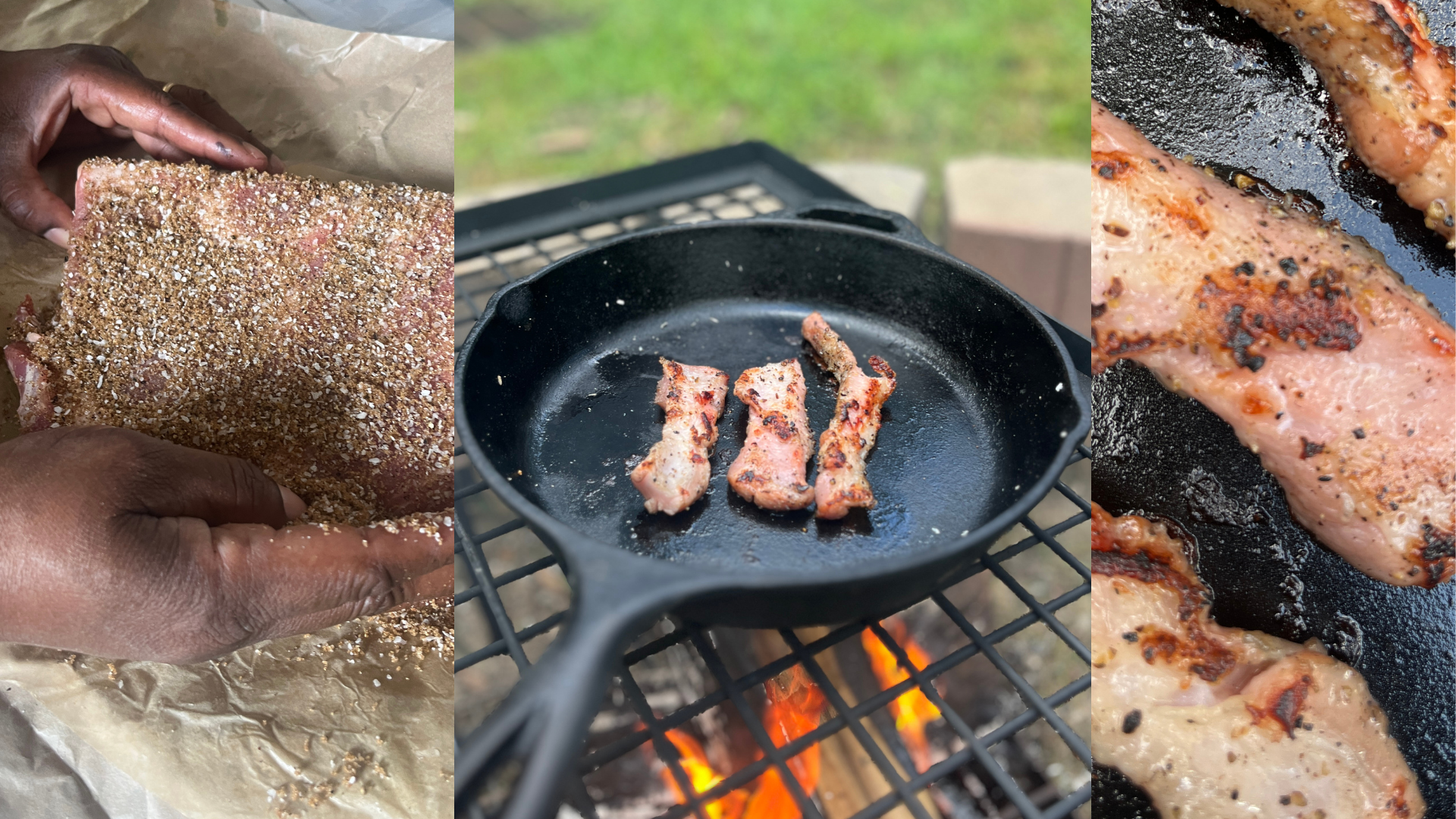
JAMES CITY COUNTY — This September, Jolly’s Mill Pond will be releasing online courses on the history of bacon — a virtual class to be taught through cooking demonstrations and historical explanations.
Walking through hundreds of years of bacon history, the class will start with a recipe from 1500 B.C. in China, including the process of curing the meat, which takes several days. The course will continue to highlight a variety of cultures, including Ancient Roman recipes, all the way to Virginian recipes.
“We can learn more about the ingredients that we see every day that really have a rich history. There are cultures that may have been forgotten, that come back to life when you start to explain that, ‘oh, wow, there’s a reason why we’re eating this food,’” said Angelia Kane, Jolly’s Mill Pond Creative Director.
The idea first came to Kane while researching the history of Jolly’s Mill Pond, which historically fostered the local grist mill, a mill used to create cornmeal and flour. As Kane learned more about food histories on her family’s property, she became more curious about one of the foods that she adores: bacon.
According to Kane, her favorite historical bacon recipe is a 19th-century style of bacon from Mary Randolph’s recipe, which includes a sugar and salt curing process. Some of the recipes from the class include multiple days of curing the meat. The course being virtual allows users to work at their own pace in their bacon cooking process.
“The full course of curing and then smoking bacon, that process takes about nine to 10 days” Kane said. “I’m going to make it a virtual class so that people can follow along at their own pace.”
Contexts of how bacon was incorporated into certain recipes, and the cultural significance of specific ingredients, will be taught interactively throughout the course, during the cooking process.
“Every implementation of bacon is going to have its own separate historical and cultural backdrop, so that you get a full context for why certain ingredients were used and why a certain process was used,” Kane said.
Although recipes will be taken from a historical context, Kane is hoping to alter small pieces of the recipes to suit her own tastes, particularly with American colonial bacon recipes.
“I generally enjoy riffing off of recipes. And that’s the beauty of it, too,” Kane said. “Every family had their own interpretation of bacon. They had their own dry cures and their own recipes that they use. And so I guess I’m kind of continuing the tradition by making certain things my own.”
Jolly’s Mill Pond doesn’t plan to end with bacon, but hopes to expand its historical cooking lessons to topics such as the history of barbecue, open fire cooking, and the histories of chocolate and candy.
“It’s so important to realize that history isn’t just for the textbooks. We can taste our local history.” Kane said.
Learn more here.

