


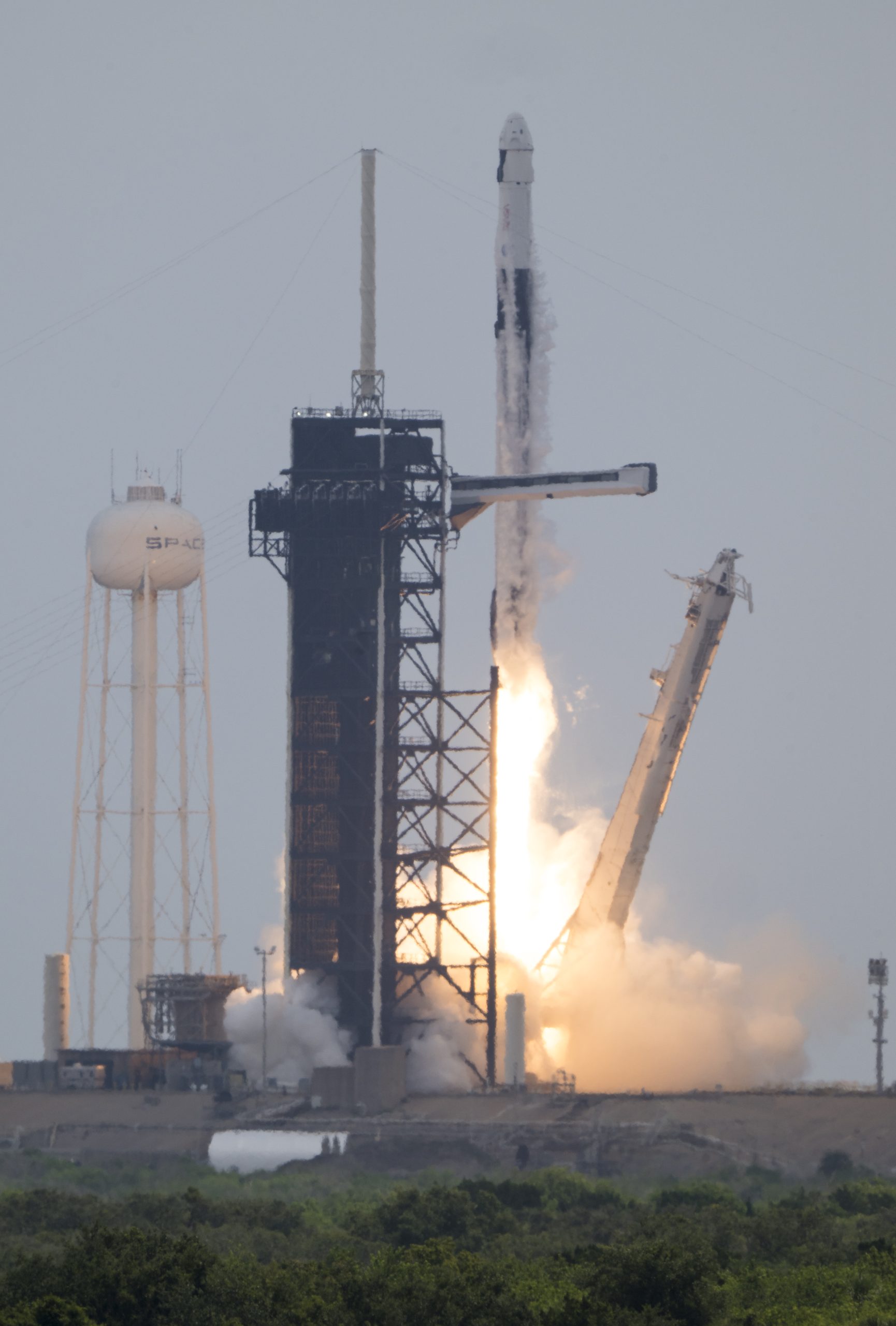
CAPE CANAVERAL, Fla. — Four crew members of NASA’s SpaceX Crew-11 mission, led by the Williamsburg area’s Zena Cardman, launched Friday for a science expedition aboard the International Space Station.
The launch, scrubbed Thursday due to weather conditions, launched at 11:43 a.m. from Launch Complex 39A at the agency’s Kennedy Space Center in Florida.
Cardman, who was previously assigned to NASA’s SpaceX Crew-9 mission, was reassigned to command the SpaceX Crew-11 mission in overall support of planned activities aboard the International Space Station.
Selected as a NASA astronaut in 2017, the 37-year-old is taking part in her first spaceflight. A 2006 Bruton High School graduate, she holds a bachelor’s in Biology and a master’s in Marine Sciences from the University of North Carolina at Chapel Hill, and at the time of her selection, she had begun pursuing a doctorate in Geosciences.
Cardman’s research in geobiology and geochemical cycling focused on subsurface environments, from caves to deep-sea sediments, NASA notes.
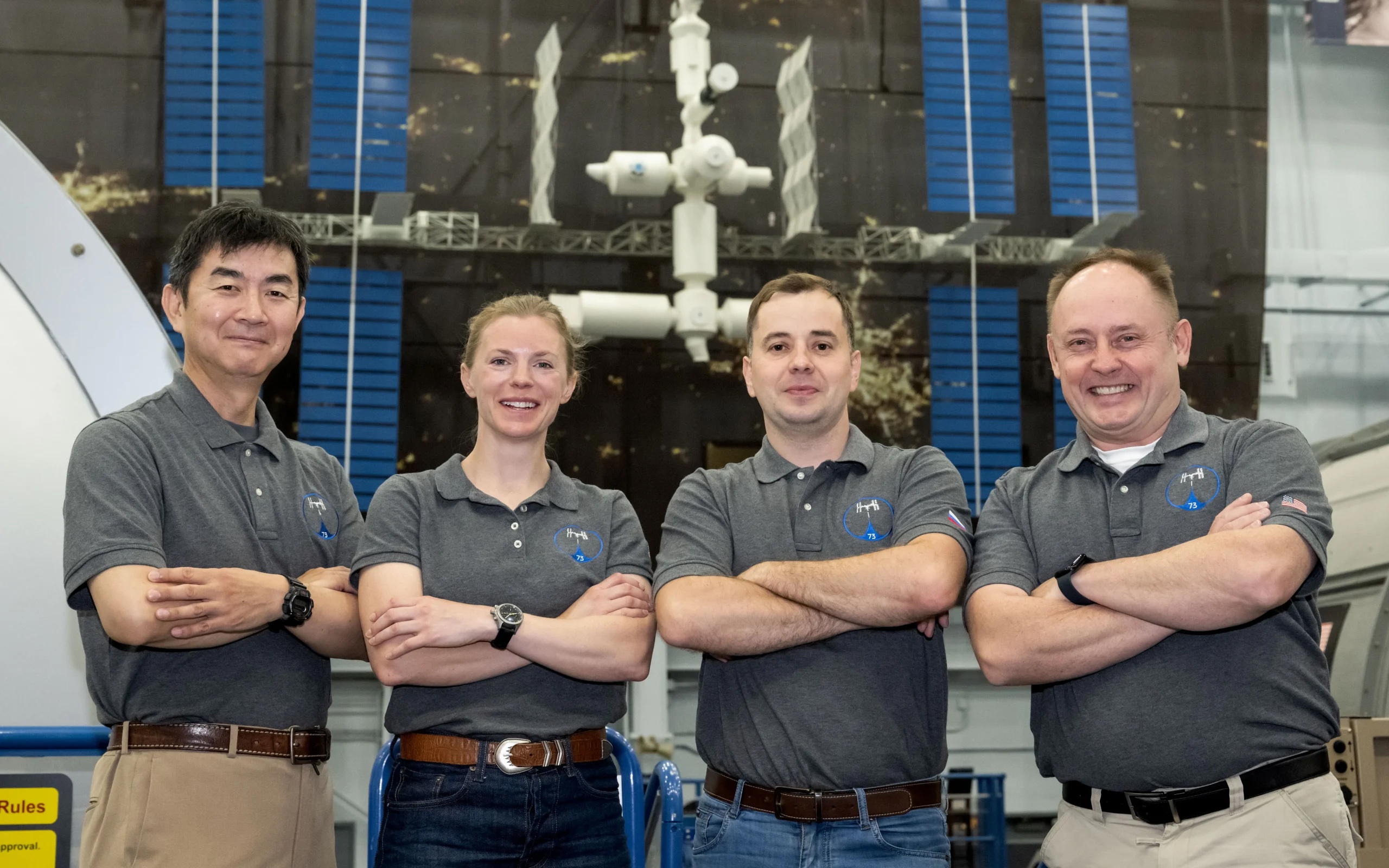
The SpaceX Falcon 9 rocket propelled the Dragon spacecraft into orbit, carrying NASA astronauts Cardman and Mike Fincke, Japan Aerospace Exploration Agency astronaut (JAXA) Kimiya Yui and Roscosmos cosmonaut Oleg Platonov. The spacecraft will dock autonomously to the space-facing port of the station’s Harmony module at approximately 3 a.m. on Saturday, Aug. 2, according to NASA.
“Thanks to the bold leadership of President Donald J. Trump, NASA is back! The agency’s SpaceX Crew-11 mission to the space station is the first step toward our permanent presence on the Moon. NASA, in conjunction with great American companies, continues the mission with Artemis in 2026. This Moon mission will ensure America wins the space race — critical to national security and leads in the emerging, exciting and highly profitable private sector commercial space business,” said acting NASA Administrator Sean Duffy.
“The Commercial Crew Program and Artemis missions prove what American ingenuity and cutting-edge American manufacturing can achieve. We’re going to the Moon … to stay! After that, we go to Mars! Welcome to the Golden Age of exploration!” he added.
During Dragon’s flight, SpaceX will monitor a series of automatic spacecraft maneuvers from its mission control center in Hawthorne, California, the agency said. NASA will monitor space station operations throughout the flight from the Mission Control Center at the agency’s Johnson Space Center in Houston.
NASA’s live coverage will resume at 1 a.m., Aug. 2, on NASA+ with rendezvous, docking, and hatch opening, it added. After docking, the crew will change out of their spacesuits and prepare cargo for offload before opening the hatch between Dragon and the space station’s Harmony module around 4:45 a.m. Once the new crew is aboard the orbital outpost, NASA will provide coverage of the welcome ceremony beginning at approximately 5:45 a.m.
Learn how to watch NASA content through a variety of platforms, including social media.
The number of crew aboard the space station will increase to 11 for a short time as Crew-11 joins NASA astronauts Anne McClain, Nichole Ayers, and Jonny Kim, JAXA astronaut Takuya Onishi, and Roscosmos cosmonauts Kirill Peskov, Sergey Ryzhikov, and Alexey Zubritsky.
NASA’s SpaceX Crew-10 will depart the space station after the arrival of Crew-11 and a handover period. Ahead of Crew-10’s return, mission teams will review weather conditions at the splashdown sites off the coast of California prior to departure from station, NASA said.
Crew-11 is slated to conduct scientific research to prepare for human exploration beyond low Earth orbit and benefit humanity on Earth, according to the agency. Participating crew members will simulate lunar landings, test strategies to safeguard vision, and advance other human spaceflight studies led by NASA’s Human Research Program. The crew also will study plant cell division and microgravity’s effects on bacteria-killing viruses, as well as perform experiments to produce a higher volume of human stem cells and generate on-demand nutrients.
The mission is part of NASA’s Commercial Crew Program. Learn more at nasa.gov/commercialcrew.

