


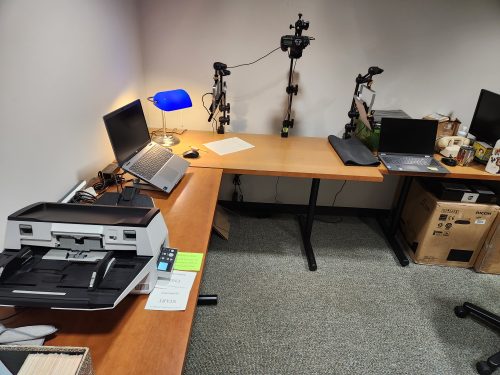
WILLIAMSBURG — Colonial Williamsburg’s John D. Rockefeller Jr. Library is digitizing the York County Project of over 800,000 court record entries from 1633 to the early 1800s — including nearly 80,000 referencing enslaved individuals — in partnership with Ancestry.com.
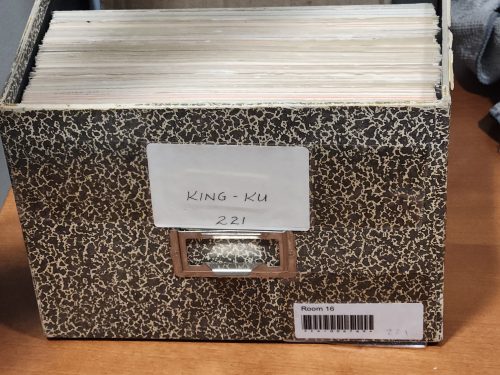
The effort was launched by Executive Director Emily Guthrie shortly after she started working at the library in spring of 2024. When she arrived, she had been told about a project with what was thought to be about 800,000 index cards stored in the library’s basement. Guthrie had worked on a similar project on a smaller scale at a library in Delaware.
The York County Project, described as a database of a biography-based study of urbanization in York County, examined the pre-urban population characteristics of York County, as well as the growth and development of Yorktown and Williamsburg to 1775. The study was begun in the late 1970s and continued through the mid-1980s.
The project was pitched to Ancestry as something for them to digitize and post on its website. The library gets all of the master files back once Ancestry finishes organizing the data collection. In turn, the library also has a searchable database base to which it has been given a lifetime free subscription.
Library users will need an Ancestry subscription to access most of the collection offsite, but they are also welcome to come in and use it for free in the library. Guthrie notes a portion of the collection involves African-American history and Ancestry has a policy to host that portion of the collection for free, so there’s no subscription needed to access it.
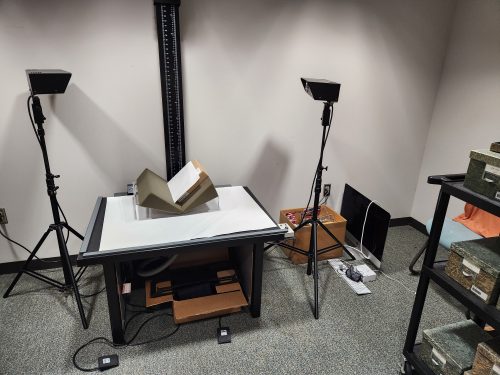
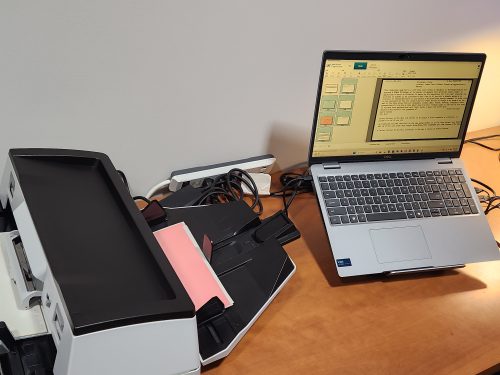
The digitization process is being performed by Brian Holcomb., a former volunteer and intern at the library who was hired by Ancestry to do the scanning. Ancestry set up the equipment for digitization and Holcomb started working on the project on March 19.
Holcomb scans the cards into the database by picking up a stack and feeding it through the machine, mindful of any defects in the physical cards or in how the scan turns out. He said he can run about 1,000 cards every half hour if he doesn’t have to stop for defects. He then sends Ancestry batches of data every two weeks, which contain about 20 boxes worth of scans.
Ancestry manually transcribes the scans into its database, according to the library. Rather than relying on machines to transcribe, the staff at Ancestry does it themselves so accuracy can be ensured.
“Some of these [cards] never got typed,” explained Holcomb. “They’re completely handwritten and they’re in all different types of hands because of how many people are involved.”
Based on his current pace, Holcomb estimates he should be finished digitizing by sometime in September.
To learn more about Colonial Williamsburg’s Digital Collections, visit the official website.

