


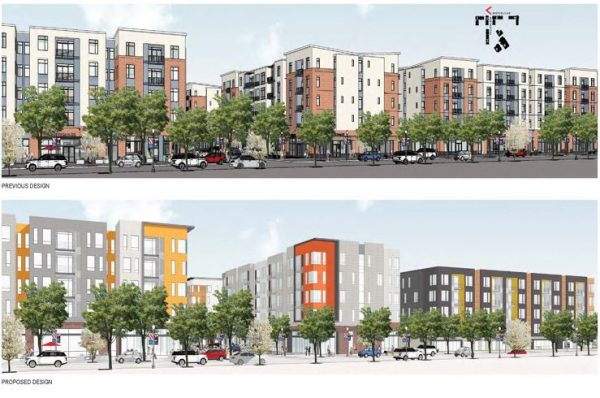
Williamsburg city planners voted 4-3 Wednesday to recommend a proposed overhaul of the Williamsburg Shopping Center.
“This is the sort of thing that we envisioned for this area,” Planning Commission Chairwoman Sarah Stafford said. “This is an area that right now, that’s not the most attractive. I think a different kind of look is the right way to go.”
The developer, Broad Street Realty, requested the city change zoning ordinances and recommend approval of a special use permit to City Council. The firm plans to redevelop the Williamsburg Shopping Center with taller buildings, more retail space, housing space, parking, and student housing.
Planners voted 4-3 to approve a special use permit for the development. Planners voted 5-2 to change the zoning ordinance to allow for certain requests by the developer.
Broad Street Realty’s preferred plan for the 58-year-old shopping center on the corner of Richmond Road and Monticello Avenue calls for buildings as tall as 66 feet, a 140-room hotel, 624 beds in 240 residential units, and 380,000 square feet of residential and retail space, according to city documents.
Broad Street Realty CEO Michael Jacoby said his company wanted to make the Midtown area feel more like a destination.
“If you look around town, and if you look around the country, our general feeling is that we’re looking to make a place,” Jacoby said Wednesday. “You have to have an interesting place to live, to eat, to shop. It has to have green features. It has to have open space.”
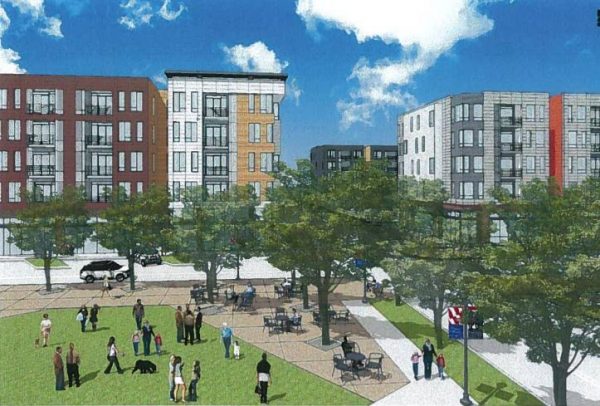
The proposal has drawn criticism from the residents, who claim Williamsburg must keep its historic “charm.” More than half of the public speakers at the planning commission meeting derided the height of the proposed development as well as the project’s styling.
One city resident, Nancy Canning, called the project an “alien implant on a charming colonial city.”
“I consider the Williamsburg Shopping Center as part of my neighborhood and I am invested in its future,” Canning said. “The essence of Williamsburg is its charm, its timeless elements, its colonial character…The buildings as proposed are too high, with a metallic quality, garish primary colors and a prison-like gray that looks depressingly ugly and is doomed to be outdated.”
City resident Betsy Anderson said she didn’t like the colors of the proposal, likening it to a “Howard Johnson’s.”
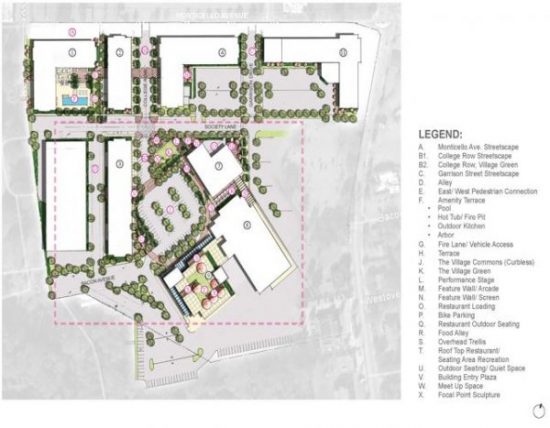
The redevelopment also calls for a public plaza, landscaped pedestrian boulevards, wide sidewalks, dedicated bike lanes, as well as a two-story parking garage, according to city documents. The developer has made it clear it plans to host student renters at the new shopping center.
The city has paired such mixed-use developments with student housing in the past — at the Prince George Commons and City Lofts. The two housing projects both focused on student housing and retail space.
The developer said they’d have to follow fair housing guidelines, but were looking to cater to students.
“Technically, anybody can live there,” Jacoby said. “But the units and the leasing program are designed for students.”
The College of William and Mary has said it isn’t looking to partner with the developer for off-campus student housing at this point, according to college spokeswoman Suzanne Seurattan.
“William & Mary has great interest in a thriving Williamsburg, and the Midtown redevelopment will add to the city’s vitality,” Seurattan said. “Though nearly 75 percent of undergraduates live in campus housing, roughly a quarter have off-campus living arrangements. It’s in the university’s best interest to have quality housing options available near campus for those students.”
Some residents questioned whether or not the proposal could survive, even with the influx of students.
“Look at High Street. Look at New Town,” Cindy Bowser said. “Look at all these empty retail spaces. What happens if this thing fails? Are the developers responsible for this? No. They are just going to sell it off and then here we are all over again.”
Ace Hardware store owner Terry Deaver, whose business has been located in the shopping center for 28 years, disagreed.
“You talk about what if it fails, as far as I’m concerned, it’s failed right now,” Deaver said.
Planners indicated the proposal’s passing came down to the needs of the city. The opportunity to house many students in the multi-use development would preserve the character of the surrounding neighborhoods: a goal of the city’s Goals, Initiatives, and Outcomes.
“We do need to accept density is part of this new urbanism,” Stafford said. “That’s what people want, and we seem to have a really good place to put it.”
The development proposal will go before City Council at a later date.
Related coverage:

