


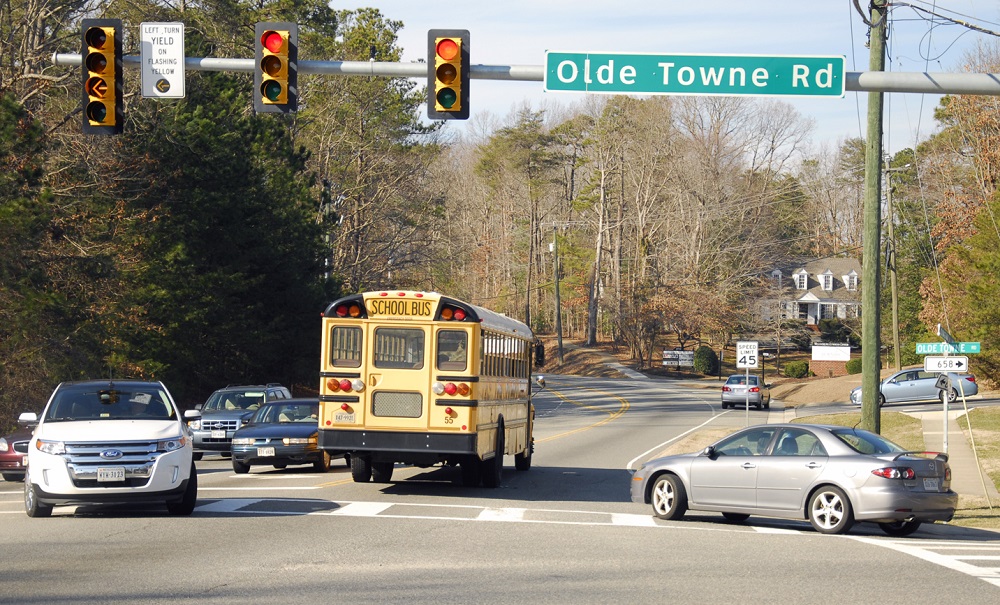
A fourth middle school is the big-ticket item in Williamsburg-James City County Schools’ budget for next year, but a smaller proposed expenditure would have a daily effect on more than 6,000 students.
Superintendent Steve Constantino included more than $1 million for new school buses in his proposed capital improvement plan for Fiscal Year 2016, which begins July 1. The CIP outlines large-dollar expenditures for the school division.
The $1,050,291 suggested in the CIP would purchase nine new school buses at a cost of about $100,000 per bus. WJCC follows state recommendations on bus service life, which suggests retiring buses after 15 years or 150,000 miles of service.
Projected through FY 2020, the CIP includes $5,576,138 for the purchase of 45 new school buses, or nine each year.
WJCC Senior Director for Operations Marcellus Snipes said the school division currently uses 123 buses for its daily operations, with 11-12 older or high-mileage buses kept in reserve to fill in when needed.
Snipes said each WJCC school bus traveled about 19,000 miles annually, which is about 105 miles per day. The division’s most recent statistics indicate about 63 percent of the 11,116 students in WJCC rode buses to school.
WJCC currently uses a “smooth replacement plan,” which replaces a pre-determined number of buses annually, rather than changing the figure from year to year.
“We don’t want a roller coaster effect,” Snipes said.
Snipes said the system allowed the school division to regularly upgrade its fleet, and was an achievable financial goal for WJCC’s two major sources of funding – James City County and the City of Williamsburg.
Although the purchase of new buses is not opposed by the School Board, some members have been vocal about the current state of WJCC’s fleet.
Heather Cordasco (Roberts) has pointed to additional school buses as one of the pressing issues facing the division.
Snipes said WJCC’s current fleet of 123 regular buses was determined by two main factors: the geographic size of the division, and the financial resources available to it.
“We’re more spread out than some other divisions,” Snipes said. “Some other divisions have neighborhood schools and don’t have to bus students; we don’t have those.”
Cordasco said the largest drawback from the size of the division’s fleet was limiting WJCC students’ access to regional programs, like the New Horizons Regional Education Center and governor’s school.
Increasing the number of buses in the fleet, Cordasco said, would allow more students to travel to the programs located beyond their schools.
Additional buses could also allow for a reconfiguration of the division’s current three-tier busing system. That system splits schools into tiers based on start- and end-times, staggering when students need bus service each day so that not all of the schools require it at once.
The school division has assembled a task force to study the possibility and effects of altering the current system, but Cordasco and Snipes said any alterations could affect other school operations, like block scheduling and class meeting times.
Snipes added switching from a three-tier system to a two-tier system would require more buses to be feasible, but did not provide a specific number.
“Divisions with double-digit schools usually don’t have two-tier schedules,” he said.
WJCC currently includes 15 schools.
Any additional buses beyond the nine included in the CIP would require the division to find extra money to fund a purchase.
The School Board is scheduled to adopt the superintendent’s proposed budget at its March 23 meeting. James City County and Williamsburg will approve their own budgets – including appropriations to the schools – in May.
