


Americans sitting down to dinner today will be feasting on a tradition that stretches back before the foundation of the nation.
The U.S. holiday was not marked officially on a regular basis until a proclamation by President Abraham Lincoln in 1863, but Americans and their colonial predecessors have long-celebrated a plentiful end to the fall season with a festive meal.
“Every agriculture society, through the dawn of history, has had some sort of harvest celebration,” said Cindy Daniel, acting interpretive site manager for the Jamestown-Yorktown Foundation, which oversees Jamestown Settlement and the Yorktown Victory Center.
Rodney Diehl, pastry chef for Colonial Williamsburg, said the way meals are cooked might have evolved, but not much is different in what goes on the table.
“Really the only thing that’s changed is our equipment and how we heat it,” he said. “Recipes are timeless.”
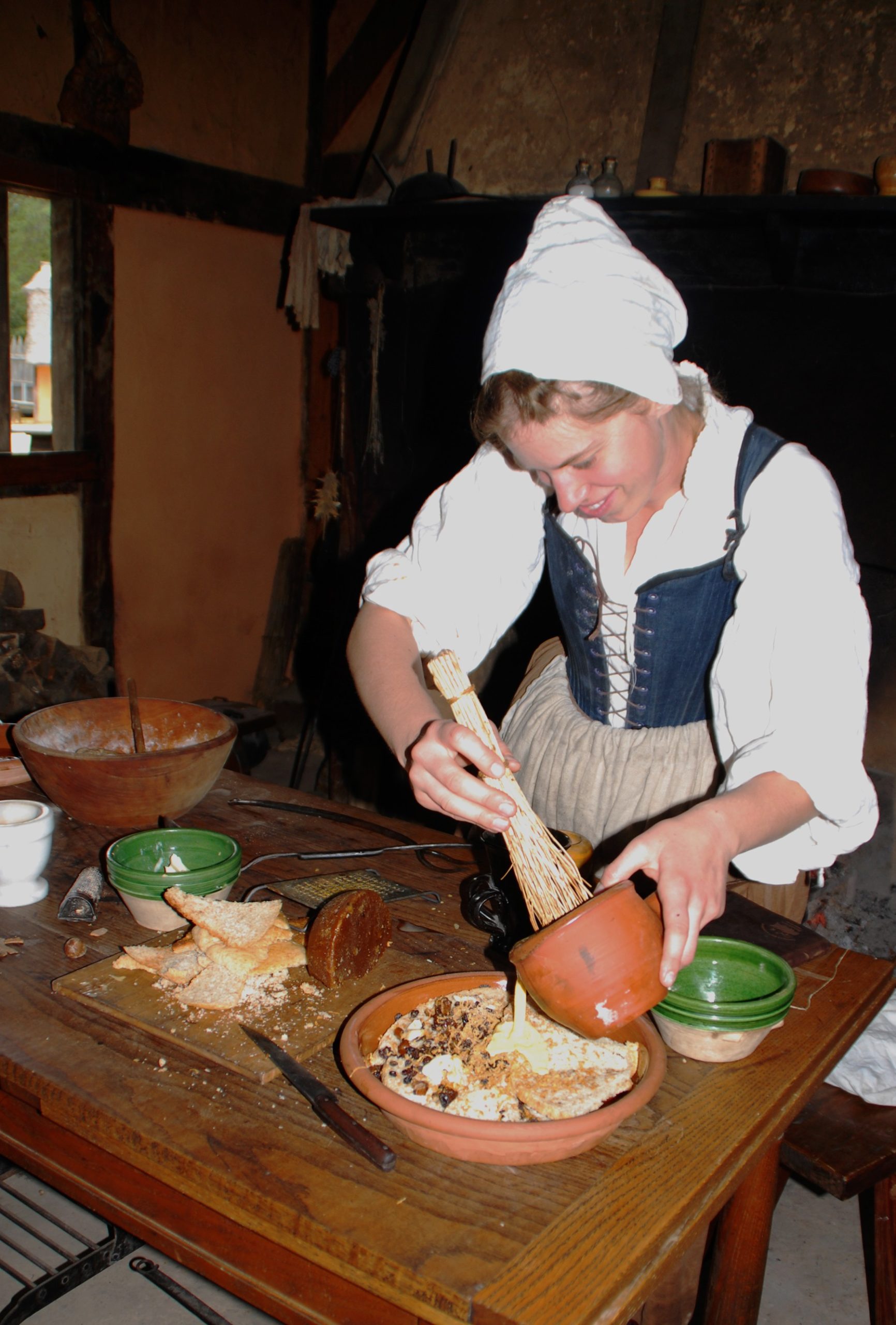
Rather than a modern stovetop and oven, colonists would rely on hearth cooking in one large pot or roasting meat on a spit. Bread would have been a major staple, as a way to fill up diners, to be joined with local supplies and what could easily be imported.
[stextbox id=”news-sidebar” float=”true” width=”280″ bgcolor=”ddd9dd”]
Want to learn more?
“Food & Feasts of Colonial Virginia” explores cooking and preservation methods at Jamestown Settlement and Yorktown Victory Center, today through Saturday. New this year, sample tastings of historical dishes will be available Friday and Saturday as supplies last.
The Jamestown Settlement Café also will also offer a Thanksgiving dinner today.
Admission is free for residents of the Historic Triangle, including College of William & Mary students, with proof of residency. Click here for hours and program information.
[/stextbox]
Daniel notes JYF’s annual “Food & Feasts of Colonial Virginia” event – starting today and running through Saturday at both sites – does not focus on the “starving time” in the winter of 1609 and 1610, when settlers turned to cannibalism to survive as food supply ships were slow to arrive from England. Instead, interactive history programs look at when Jamestown had good fortune and how they gave thanks.
“One of the big points that we always make at that museum is that the English brought their customs and their cultures with them,” Daniel said.
She sees the study of food history, along with the hands-on events at Jamestown Settlement and Yorktown Victory Center, as ways to connect with people of the past. Even as food changes, Daniel said, it remains a part of life – every day and during special moments like Thanksgiving – and provides insight and an emotional bond to earlier eras.
“The thing about food is that everyone pretty much has a unique relationship with food. It’s more than just sustenance,” she said. “Food means comfort and it means home. It can mean family and community.”
Turkey
Unlike today, turkey would not have been the main attraction of colonial meals of gratitude.
Daniel said the English brought farm animals with them – chicken, goats and hogs – and pork was a typical protein. They did some fouling, but the Virginia Company did not spend much of its time hunting and fishing.
[stextbox id=”news-sidebar” float=”true” align=”right” width=”280″ bgcolor=”ddd9dd”]
Recipe for “Minc’t Pie,” from Gervase Markham’s “The English Hus-wife,” 1615
“Take a Legg of Mutton, and cut the best of the flesh from the bone, and parboyle it well: Then put to it three pound of the best Mutton suet, and shred it very small; then spread it abroad, and season it with Salt, Cloves, and Mace: Then put in good store of Currants, great Raisins, and Prunes, clean washed, and picked, a few Dates sliced, and some Orange pills sliced; then being all well mixt together, put it into a Coffin or into divers Coffins and strow store of Sugar on the Top of the Meat, and upon the Lid. And in this sort, you may also bake Beef or Veal, only the Beef would not be parboyl’d and the Veal will ask a double quantity of Suet.”
[/stextbox]
Powhatan Indians would have been doing the hunting, and enjoying turkey cooked over an open fire.
“Pies are really big,” Daniel said of the English settlers’ cuisine. “This is really a time for pastry of all sorts, sweet or savory.”
Often, recipes called for a combination of the two, joining fruit and meat in a vessel that was edible and functional as a serving dish. Dessert pies might also bring marrow – Jamestown Settlement substitutes butter in its recreations – into the mix.
Daniel notes the legacy in the holiday’s cranberry sauce, essentially a stewed fruit, paired with turkey today.
“We don’t see this kind of serving meat with fruit, meat paired with fruit, on our modern menus, other than at Thanksgiving,” she said.
Fruits could be apples, which were grown in Virginia or sturdy enough to survive an overseas voyage, or others that could be shipped dry, like raisins, prunes or currants.
“The concept of preservation actually drove cuisine a great deal,” said Executive Chef Rhys Lewis from Colonial Williamsburg. To extend the shelf life of many ingredients, they would have been cooked down or dried for eating, or fermented or distilled for drinking.
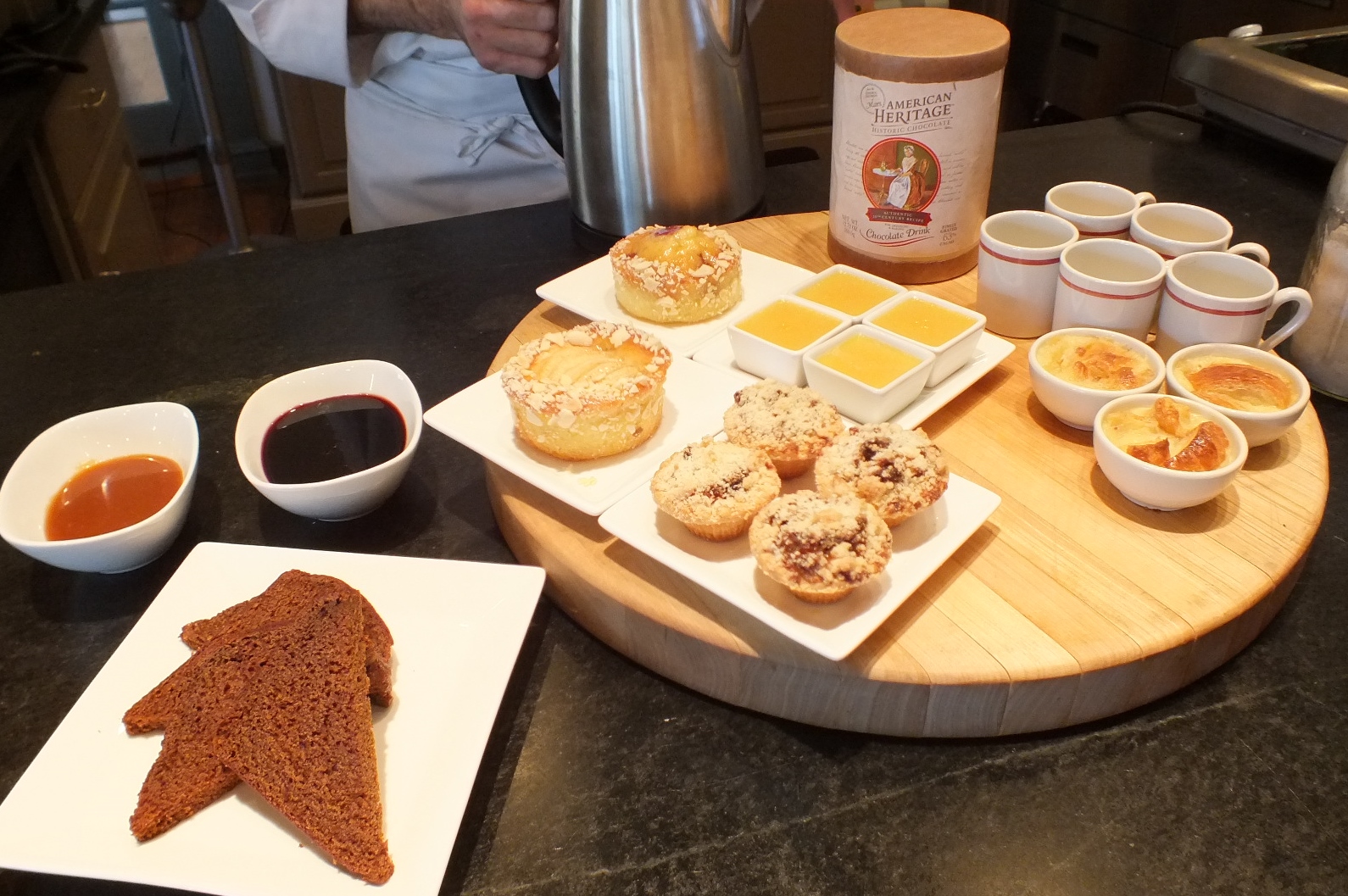
Day-old bread would have been used in bread pudding, while leftover fat and meat from the cow would be combined with fruit, spices and some type of spirits to make mincemeat.
“Over the ears, the fat and the beef parts disappeared, but everyone enjoyed the citrus taste and the nuts,” said Diehl, so the name remained without the meat. Either way, a mincemeat pie would have served as a main dish.
Sides
The English had palates like children today, Daniel said, favoring meat and sugar. When they did eat vegetables, the produce would often be cooked, which was believed to be safer for consumption.
Carrots or onions would be cooked down, typically with a mix of apples, currants and spices, to be eaten on toast.
Salads might also find a place on the table. Their ingredients carried meaning as well as nutrients – elements traditionally symbolized an idea, such as beets representing merriment.
“You may be telling a story with it as much as it’s something that tastes good together,” Daniel said.
Beverages
Preservation had a large influence on the drinks colonists imbibed, during the holidays and otherwise. Apples became cider, other fruits became alcoholic punches or wassail, and grain could be brewed for beer or distilled for harder alcohol. That way farmers could avoid mold in a humid climate destroying piles of grain, pushing its expiration date back by months.
[stextbox id=”news-sidebar” float=”true” align=”right” width=”280″ bgcolor=”ddd9dd”]
Williamsburg Lodge White Chocolate Bread Pudding with Apple Cider Caramel Sauce, 12 servings
Ingredients:
- 1 croissant, day old, cut into 1/2 inch cubes
- 3 cups whole milk
- 5 oz. white chocolate
- 6 Eggs
- 1 cup Sugar
- 2 oz butter
- 1 Tbsp. Vanilla
- 1 tsp. Cinnamon
- 2 cups Heavy cream
- 1/4 cup Crème de Cocoa
- Sugar for coating
Method
- Spray the 9” by 13” pan with pan spray and coat it with sugar.
- Heat the milk to a simmer then pour the warm milk over the white chocolate and butter to melt the chocolate.
- Mix the cinnamon with the sugar then add eggs, to this add the milk and chocolate mixture then add the vanilla, crème de cocoa and heavy cream
- Pour the flan filling over the bread mix and let set soak 1 hour or overnight.
- Then bake in a water bath in a 350° oven and bake until golden brown about 1 hour.
Apple Caramel Sauce, makes 2 cups
Ingredients:
- 8oz Apple Cider
- 1 tablespoon Lemon juice
- 16oz Sugar
Method
- In a heavy bottom sauce pan combine the apple cider, lemon juice and the sugar.
- Heat on medium high until the mixture reaches 260 degrees or a deep caramel color.
- Brush the side of the pan with water to wash down the sugar to prevent crystallization.
- Avoid the temptation to taste the sauce until it cools adequately.
- Add additional apple cider if needed to adjust the consistency of the final sauce.
[/stextbox]
Although lacking in alcohol, hot chocolate was also a beverage drank by early settlers.
Less sweet than the modern version, and including spices like cinnamon and red chili with dried orange zest, the process to make hot chocolate was painstaking. Cocoa beans had to be milled, or ground, by hand on a stone before blending with water and other flavors, making chocolate in any shape relatively costly.
In those times, Lewis said, drinking chocolate was more common than eating it in bar form, nothing like the wall of candy bars one might find at a convenience store today.
“There’s probably more chocolate than anyone in the 1700s would see in their lifetime,” Lewis said.
Desserts
Thanksgiving is a time for comfort food, Rhys said, and one when many Americans treat themselves to desserts that remain memorable long after thoughts of turkey have faded.
One sweet autumn staple would have been popular with settlers: pumpkin pie. Daniel said pumpkins and sweet potatoes, grown in the New World, were a big hit with the English and would have been cooked in a similar manner to today, though the dish would have been called a pudding, not a pie.
