


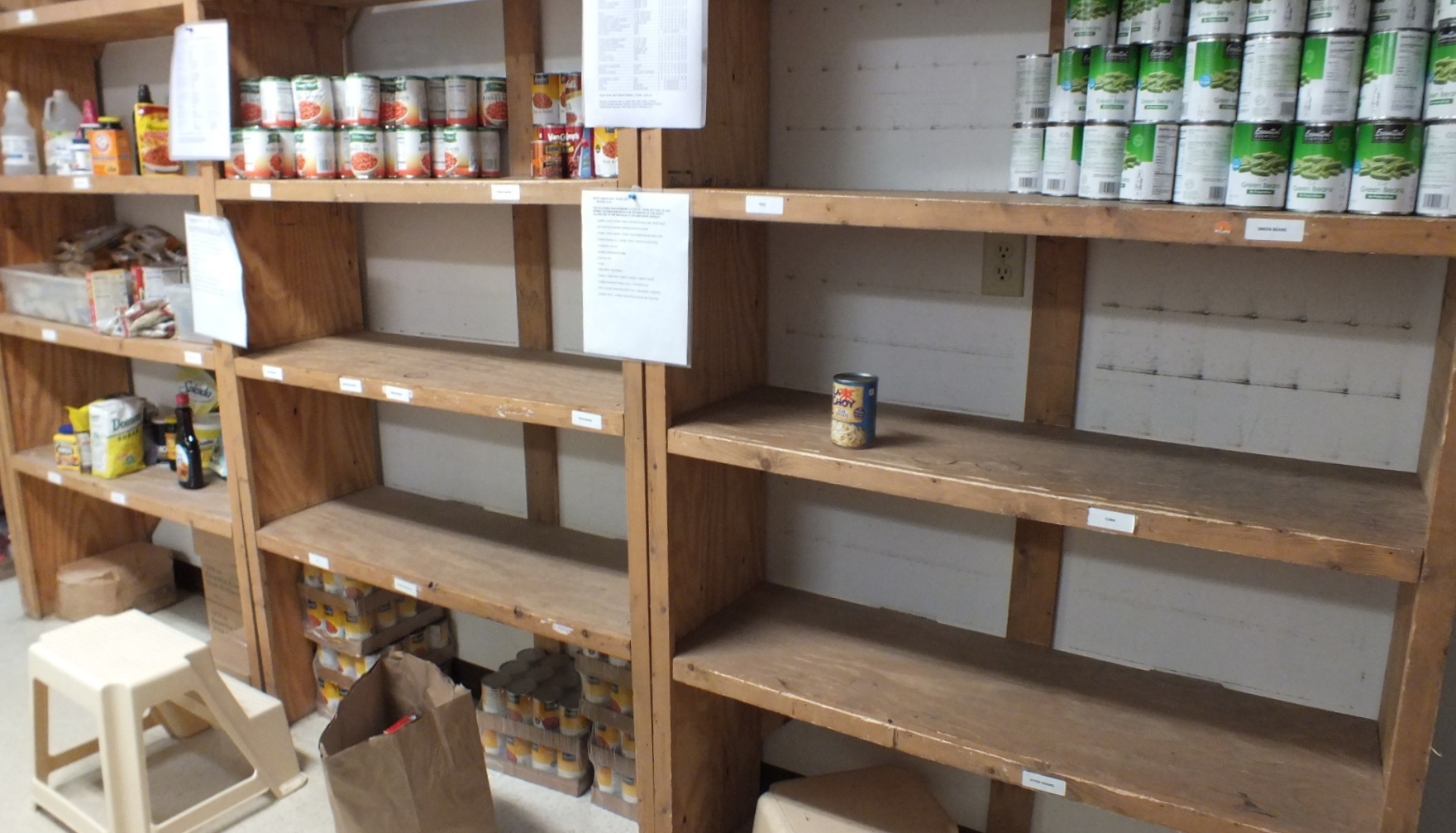
Labels remain to mark the empty shelves where columns of canned corn once towered in the FISH food pantry. Gaps between boxes clamor to be filled with the donations that did not come.
Gene Bruss – a volunteer at the organization which serves the community with food, clothes, housewares and hygiene needs – frantically bags groceries for clients referred by the United Way and Community Action Agency.
But the requests are coming in more quickly than the supplies to keep up.
Bruss blames the season for the lack of food contributions to stock the pantry.
“As Christmas and Thanksgiving approach, everyone comes out of the woodwork with donations,” he said. “Summertime, not so much.”
Billie Johnston, the director of the all-volunteer nonprofit, expects donations to swell around Halloween and through the holidays. In the meantime, she said the demand is greater than the supply.

Both said donations have been up overall, but not enough to keep up with the increased need for sustenance.
From 2012 to 2013, the number of meals FISH provided increased from 132,270 to 158,100. Based on an average of 13,290 meals per month through August of this year, the organization is on track to top that total for 2014.
Food is given out based on the number of people in a household, with a nutrition-conscious checklist followed for filling brown bags.
“We’re trying to supply them the foods that are good for them,” Bruss said, adding the groceries are meant as a supplement to meet needs in an emergency situation.
Still, he sees many clients return month after month.
FISH purchases many of the staple food items – products like pasta and canned beans – from Farm Fresh. Those stocks are dwindling before new orders come in once a week, while deficits develop in other categories from the lull of outside donations.
Without community contributions, FISH must put more of its donation money toward purchasing food. Johnston has to contend with that need while keeping in mind rent payments for the space in the Historic Triangle Community Services Center.
And food is not the only area where FISH is facing shortage.
“We’re down on everything,” Johnston said, pointing to bare shelves for linens.
Clients used to be allowed to find outfits in the expansive clothing closet – where all items have been laundered, mended and organized by size – once every three months. Now they can only visit every four months, and shopping for housewares has been limited as well.
Johnston cannot fathom why this has been a particularly tough year for FISH.
“I really don’t know why, and I’ve been here a long time,” she said.
She has seen the organization since its start in 1975, in a small house without heat or air conditioning. Johnston remembers ducking to avoid light bulbs hanging from the ceiling.
Now FISH occupies part of Historic Triangle Community Services Center with space for a waiting area, the food pantry, aisles of clothing racks, shelves of housewares and a back office area.
To serve the thousands of requests they receive for food, clothing and goods, along with transportation assistance, FISH uses more than 300 local volunteers. It also relies solely on donations and grants for its funding, as it receives no government money to operate.
“We just thank the community for supporting us well, and without them we could not function,” Johnston said.
To see a list of the most needed supplies, visit the FISH website.
