


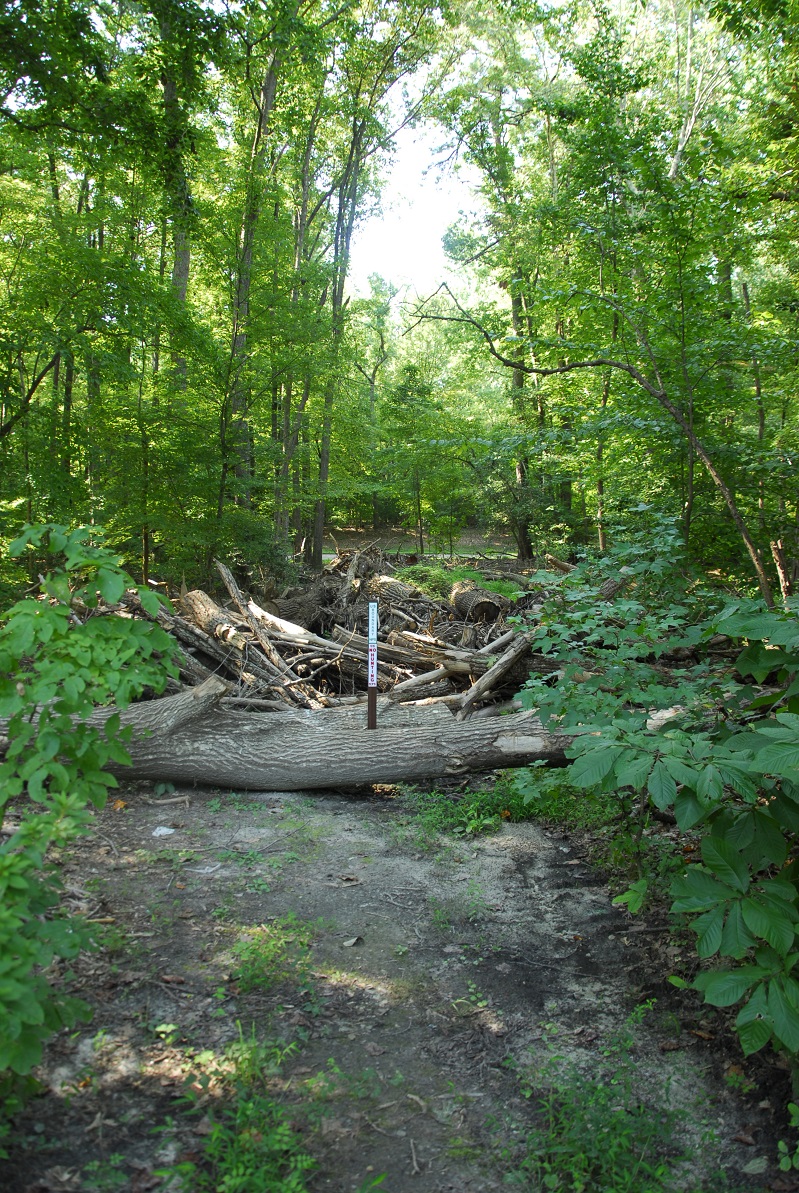
A small path that links Queens Lake with the Colonial Parkway is at the heart of a dispute between residents of the neighborhood and the National Park Service.
Residents are looking to have large piles of logs and other assorted debris, which currently fills the path, removed to allow access to the parkway and clear out what they say is an eyesore in their neighborhood.
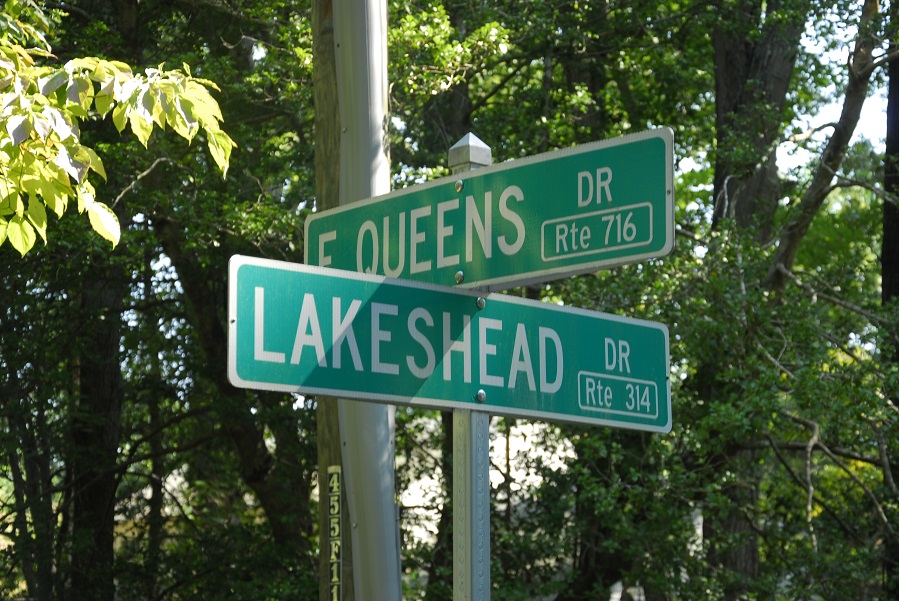
The path cuts from the intersection of Lakeshead Drive and E. Queens Drive through the wooded buffer that sequesters the parkway from its surroundings. The debris was dumped on the path by NPS in early spring, frustrating Queens Lake residents in a move NPS says is necessary to prevent illegal trespassing and the damaging of government property. NPS owns the entirety of the wooded buffer where the path currently exists.
Residents from the neighborhood spoke out during the citizens’ comment period of a York County Board of Supervisors meeting last week. Their comments blasted the appearance of the debris, with a few people saying the scene was embarrassing to the neighborhood. Five residents of the neighborhood spoke at that meeting.
Peter Forney, a member of the board of directors for the Queens Lake Community Association, said in a Tuesday interview with WYDaily that the problem is twofold.
“Our primary objective would be to get rid of the logs and just not have such an eyesore,” Forney said. He said the residents respect the natural beauty of the area and they want to preserve it.
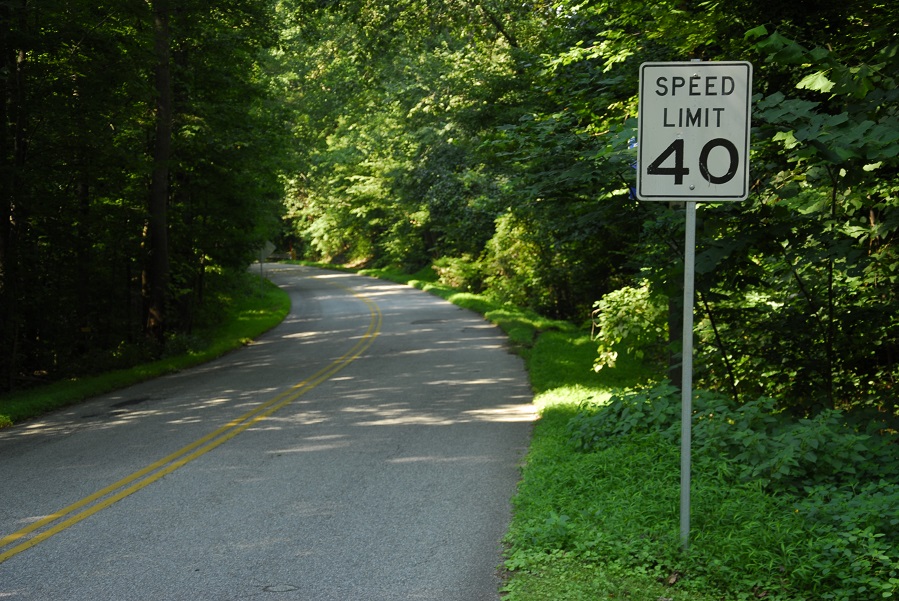
The other problem for the residents is one of access. Cyclists and pedestrians who use the path to access the Parkway must now access the parkway via Lakeshead Drive, a winding road with numerous blind spots, a 40 mph speed limit and no shoulder. Furthermore, cyclists and pedestrians from outside the neighborhood who are trying to access New Quarter Park — which is at the end of Lakeshead Drive — must now also use that road instead of the path, which dumps onto Lakeshead Drive near the entrance to the park.
“Lakeshead Drive is a fairly dangerous road,” said Judy McCormack, the chair of the beautification committee for Queens Lake. “It’s narrow, it’s winding, it’s not good for joggers.”
She said she wants to see the debris removed, and that she has contacted both Colonial National Historical Park and NPS in Washington, D.C. Queens Lake residents who spoke at the supervisors meeting, including McCormack, said they have tried to talk with NPS but have had little luck. Mike Byrd, a spokesperson for Colonial National Historical Park, said NPS has reached out to Queens Lake residents but they “never really got back with us.”
Byrd said the decision to block the path came after NPS officials discovered someone had cut down trees to widen the path. They also found trash and old tires on the path.
Now a plan is in motion to build a pair of fences to block access to the area — a crisscross wooden fence will be erected on both sides of the parkway, while a chain-link fence will be installed in the wooded buffer to further block access. Once that’s done, NPS personnel will woodchip the logs to clear the area out. He said work should begin to install the fencing within two to three weeks.
Because NPS owns the land, there is little that can be done without the organization’s permission.
“On most matters pertaining to the parkway, [Colonial National Historical Park Superintendent Dan Smith] has been pretty steadfast in his decision to either do something or not do something,” said York County Board of Supervisors Chairman Walt Zaremba, whose district encompasses Queens Lake.
The supervisors have not adopted a position on the issue, nor have they yet received any correspondence or communication from Queens Lake residents regarding the issue other than the remarks made during the citizens’ comment period.
Queens Lake, a 2002 and 2010 winner of York County’s “Neighborhood of the Year” award in the beautification category, is in Upper York County, where it is surrounded by government property on all sides — to the south is the parkway, to the east is New Quarter Park, to the north is Queen Creek and Camp Peary and to the west is Interstate 64.
