


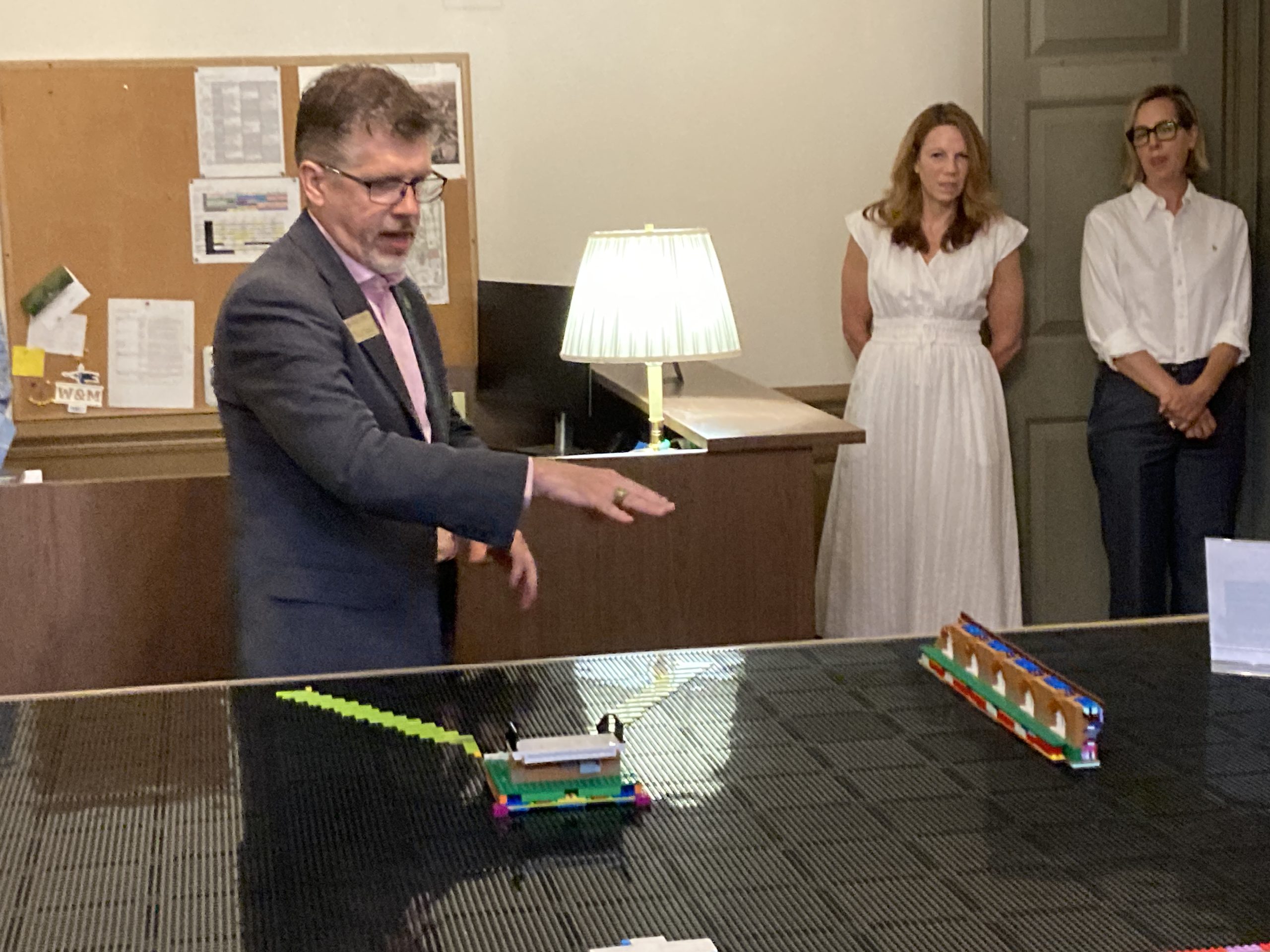
WILLIAMSBURG — A new long-term project at William & Mary will see members of the university community assist in constructing a large Lego model of the Sir Christopher Wren Building, the Brafferton and the President’s House.
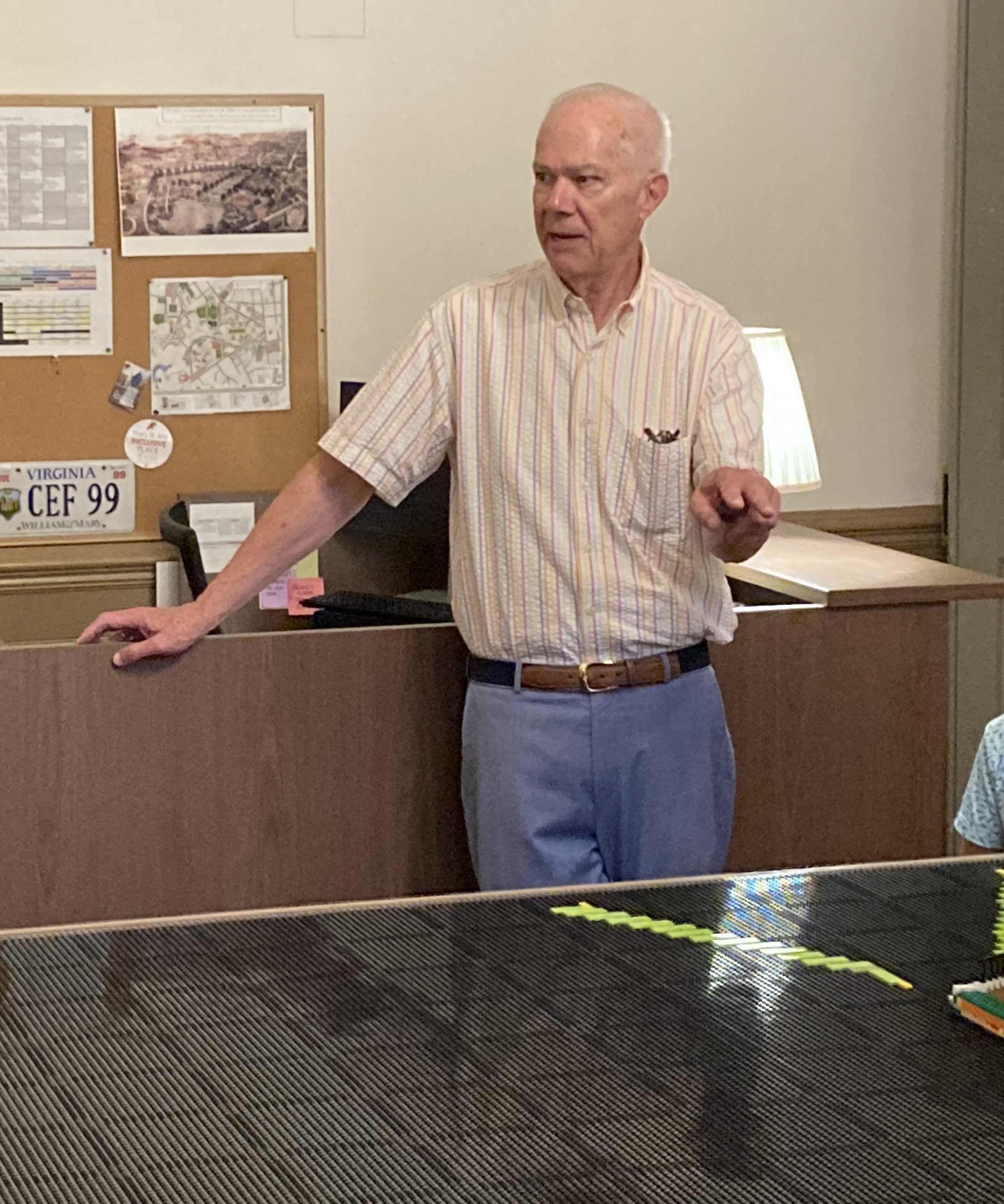
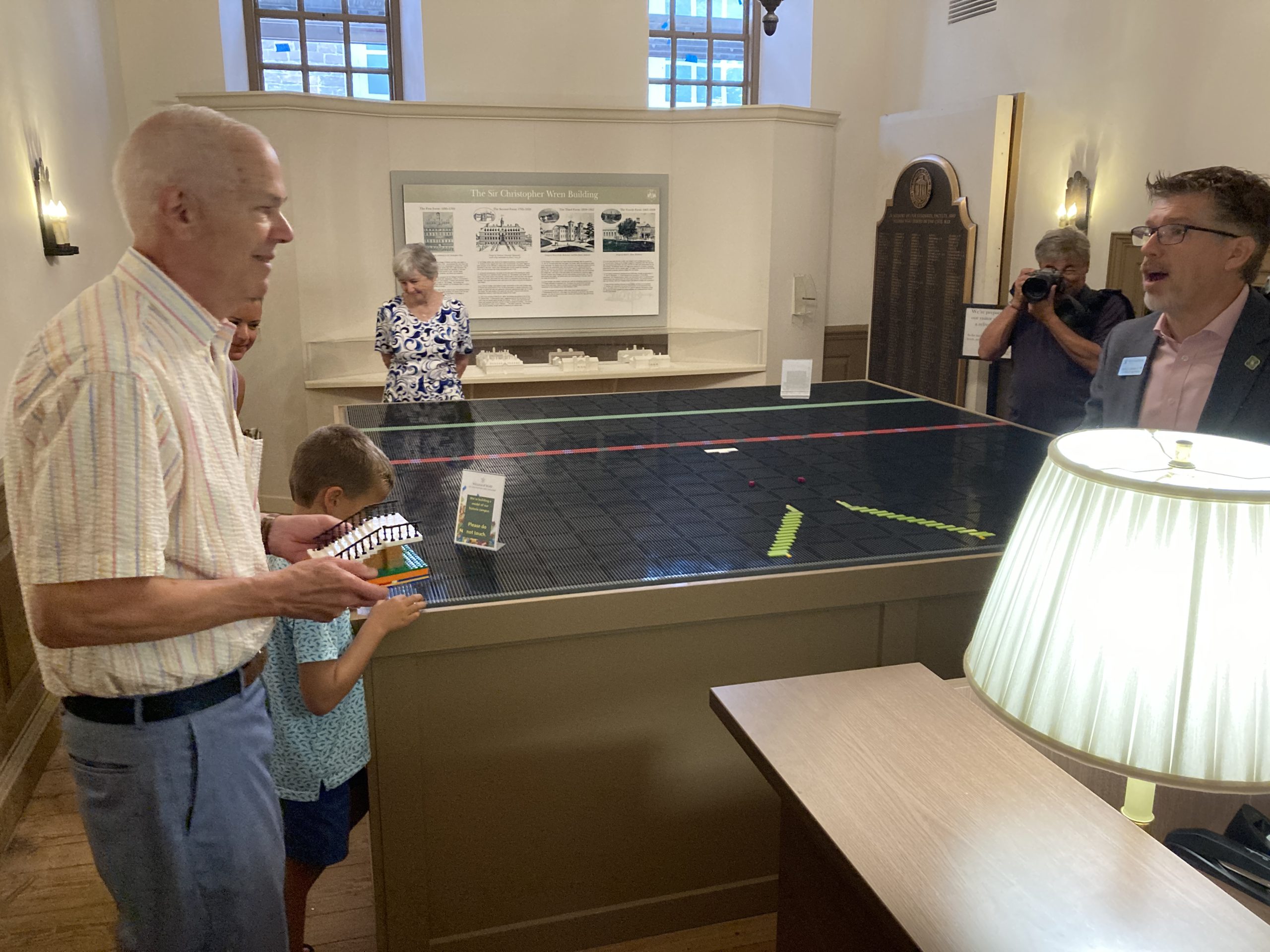
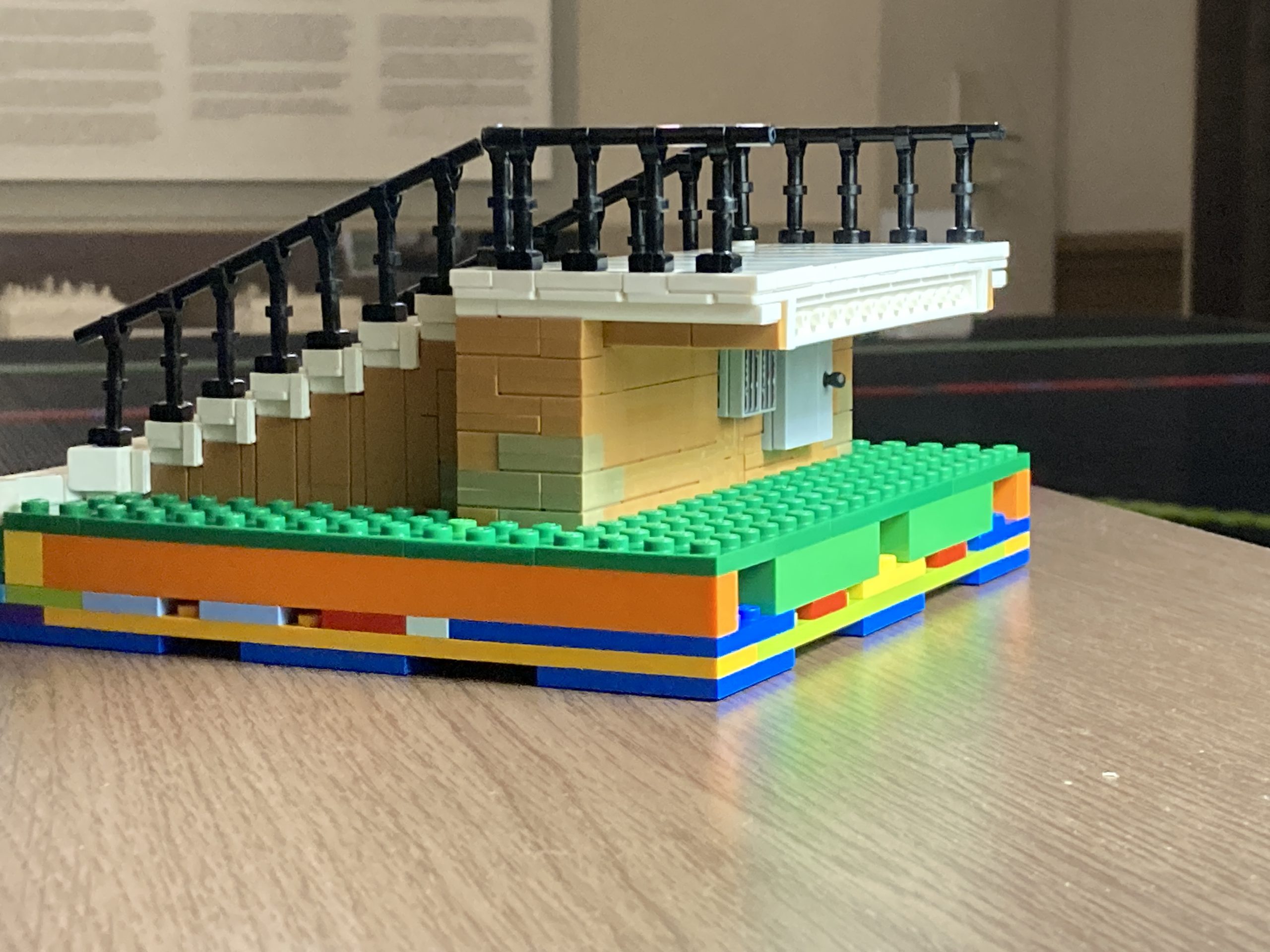
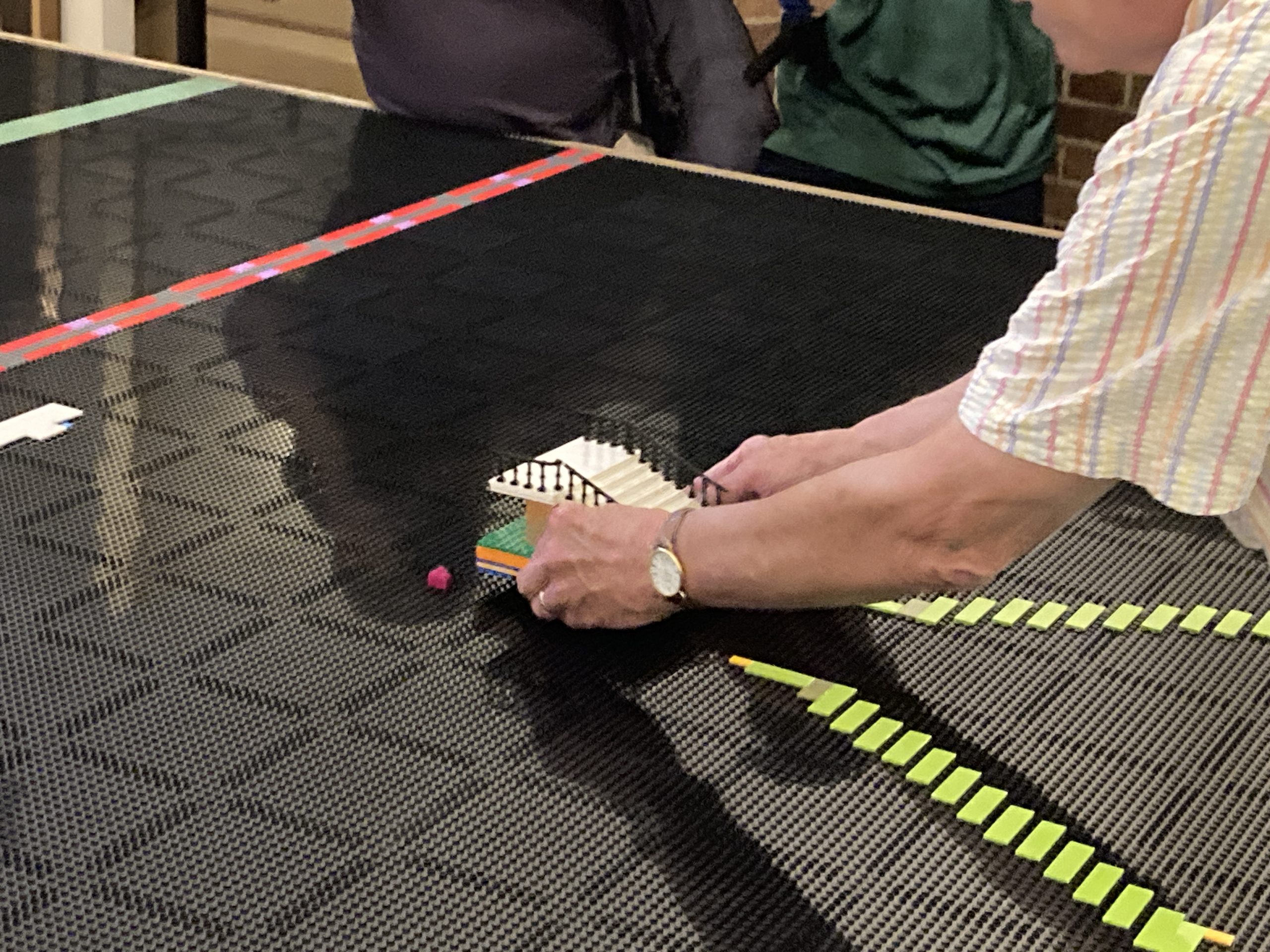
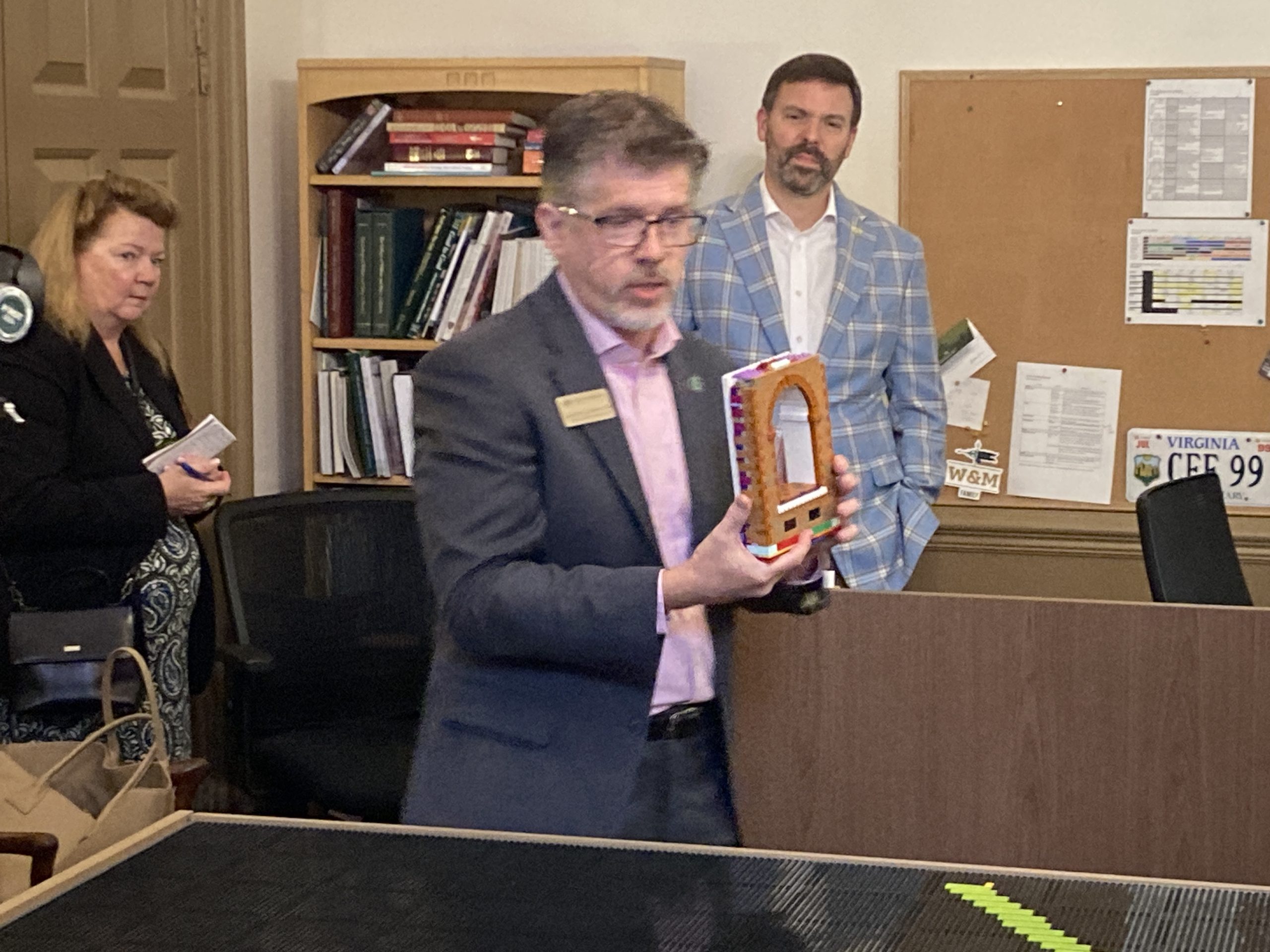
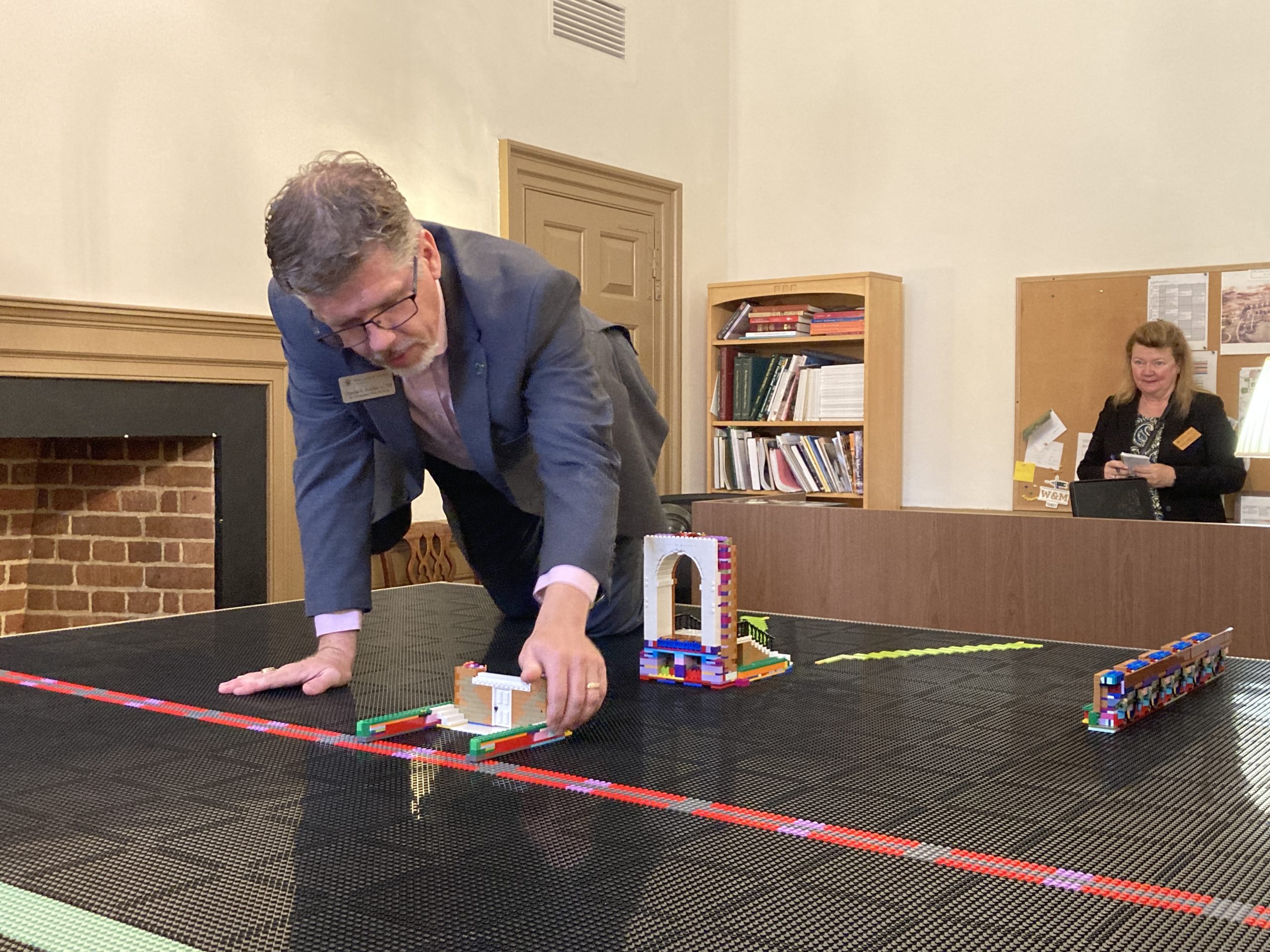
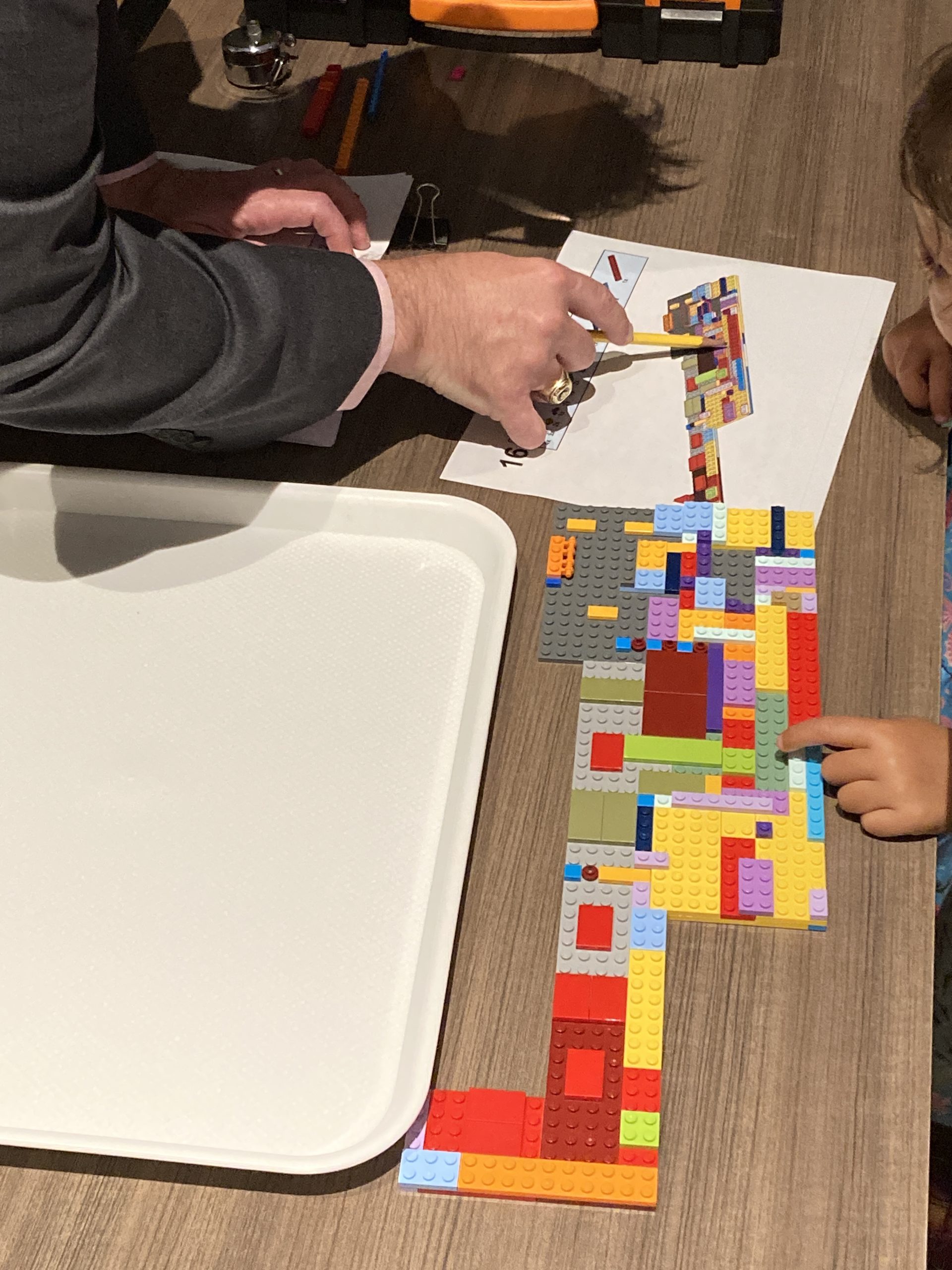
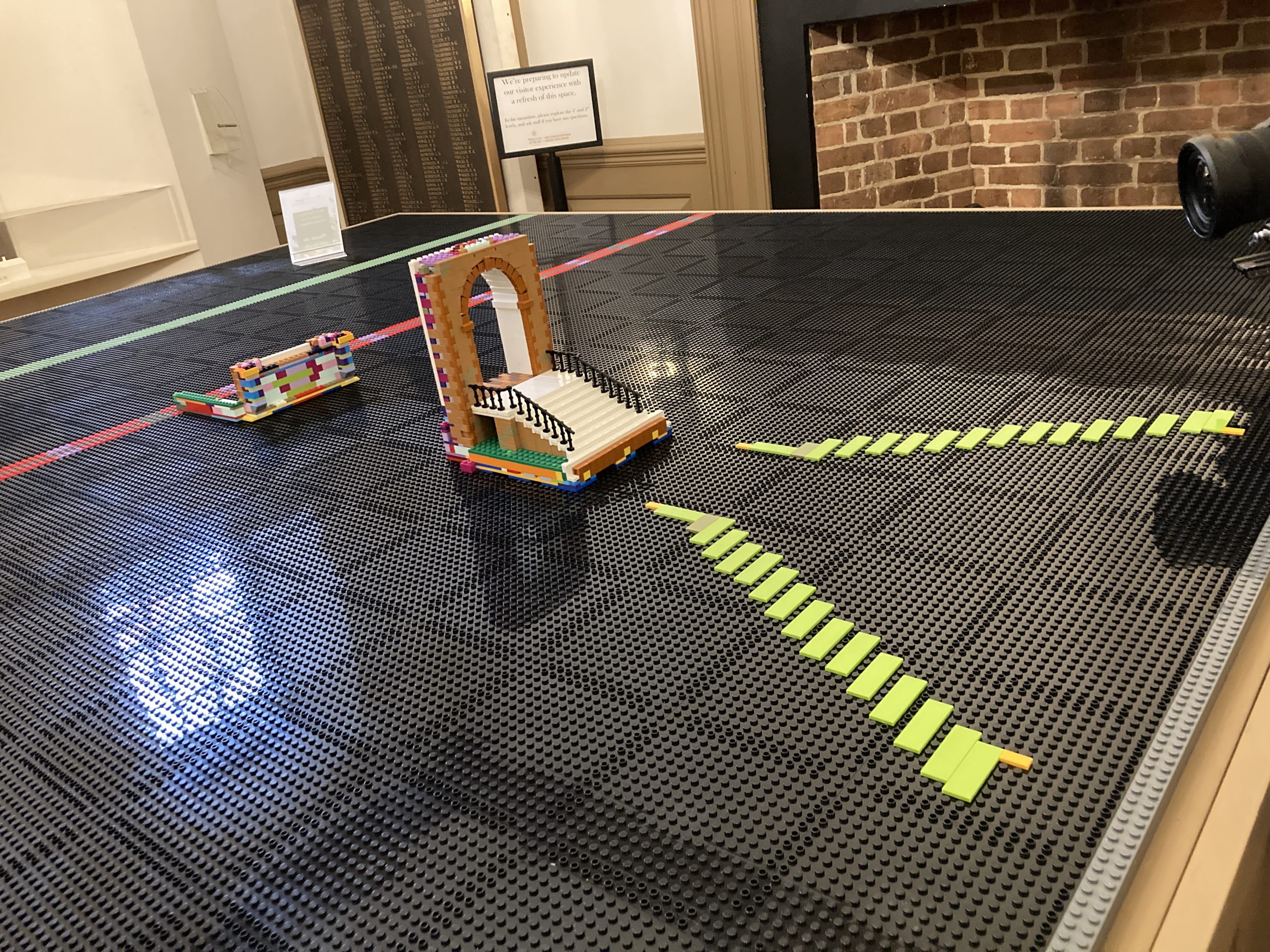
The project officially launched on Wednesday at the Wren Building with a visit by donor D. Bruce Christian and his family, and the first public installation of bricks — a replica of the Wren’s west steps built by Christian and his grandson, Maks. Christian is funding the project.
“This will be fantastic. It’s taken a long time to get here, but it’s really just so cool for us to have this year, for the much, much broader, larger, William & Mary community to come together to make this,” said Christian. “it’s not like they bought it preassembled, just set it here in this room. It’s everyone through the years, whatever your connection: faculty, staff … alumni, students, recent grads.”
Christian said it was the second time the university had approached him for a unique project, and the second time it was the perfect fit for him.
“I think if Maks weren’t around, I probably would have thought, ‘Oh, that’s a great idea,’ but I didn’t have a real connection to it. But I do, because of his love, and his dad’s love, with Legos. So it’s worked out really, really well,” he said.
The community aspect was important.
“We use this term — I think genuinely — it is a William & Mary community. So, it is a community effort,” he added. “I think that speaks to who and what we are at William & Mary, because we’re big enough to be really, really great and wonderful. Or small enough, where everybody knows everybody.”
The project is spearheaded by Charles Fulcher, the Wren’s director of operations and events. Fulcher has led Lego projects in the past, including at the National Cathedral in Washington following a 2011 magnitude 5.8 earthquake that damaged the landmark.
“I would say the mother of this project is one that I did when I was on staff at the National Cathedral in Washington. I proposed and oversaw a project — It’s still underway — building a model of a cathedral that was, in part, a fundraising initiative, where visitors would pay to be able to place a piece on the model, because there was significant earthquake damage,” he said.
“What sets this apart from a lot of other large-scale projects is that it’s our community,” he adds. “It’s students, alumni, faculty, staff, donors, friends … putting hands on it, bringing it together. That’s a very William & Mary, community-based thing.”
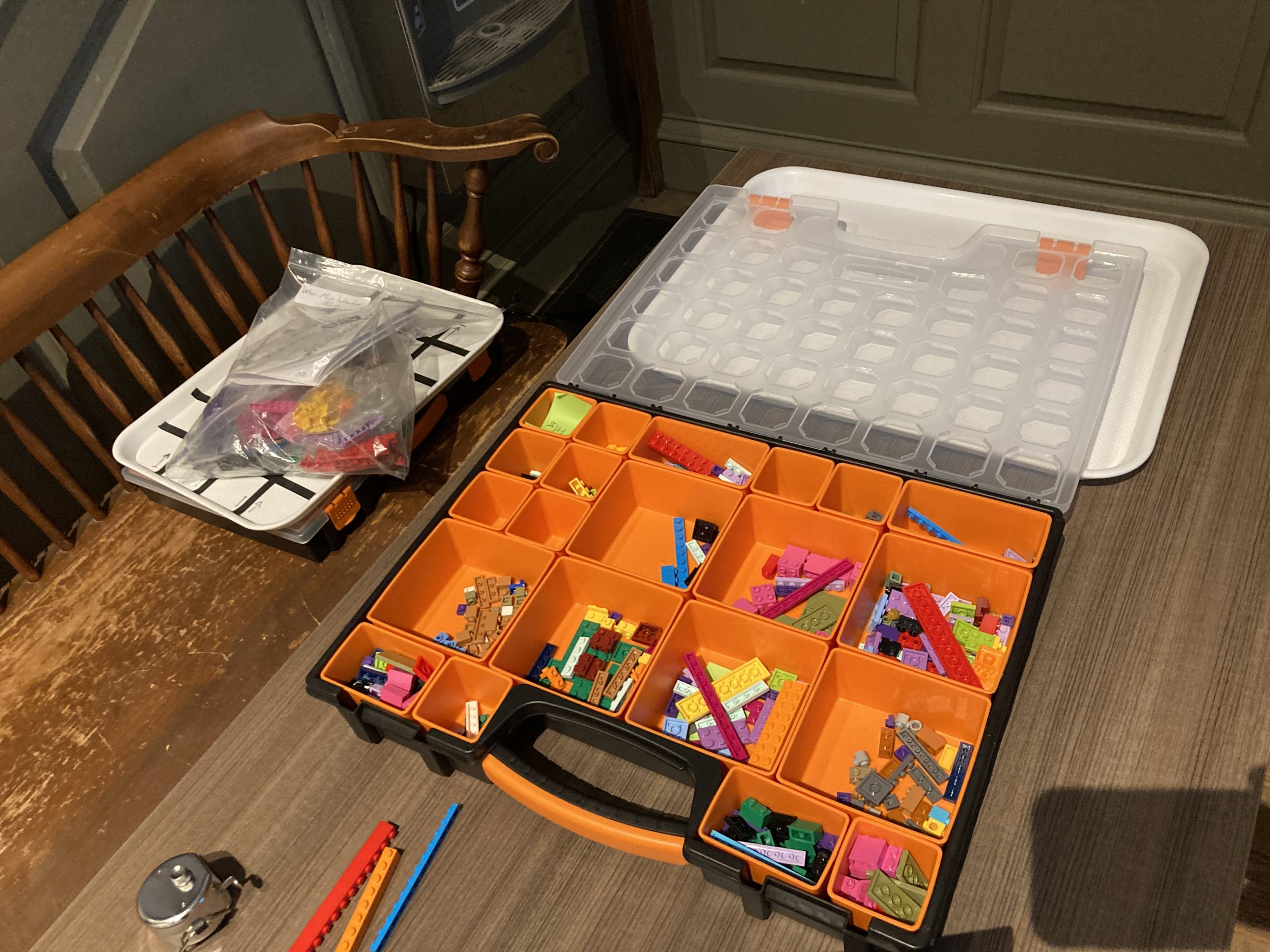
The pieces arrive in bulk, and volunteers sort the bricks for each module.
“When the pieces come to us, they come in bulk. So it’s 500 of this piece and 1,000 of this piece, and 75, and then every module has a parts list, so you’ve got to have volunteers come in … basically, we form these modular kits, these bags,” Fulcher adds.
According to the university, the project, expected to be completed by next summer, is an estimated eight square feet and will consist of somewhere between 180,000 to 200,000 Lego pieces.
As the model is modular, it can be disassembled and reassembled at various locations and serve as an educational tool. Each module is highly detailed — right down to electrical panels on the rear of the stairway that will not be visible in the completed project.
“I supervise the students who give tours of the building. This will be an educational tool they can use. They can bring visitors into the space. We don’t have a way to see this whole historic campus in miniature,” Fulcher explained. “They can talk about the relationship between the buildings, even the structure, some of the architectural changes of the Wren itself will be represented in the model. So it’s an educational tool as well.”
The broader William & Mary community will soon be able to start participating during open builds. And because the model is modular, builds can happen in different locations.
“The whole model breaks down into about 200 modules,” explained Fulcher. “These units, because they are modular, we can go to the library, Sadler center, or here, or in Washington, D.C., or wherever.”

