



Shopping centers have been hit hard in Hampton Roads.
Macy’s closed three area stores in 2016. So did Sports Authority, after filing for Chapter 11 bankruptcy.
And for Williamsburg Premium Outlets, there’s a new competitor on the scene: Norfolk Premium Outlets, which opened June 29.
What does this mean for the traditional malls of Hampton Roads? The answer may not be what you think.
“I’ve been hearing [about] the demise of the malls for literally decades,” said J. Andrew Hansz, a real-estate professor at Old Dominion University’s Strome College of Business.

Lifting all boats
At least ten shopping centers, from Chesapeake Square to the Town Center of Virginia Beach, sit within a roughly 50-mile radius between the Norfolk and Williamsburg Premium Outlets. Both outlet malls are operated by Simon Property Group L.P.
For one shopping-center manager, the Norfolk outlets are an opportunity to reach more customers — not a threat to existing sales.
“Here’s how we look at it,” said Jim Wofford, general manager of Norfolk’s MacArthur Center, 300 Monticello Ave. “The rising tide lifts all boats.”
A Southside retail developer struck a different note, saying outlet stores cater to a low-price customer.
“I don’t see it as being necessarily in the mix of the traditional retail environment,” said Gerald Divaris, chairman and CEO of Divaris Real Estate Inc., which manages Virginia Beach Town Center, 222 Central Park Ave.
Retailers are, however, in a state of transition, with Amazon and e-commerce disrupting the industry. And competition from e-commerce is heating up.
During the first quarter of 2017, estimated e-commerce sales rose by 4.1 percent over the fourth quarter of 2016 — and by almost 15 percent from the first quarter of 2016, according to the U.S. Census Bureau. E-commerce made up 8.4 percent of total retail sales during the first three months of 2017, the bureau said.

Cultivating a captive audience
Shopping centers may not disappear, but they’ll have to change and look different, according to Hansz. They might need more office space, less retail space and more unique activities, such as ice rinks, hockey leagues, soccer teams and amusement parks, he said.
“The mall is going to become more and more of a congregation area,” he added. “When people congregate, they start to spend money.”
A retail-management expert echoed this view.
Traditional enclosed malls — including those anchored by department stores such as Sears and J.C. Penney – have to reinvent themselves to stay relevant, Divaris said. And retailers need to combine an online presence with brick-and-mortar stores, he added.
“It’s really both channels that work together,” Divaris said. “Those that have been able to combine the two are the ones that are going to win in the long run.”
An economic development official offered a similar take.
Stores like Walmart that compete on the internet and in brick-and-mortar spaces will fare the best, according to Amy Jordan, director of economic development for James City County.
“These are the ones that are offering the mix and making it work,” she said.
Town Center, on the other hand, is unaffected by the constraints on traditional malls, according to Divaris. It’s an open-air setting with stores, restaurants, entertainment, office workers and residential units.
“So you’ve got a captive audience right on site,” he said.
Another industry professional offered a similar assessment, saying malls are places for communities to gather and they succeed by offering entertainment, including restaurants and movie theaters.
“Outlet centers and malls are creating an experience for a customer that can’t be duplicated online,” said Chris Good, vice president of retail brokerage at Colliers International in Norfolk.
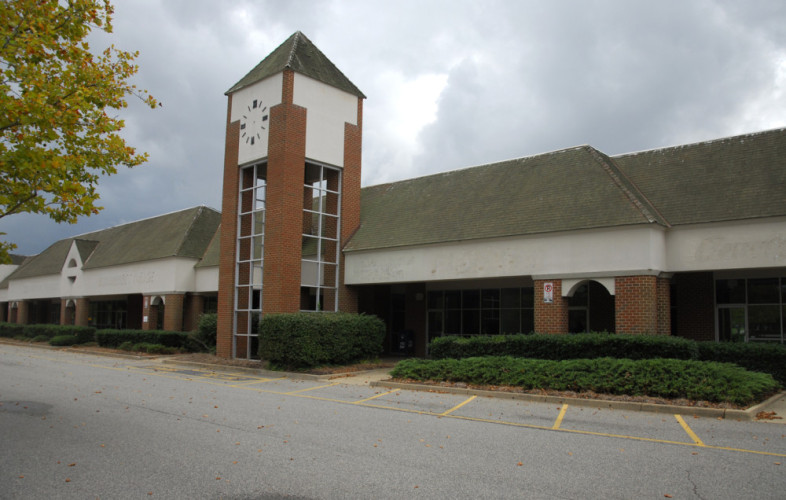
Grocery store-anchored malls
Yet another area of retail flux is the grocery-store anchored shopping center.
In Hampton Roads, supply may be outstripping demand.
According to the Williams Center report, new grocery stores are being added at a pace that’s faster than population growth, with recent entries and interest from players such as Aldi, Lidl, Publix and Wegmans.
“There may be a tipping point in the near future where older grocery stores will fail or some may decide to withdraw from the market,” the report said.
Good, of Colliers, had a different take: grocery-anchored centers meet shoppers’ demand for groceries, of course, and also for hair salons, restaurants and service retail.
“There’s always a need,” he said.
Banking on Gen Z
Still, one mall operator sees room for optimism: Gen Z consumers, the post-millennial generation born roughly since the mid-1990s.
Gen Z shoppers come to the mall with their friends, according to Wofford, to see and touch things before buying.
“They’re already a force to be reckoned with,” he said. “They can still go out there and shop.”

