


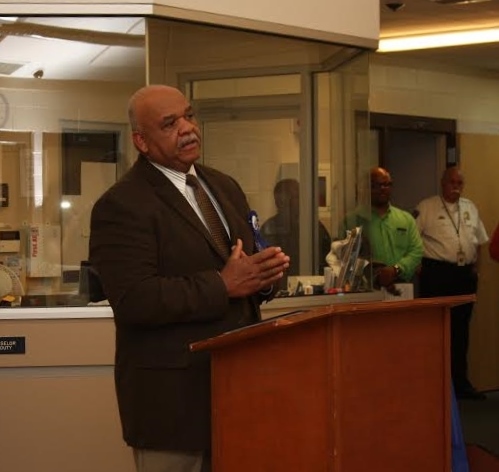
In 39 years with Crossroads Community Youth Home, Ron Wallace never saw a “bad kid.”
Wallace came to the program in 1975 when it was a nine-bed home for boys in an old house on Richmond Road, a far cry from the modern co-ed center it is today. Thirty-nine years later he is retiring, having served almost 15 as program manager.
He did not set out for a career in youth homes. With a degree in vocational education, Wallace was working at a high school in Gloucester when the opportunity came up for a position closer to home with better pay. The house was called Green Acres at the time, and he thought he would stay a year or two until he could find a job at a high school.
Wallace’s mind quickly changed.
“Not only was it the chance to work with adolescents, I began to bond with them and I found I kind of had a knack for it,” he said.
Despite negative perceptions, he found children who just needed to learn and the chance to do so in a sound environment with strong leaders. He and other counselors took a “kick them in the butt and hold their hand” mix of tough lessons and comfort. Wallace enjoyed watching the youth develop, when at 23 he said he too was a child learning to grow up.
In the years since, Wallace said the group home philosophy has changed. The local center was founded in 1973 when most of the factors that led to youth admittance were petty crimes and family issues. The offenses have become more serious in recent years, including substance abuse issues, and he said more children come from broken homes or are raised by grandparents.
“One common denominator is that people still love their kids,” Wallace said. He sees an average of 30 to 40 children come through Crossroads every year. “They love their kids but they don’t know how to take care of them.”
While he supports new measures that seek to treat the whole family and keep children in their homes as long as possible, it makes it harder to treat older teens if those tactics do not work. The greatest danger lies, he said, in writing off the children who do not come from the privilege of a stable home life.
“If you don’t give them the benefit of the doubt, if you turn them off, they become toxic,” he said. He said he feels it is his duty to light the way for residents, giving them a flicker of hope for their future that can grow into a blaze.
Though Wallace found it difficult at times to see the issues the youth are facing, he said the job has had its share of rewards.
Wallace fondly remembers greeting former residents who were subcontractors on the construction of a new building, its current location on Mooretown Road in York County. He was proud to see the children he shaped as successful businessmen in the area.
Crossroads’ present spot is a big change for its humble beginnings. A 1985 fire forced the home out of the Richmond Road home — now the site of Kyoto Japanese Steak House & Sushi Bar — and into side-by-side apartments for a year. They then moved to another old Cape Cod home on Longhill Road before the current center was built in 2008, designed with a more institutionalized layout and feel.
With room for 16 of both genders, Wallace said the space is not as homey but allows staff to keep a better eye on the residents.
All of those children attend area public schools. Wallace said he does not understand the surprise or outrage when citizens learn the Crossroads youth are being integrated into the education system with their children.
“If you put them on the table together you wouldn’t be able to tell the difference,” he said. “The difference is parents.”
Wallace was committed to having the children remain actively involved in the community as well – he started a Crossroad basketball group in the 1980s to compete in county events. Some children made it to the playoffs and while their interest waned, Wallace’s passion never has.
Managing a youth home is a 24/7 responsibility. In a cell phone-less 1975, if on-call employees had to leave their homes they were required to call in to the center every two hours. A month into retirement, Wallace likes the freedom not to jump every time the phone rings but does still feel phantom vibrations on his side from lack of pager.
Leaving Crossroads is bittersweet for Wallace, but he has already started to tackle a “honey-do” list of home improvement projects and is looking forward to his hobby of restoring tractors. He will also be helping the younger of his two sons with his lawn care business.
Wallace hopes to devote more time at New Zion Baptist church, where he is a deacon, and jump generations with service to the elderly.
