


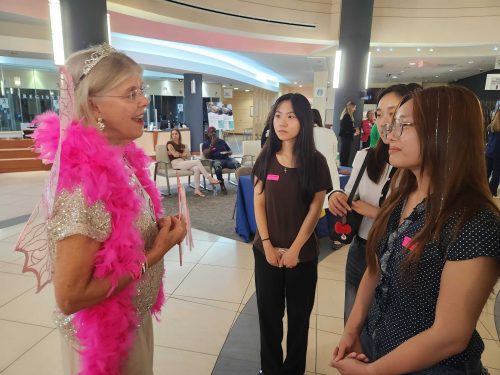
WILLIAMSBURG 一 Sentara Williamsburg Regional Medical Center lit its exterior in green, teal and pink on Oct. 13 to raise awareness of metastatic breast cancer, joining the local Here for the Girls chapter for a LightUpMBC event.
Metastatic breast cancer (MBC) occurs when breast cancer spreads beyond the breast to other parts of the body, according to Breastcancer.org. Also known as stage 4 breast cancer, it is considered incurable, though treatment can help patients live longer. The colors green, teal and pink represent renewal, healing, spirituality, the fight for better treatments and the origin of the disease, according to Here for the Girls.
H4TG is a Williamsburg-based nonprofit that supports women living with breast cancer. Mary Beth Gibson and René Bowditch founded the organization in 2006 after meeting at a retreat for breast cancer survivors.
A member of Here for the Girls who serves as an ambassador for LightUpMBC spoke with McConaughey and Gibson at an event about increasing the initiative’s presence in Virginia. McConaughey signed up to become an ambassador and contacted Sentara to coordinate the lighting.
Asked what having this event means to them, H4TG Chapter Director Chris Schwab said it’s about the support people need when facing cancer.
“It’s community, we can’t do this alone. None of us can,” she said.
Loren Smith, vice president of operations at Sentara Williamsburg, became interested after Schwab discussed the idea of the hospital hosting the event.
“We thought what a great opportunity for us to lead the way and showing other health systems what it looks like to really support this cause,” said Smith.
Valerie Ryland was diagnosed with MBC nearly 10 years ago. The event was the first time she has shared her story. She also works for Sentara as a manager of inpatient case management. She said the event helped people understand how MBC differs from earlier-stage breast cancer.
Ryland said many people don’t realize that treatment for MBC never ends. She has a heart scan every three months and a full-body scan every six months to check for progression, and she gets immunotherapy every 21 days.
“It’s a terminal diagnosis but you can live a very robust life, thankfully, due to a lot of our scientific research and our new medicines that are available,” Ryland said.

