


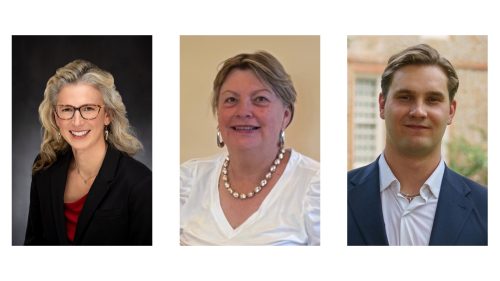
Williamsburg voters will choose two City Council members on Nov. 3, with incumbent Stacy E. Kern-Scheerer and challengers Carolyn A. Murphy and Eino I. Korpela competing for the two seats.
The three candidates answered the same WYDaily questionnaire. Housing affordability, city spending and government transparency came up repeatedly in their responses. While they share several priorities, they offer different proposals and bring distinct professional backgrounds to the race.
Stacy Kern-Scheerer
Following my B.A. from Beloit College, I earned a J.D. from Boston University School of Law and an M.P.H. from Boston University School of Public Health. I was a legislative attorney in the U.S. Senate Office of the Legislative Counsel from 2004-2013. From 2013-2026, I was on the faculty at William & Mary Law School, where I taught many courses, founded the Immigration Clinic, and was the Director of Clinical Programs. In addition, I am a certified Pilates instructor.
In 2022, I successfully ran for City Council. In the 17 years since my husband and I moved to Williamsburg, I have also volunteered with the PTA and Scouts, served as citizen representative on the Colonial Community Criminal Justice Board, as Vice Chair for Olde Towne Medical and Dental Center, volunteered to raise money for Boys & Girls Club and Literacy for Life through Dancing with the Williamsburg Stars and am currently on the Advisory Board for Literacy for Life.
1. What motivates your campaign for Williamsburg City Council this year, and what experiences have prepared you for this role?
I am motivated by several things, most notably by my longstanding commitment to public service and to contributing to my community. I am also motivated by my drive to use my skills and experience to help Williamsburg residents thrive today, while also ensuring a strong Williamsburg for future generations. I am not motivated by a single issue or area of focus. In my view, based on experience, Council members must be adept at balancing many priorities and issues at the same time, and be able to probe into details of any issue while also keeping a steady eye on the big picture.
My experiences prepare me well for this role and responsibility. For the first 10 years of my career as a lawyer, I was a legislative attorney in the U.S. Senate, working not for a particular party or elected official, but for the institution. I worked with everyone. I advised on legislative structure, language, and potential consequences of policy while maintaining an objective view and navigating sometimes politically charged and contentious situations with a calm, level head. I then taught at William & Mary Law School for 13 years. One of my most significant roles at the Law School was Director of Clinical Programs, which is a role that is a bridge between the Law School and the community and through which I built many relationships and partnerships with local organizations.
Not only do I have these relevant professional experiences, but I have also served on Council for 4 years, gaining a direct understanding of how the City operates, learning quickly the breadth of issues addressed by Council, and working directly with City residents to address issues that matter to them. I am also someone who moved to Williamsburg 17 years ago as a young professional, bought my first home here, and am raising my family here. These experiences matter too, as they give me important perspective and deep investment in our community.
2. What do you believe are the most pressing issues facing Williamsburg over the next four years, and what specific actions would you support to address them?
Williamsburg has many strengths and is a wonderful place to live. Working to maintain what makes Williamsburg unique and desirable, while also making sure our town’s economy continues to grow and thrive, means addressing several issues, include housing, fiscal responsibility, transportation, land use, community preservation, and investment in public education and public safety.
These are all complex, intersecting pieces of a puzzle and must be addressed not in silos, but in context of ensuring the overall future health of Williamsburg. In my first term, I have worked tirelessly on these issues by engaging with residents and City staff, analyzing information, and using my ability to maintain a view of the big picture while digging into details.
As examples, with respect to housing, I have supported managed growth in housing stock while rejecting proposals I determined as too intense, supported development of initiatives to assist first-time homebuyers in the City, and supported hotel-to-apartment conversions. I would continue to work on these policies in a second term.
With respect to fiscal responsibility, I worked with my colleagues and staff to cut millions from the City Manager’s proposed budgets, and I would enhance these efforts with additional improvements, including, for example, deeper discussion and evaluation of any new positions proposed by the City Manager during the February Budget retreat.
I have supported increased investment in our public schools and education, supported improvement of bus stops, responded to constituent requests for improvements to pedestrian and road safety, advocated at the General Assembly to ensure that local land use and zoning decisions remain local, and spearheaded town halls and meetings with residents. If re-elected, I would continue to advance all these efforts.
3. Williamsburg continues to experience growth and development while also serving as a major tourism destination. How should the city balance economic development, tourism, infrastructure needs, and the preservation of the community’s historic character and quality of life?
We must be able to balance with intention and strategy, and recognize that each of these issues are interdependent. I believe that public infrastructure quality and safety is a foundational function of local government, and we must ensure that our road, water, and other core infrastructure is intact and not neglected.
We cannot let development get out of balance such that we lose our community’s character, as that would damage both tourism and the quality of life for our residents. This is why it is important for Council members to not have tunnel vision on any particular area of focus, but must constantly evaluate the potential impacts and consequences of each decision has on the bigger picture of balancing these priorities.
4. Housing affordability and cost-of-living concerns have become increasingly important issues for residents. What role should the city play in addressing these challenges, and what policies would you support?
As I have often said, when discussing housing issues, we must recognize that no single solution will address all the challenges. Policies that may be effective at helping affordability for first time home buyers will not be the same policies directed at making rents more affordable for full-time residents or College students. Council members must dig into targeted solutions and not promise a magic bullet.
For example, specifically for first-time home buyers, I want to continue discussing the use of the City’s affordable housing fund, in partnership with local banks, to provide down payment assistance to families and individuals trying to purchase a home within the City. We also have to recognize that local government cannot do it all alone, especially not something as huge as solving a Commonwealth-wide affordability and housing crisis.
A lot of times the role of Council is a reactive one, i.e. evaluating and responding to an application submitted by a private developer for action on privately-owned land. When it comes to those decisions, I will continue to evaluate each proposal on its own merits and make decisions that bear in mind affordability and housing along with the other issues mentioned in previous questions. Opportunities to expand workforce housing may come from partnerships with WHRA or public-private partnerships or potential use of the City’s affordable housing fund. I also support continued evaluation on where and how the City can expand its workforce housing options and supply.
5. If elected, what would be your top priorities during your term on the City Council, and how would you define success by the end of your tenure?
Some of my top priorities include advancing basic infrastructure improvements, such as pedestrian and road safety infrastructure; helping ensure a robust and successful Comprehensive Plan update process; remaining attentive to how the City can continue to support our public schools in helping our kids succeed in school and after graduation; and focusing on constituent engagement and responsiveness to concerns.
The answers to the following questions would help me evaluate the success on the priorities listed above: Have we identified places where we need additional infrastructure improvements for the health and safety of our residents, including places where we need sidewalk and crosswalk improvements and connectivity, and started executing improvement plans? Have we made progress on improving our bus stops?
Does our new Comprehensive Plan reflect robust public engagement on setting the strategic plan for the City and contain a clear vision and implementation steps for land use, economic growth, corridor improvements, and complete streets policies? Are the outcomes for our children in WJCC schools improving and achievement gaps closing? Do residents feel heard when they raise an issue or concern and feel they can reach out to me, knowing that I will do my best to help resolve their issue?
In addition to the specifics above, I would also define success on whether I felt that I had done everything I could—while working with my colleagues and residents and evaluating all information available to me—to make the best decisions for Williamsburg and to help maintain the Williamsburg we all love, while ensuring it keeps thriving in the future.
6. Is there anything else you would like voters to know about you or your candidacy?
I think it is important to recognize that leadership is a team sport. No one accomplishes anything totally alone. Experience and vision matter, as does the ability to work with others, build consensus, ask questions, and learn from others. I want voters to know that not only do I have a depth of experience, knowledge, and investment in our community that make me an effective and qualified member of Council, but that I also am someone who believes in listening, being open to multiple perspectives, learning what I don’t know, and working with different viewpoints to reach understanding and compromise where possible.
I want each City voter to know that I always welcome the opportunity to talk with you directly about what matters to you. I respectfully ask for your vote so that I can continue to work for all of Williamsburg. I encourage City residents to reach out to me with any questions at [email protected].
Carolyn Murphy
I am married to Allen Murphy, and I have one son Ryan and one grandson. I have 46 years of progressively responsible experience in local government, with the last 30 years in the City of Williamsburg Planning Department. I have extensive experience in local government having started in real estate assessments, the building code department, zoning, historic preservation, planning and finishing up my career as the Planning and Codes Compliance Director.
I led the staff-driven effort to develop and update the Comprehensive Plan with the Planning Commission, which received unanimous approval from the City Council. I served on the WATA Board of Directors, the Hampton Roads Transportation Committee, addressing transportation needs for the city, and over my career, I served as lead staff for the Architectural Review Board, Board of Zoning Appeals, Planning Commission and the City Council. In October 2021, I received the “Outstanding Service Award” from the Virginia Chapter of the American Planning Association.
1. What motivates your campaign for Williamsburg City Council this year, and what experiences have prepared you for this role?
I am motivated by encouragement from citizens who have supported me throughout my campaign, from meeting individuals when I walked neighborhoods campaigning, talking to citizens at meet and greets, and hearing from businesses who are concerned about the city’s direction. Citizens feel I will bring a different perspective to city council.
With my 46 years of experience in local government, I am a problem solver. I worked for Williamsburg for 30 years, the last five years as Planning and Codes Compliance Director, and I have considerable knowledge about the city, community partners, businesses, staff, the budget, planning and interdepartmental relationships. I am a good listener and have a straightforward approach to problem solving. I believe we need to be more fiscally responsible, make improvements to the budget process and lastly, we need to improve transparency between the city and its citizens.
2. What do you believe are the most pressing issues facing Williamsburg over the next four years, and what specific actions would you support to address them?
I believe Williamsburg’s biggest challenge is with the budget and the budget process. A more conservative approach must be given to the budget to include borrowing, capital projects, positions and expenditures. New CIP projects and programs need careful review, public buy-in and consideration before being placed in the budget.
The city spends every dollar in additional revenue and this year dipped into reserves for 1.5 million to balance the budget, which is not sustainable without increasing the tax rate in the future. If elected, I would recommend:
a) Some revenue gains being set aside in reserve funds for payment of debt service or lowering the tax rate or other revenue sources.
b) A draft budget being presented to council before the budget retreat to allow council discussion on major items in the draft budget.
c) The budget being released sooner than the last week of March which does not allow sufficient time for council and citizens to comment at the two public meetings scheduled in early April.
d) Public forums be built into the schedule for public discussion on major topics in the budget, year-to-year comparisons when items have changed and updated CIP information explaining adjustments being shown in the proposed budget.
e) Substantive justification that demonstrates a need or breakdown of service before approving new positions. During these economic times families, students, and those living on a fixed income are stretched financially with inflation due to the increased cost of groceries, goods, gasoline and buying a home and the city must budget appropriately.
3. Williamsburg continues to experience growth and development while also serving as a major tourism destination. How should the city balance economic development, tourism, infrastructure needs, and the preservation of the community’s historic character and quality of life?
These are all items that should be addressed by citizens during the Comprehensive Plan update. The update started last weekend and everyone must make the effort over the next 18-24 months to let Planning Commission, staff and City Council know what we want our city to look like in the next 5, 10, 15 and 20 years.
We have a finite amount of undeveloped land and other properties that may be ripe for redevelopment and we must express our vision for Williamsburg’s future. While visitors and other individuals can express their ideas, it is the citizens and businesses in the city that must drive the Comprehensive Plan update to determine the look and feel of our city in the future.
4. Housing affordability and cost-of-living concerns have become increasingly important issues for residents. What role should the city play in addressing these challenges, and what policies would you support?
Williamsburg currently has a mixture of over twenty for sale neighborhoods with over 1,400 units under $400,000. It has apartment complexes, over 100 public housing units, 13 workforce housing units, and has approved the conversion of hotel units to affordable housing units over the last 10 years.
The city has a limited amount of undeveloped land which is very expensive and combined with new development costs make it difficult for developers to construct only affordable units. The 2024 Town & Gown Report indicates 62% of our total population were university students (9,762) leaving a population without students of just over 6,000 residents.
We are a university town with limited new affordable housing construction opportunities. The values of for sale and rental units are higher in the downtown area and those areas adjacent to campus because of the income associated with student rental.
Some ways to address the issue include:
a) The city lobbying the State to require William & Mary to provide additional dormitories on campus before allowing any increase in enrollment each year.
b) The State providing additional funds for more campus housing and investigating in programs to lower the cost of housing on campus for students.
c) The State implementing additional loan programs for home buyers.
d) The State allowing each jurisdiction to determine their zoning requirements without intervention because the needs are different in each jurisdiction.
e) The city needs to carefully review any new development or redevelopment projects for opportunities to provide more affordable units in the review process.
5. If elected, what would be your top priorities during your term on the City Council, and how would you define success by the end of your tenure?
If elected, my top priorities would be fiscal responsibility, working to not increase our tax rate unless absolutely necessary, continued support for our schools, and transparency. Success would be defined by not dipping into our reserves to balance the budget, not increasing the tax rate, seeing improvements in reading and math for our school children, and citizens feeling they have a government that is transparent and responsive to their questions.
6. Is there anything else you would like voters to know about you or your candidacy?
If elected, I would work hard for citizens on improving transparency in our government. I would encourage citizens to speak about their concerns and issues to council at meetings, by email or phone. Citizen questions should be answered by council or staff in a timely manner and not ignored and not answered.
I believe the budget should be developed, approved, and spent responsibly because it is your money. With the update of the Comprehensive Plan being underway, I encourage all citizens and businesses to become involved in the update. We need to agree on a vision as to what our city should look like in the future.
We need to agree on density, types of housing developments and where additional housing and housing types should be allowed. The city needs to be careful in allowing developments by right because it loses the ability to get affordable housing units, debate projects and taxpayers will be required to upgrade off-site improvements such as water, sewer, stormwater, roads, and environmental effects. Unless we evaluate carefully what our vision for the city is in the future, those decisions can greatly affect our quality of life.
Eino Korpela
I am a William & Mary graduate, local business owner, and candidate for Williamsburg City Council. A member of William & Mary’s Class of 2025, and building a personal and professional future in Williamsburg.
I founded PureHome Water Solutions and co-founded TurfTeams. My business experience has shaped my interest in practical problem-solving, responsible spending, and the challenges facing people who want to establish themselves in the community.
I am a Finnish-American and one of five brothers. I served in the Finnish military, where I developed an appreciation for preparation, teamwork, and leadership grounded in responsibility to others.
My campaign focuses on affordability, accountability, and representation. I support expanding affordable housing opportunities, making city finances easier for residents to understand, and strengthening relationships among William & Mary students, longtime residents, and local businesses.
I believe Williamsburg can preserve its historic character while creating more opportunities for people to live, work, and put down roots. My approach to public service emphasises on listening, humility, and earning residents’ trust through consistent follow-through.
1. What motivates your campaign for Williamsburg City Council this year, and what experiences have prepared you for this role?
I’m running because I want Williamsburg to be a place where people can build a future, afford to stay, and feel heard by their local government. Our city has extraordinary history and strong institutions, but its future also depends on whether young professionals, families, local workers, and longtime residents can thrive here.
As a William & Mary graduate and local business owner, I understand the transition from being a student to putting down roots in this community. I founded PureHome Water Solutions and co-founded TurfTeams, which is working to build small soccer fields for local communities around Virginia. Building businesses has taught me to manage limited resources, solve problems, and take responsibility for results.
My service in the Finnish military also shaped my approach to leadership: listen carefully, prepare thoroughly, and put the people you serve ahead of your own ego. I would bring that mindset to City Council, along with a willingness to ask questions and work with people whose perspectives differ from mine. My campaign centers on affordability, accountability, and representation.
2. What do you believe are the most pressing issues facing Williamsburg over the next four years, and what specific actions would you support to address them?
Williamsburg’s most pressing challenges are affordability, responsible spending, and making sure residents have a meaningful voice in decisions that affect their lives.
On housing, I support expanding options that fit Williamsburg’s character and help local workers, young professionals, families, and longtime residents afford to stay here.
On city finances, I would push for clearer budgets, stronger scrutiny of major capital projects, and a dedicated effort to pursue grants. Residents should be able to understand where their money goes and what results they receive.
We also need a stronger relationship among the city, William & Mary, and surrounding neighborhoods. That requires regular communication and practical solutions to recurring concerns. Finally, I oppose Flock license plate cameras in Williamsburg. Public safety matters, and so do privacy and accountability. Residents deserve a clear explanation of what information the city collects, who can access it, and how its use is controlled.
3. Williamsburg continues to experience growth and development while also serving as a major tourism destination. How should the city balance economic development, tourism, infrastructure needs, and the preservation of the community’s historic character and quality of life?
Williamsburg’s historic character is both a community asset and a foundation of our economy. Protecting it should be central to development decisions. I support development that fits its surroundings, strengthens the local economy, and addresses community needs. Before approving major projects, the city should examine their effects on traffic, infrastructure, public services, and nearby neighborhoods. Residents should have meaningful opportunities to participate before decisions are effectively settled.
Tourism should benefit the people who live here as well as those who visit. That means maintaining reliable infrastructure, supporting locally owned businesses, and making sure tourism investments provide a clear public benefit.
We should also make it easier for existing businesses to succeed through clear rules, predictable review processes, and responsive city services. Preserving Williamsburg’s charm can go hand in hand with helping residents and businesses adapt.
My standard would be straightforward: does a proposal strengthen Williamsburg’s long-term finances, respect its character, and improve residents’ quality of life?
4. Housing affordability and cost-of-living concerns have become increasingly important issues for residents. What role should the city play in addressing these challenges, and what policies would you support?
The city should examine both the costs it directly imposes and the barriers that limit housing choices. I support encouraging appropriately located housing that fits Williamsburg’s scale and character. When the city contributes land, funding, or other assistance to a housing project, it should seek clear, lasting affordability commitments, including opportunities for teachers, first responders, and other local workers.
On everyday costs, I support working toward reforming the meals tax through a financially responsible plan that identifies the revenue impact and protects essential services. I would also scrutinize spending before supporting higher property taxes or fees. The city should actively pursue grants and other outside funding to help address community needs without placing the entire burden on local taxpayers.
No single policy will solve affordability. The city can make progress by expanding housing options, reducing unnecessary barriers, and treating the cost of living as a central consideration in its decisions.
5. If elected, what would be your top priorities during your term on the City Council, and how would you define success by the end of your tenure?
My top priorities would be making Williamsburg more affordable, making city government easier to understand, and strengthening residents’ confidence that their voices matter.
I would begin by examining opportunities to reduce the local tax burden, pursuing outside funding, and improving the accessibility of budget information. I would also push for clearer explanations of major spending decisions and consistent follow-up on residents’ concerns. Building a better relationship among students, longtime residents, local businesses, and city government would be another priority. These groups share an interest in a safe, welcoming, successful Williamsburg, even when they disagree about particular policies.
By the end of my term, I would want to see tangible progress: more affordable housing opportunities, clear reporting on major projects, stronger efforts to secure outside funding, and better communication between the city and its residents.
Success would mean people can point to improvements in their daily lives and understand how their local government helped deliver them.
6. Is there anything else you would like voters to know about you or your candidacy?
I’m 24, and I see public service as a responsibility to listen, learn, and earn people’s trust. I would bring energy and a long-term stake in Williamsburg’s future, along with respect for the experience of those who have helped shape this community. I want to evaluate local issues on their merits and work with anyone who has a constructive idea.
One of the most valuable parts of campaigning has been hearing directly from people whose experiences differ from my own. Those conversations have reinforced my belief that leading with humility is the best way to lead.
I’m asking voters for the opportunity to bring that approach to City Council: accessible, thoughtful, and accountable to the people I serve.
Early voting
Early voting for Williamsburg residents runs through Saturday, Oct. 31, at the Voter Registrar’s Office in the Municipal Building, 401 Lafayette St. The office is open Monday through Friday from 8 a.m. to 4:30 p.m. It is also open Saturday, Oct. 24, from 8 a.m. to 4:30 p.m.; Sunday, Oct. 25, from 11 a.m. to 4 p.m.; and Saturday, Oct. 31, from 8 a.m. to 5 p.m. There is no early voting on the Sunday or Monday before Election Day.
On Nov. 3, polls are open from 6 a.m. to 7 p.m. at voters’ assigned precincts. Stryker Precinct votes at the Community Building, 401 N. Boundary St. Matoaka Precinct votes at Williamsburg United Methodist Church, 500 Jamestown Road.
The deadline to register to vote or request an absentee ballot is Friday, Oct. 23.

