


A team of archaeologists from Preservation Virginia has been at work since 1994 uncovering the buried secrets of Jamestown.
When the Jamestown Rediscovery Archaeological Project started, the hope was to find the site of the original 1607 James Fort, which had been written off for more than 200 years as lost to shoreline erosion.
Since then, the team has discovered the fort and more than a million artifacts in the ground. Jamestown Unearthed is a recurring feature in WYDaily exploring the latest discoveries in and around James Fort.
3-D Printing Technology Creates Hands-On Experience for Historic Jamestowne Visitors

When school children visited Historic Jamestowne in the past, they were able to peer inside glass museum cases at unearthed artifacts and listen as tour guides describe how they were used.
Now they can handle the goods for themselves.
A partnership with Virginia Commonwealth University’s Virtual Curation Laboratory has supplied the Preservation Virginia tour guides who regularly shepherd school children and other visitors through Historic Jamestowne with a bevy of 3-D printed replicas of artifacts.
3-D printing technology uses scanners to take comprehensive readings of an artifact, which is then re-created in plastic and painted by hand to resemble the scanned artifact. The entire process usually takes less than four hours and yields a replica artifact often indistinguishable from the real thing.
For example, the archaeologists at James Fort unearthed a caltrops — a weaponized ball of nails used to pierce the feet of advancing troops and animals — which was likely brought to the fort in its first days to use in case of a Spanish attack. By scanning the caltrops and then printing it, visitors to Historic Jamestowne can handle the re-creation and feel what it was like without harming either themselves or the excavated caltrops.
“You can explain all day the Spanish [were considered a threat at the time], but this way we can show actual evidence,” said Jeff Aronowitz, the assistant manager of public and educational programs at Historic Jamestowne.
Since the partnership between VCU and Preservation Virginia began more than a year ago, the tour guides who lead students and other visitors through Historic Jamestowne have been equipped with a set of 3-D printed artifact replicas including bird bones, a jawbone from a butchered dog, an arrowhead, Indian pottery, a compass and a clay container used for metallurgy.
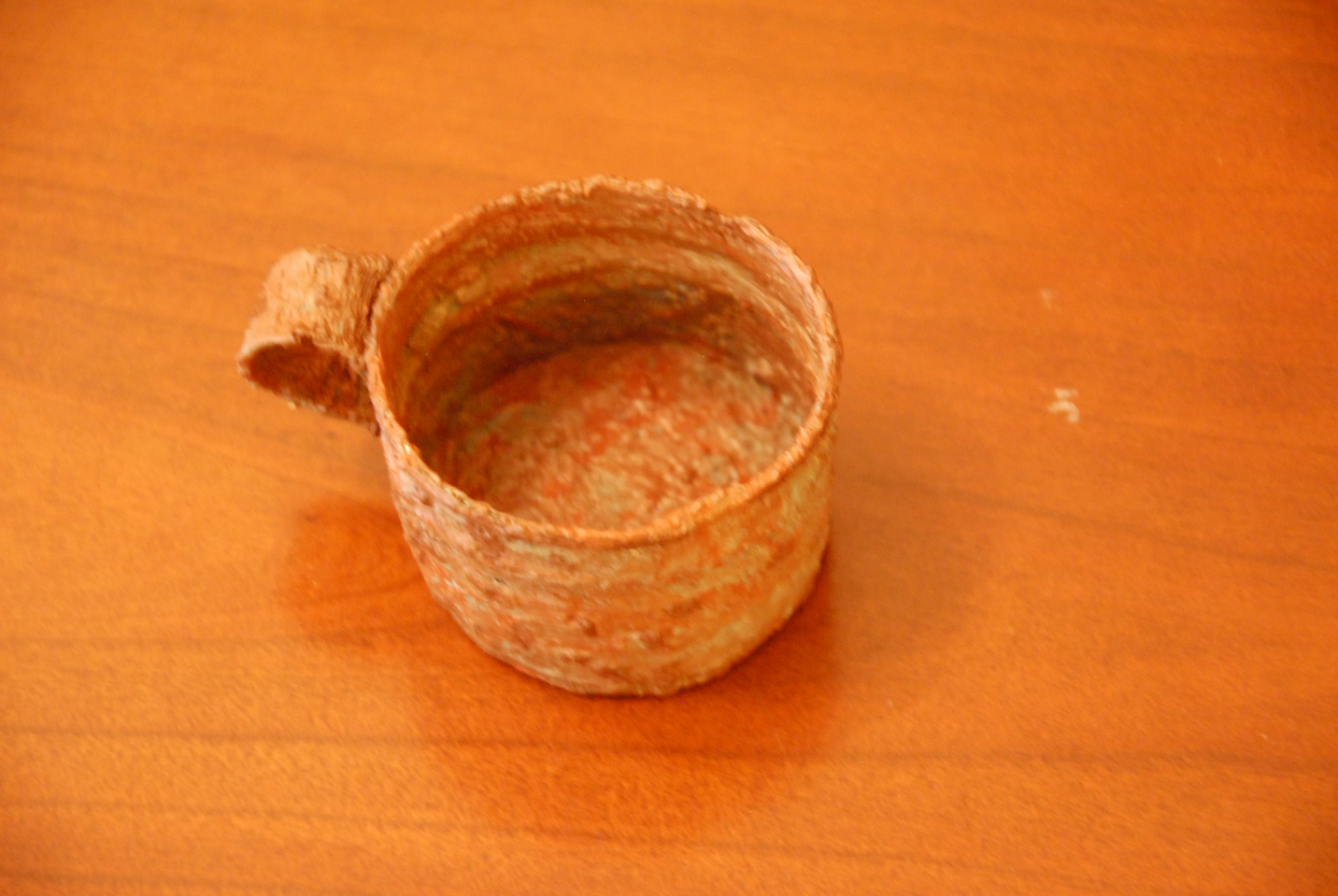
These replicas are passed out to the students and visitors, who can look at them close up without the risk that would come with handing out artifacts that are hundreds of years old.
3-D printing is cheap, too, so if one of the replicas is accidentally broken, it costs no more than a few dollars worth of plastic and the time it takes to repaint it.
“You see their faces, the wow factor with the 3-D printed artifacts,” Aronowitz said. “It’s the best tool for public archaeology.”
The replicas allow for the stories told by the tour guides to contain new depth and meaning for those who are listening.
The dog jaw, for example, has marks from when it was butchered by early James Fort settlers. After the discovery last year that those settlers had likely turned to cannibalism in the first years of the fort, the jaw can be handed out so those on the tour can feel the chipped bones.
“The interpretive value is astounding,” Aronowitz said. “You’re able to feel the butcher marks — it’s illustrative of the desperation of the time.”
The partnership with VCU allows the public to explore the scanned artifacts from the comfort of their own homes, too. Bernard Means, the director of the Virtual Curation Laboratory, runs the Virtual Curation Museum, a website featuring 3-D renderings of the artifacts that have so far been scanned at Jamestown and other historic sites.
Means said he teaches classes at VCU connected to the lab, and his students help with the work of printing and painting the artifacts. He brings a scanner and other equipment to Historic Jamestowne once or twice per month to create more 3-D printed artifacts for use at the site.
The 3-D printings have also been used to enrich the experience of the blind and to bolster the offerings at museums throughout the world, Means said. He has worked with researchers, historians and museum operators throughout the U.S. and beyond to help implement the technology as a new tool to help people understand the past.
The 3-D printings have other applications beyond their current use at Historic Jamestowne and the Virtual Curation Museum.
Aronowitz said he wants to expand the 3-D offerings to the public via the Internet. Plans include making the 3-D files available to educators, who could then print them on their own printers and use the artifacts along with Historic Jamestowne lesson plans to implement the stories of the first settlers into curricula around the world.
He also wants to make the 3-D files workable with 3-D goggles, allowing those who have the goggles to observe the artifact models in 3-D.
Related Coverage:
