


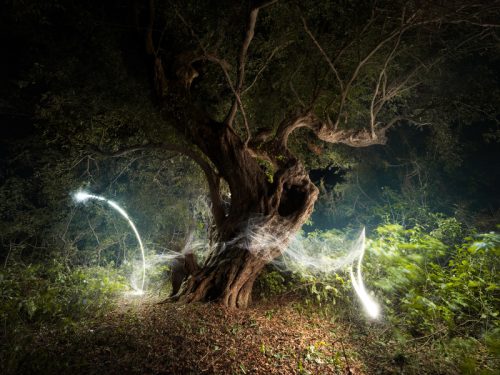
WILLIAMSBURG— A new photography exhibition has been unveiled at the Muscarelle Museum of Art at William & Mary, bringing together the work of eight international photographers to tell the stories of irreplaceable ecosystems.
“VITAL: Our Irreplaceable Earth” is on view Aug. 27 to Nov. 2.
Curated by Ami Vitale, a renowned National Geographic photographer, writer and filmmaker, the project is designed to bring science and conservation to life, documenting the landscapes and the people working to protect them, according to the museum.
“Every single environmental issue needs artful, informed storytelling,” said Vitale. “Photographers can create images that serve as an unfiltered connection to the natural world, stirring emotions, fostering empathy and cutting through the noise of misinformation. These are not just photographs; they are windows into ecosystems, cautionary tales of human impact and invitations to take meaningful action. Now is the time to listen deeply, to look closely and to tell stories that move us to act — with clarity, with compassion and with courage.”
The exhibition is backed by the science of Conservation International, an organization working to spotlight the critical benefits that nature provides to humanity. In 2021, Conservation International scientists identified ecosystems that hold vast reserves of “irrecoverable carbon” — climate-warming carbon that, if released into the atmosphere through the destruction of these landscapes, could not be recovered in time to prevent the worst climate impacts, according to the museum.
“Our global map of Earth’s irrecoverable carbon shows the precious places we must protect to avert a climate catastrophe,” said Allie Goldstein, a scientist at Conservation International who led the research. “‘VITAL’ brings these stunning landscapes and their often-invisible protectors face-to-face with viewers through photography. From Australia to Liberia to Cambodia to Canada and more — the images give a glimpse into some of the last remaining old-growth rainforests, mangroves and peatlands on every continent. Conservation International helped send photographers to every corner of the planet to document the places we cannot afford to lose — and haven’t yet.”
Conservation International selected eight photographers to travel into these environments and uncover their stories. Each artist brought a deeply personal lens to the work, interpreting each place in diverse and unique ways, it said.
According to the museum, more than 60 photographs are presented in the exhibition:
- Ami Vitale’s photographs take us to northern Kenya, where an indigenous Samburu community protects the mountain forests of African juniper and the elephants and other iconic species that roam there.
- Musuk Nolte’s photographs of the Peruvian Amazon capture the unique palm forest ecosystem and its protectors illuminated at night.
- Reuben Wu’s ephemeral images of Tonlé Sap Lake in Cambodia, using long exposures and light painting, show the flooded forests as they’ve never been seen before.
- Adeolu Osibodu chronicles the state of Liberia’s rainforests, meeting with Indigenous communities and frontline conservationists along the way.
- Tamara Dean’s intimate exploration of the eucalyptus forests of southeast Australia — some of the most carbon-dense ecosystems on Earth — highlights the increasingly dry conditions that have made the region highly susceptible to fire.
- Jim Naughten’s series of photographs reimagine Scotland’s peat bogs as portals to the past, framing the mountains where animals once roamed.
- Maíra Erlich’s photographs feature coastal Guyana’s mangroves and forests, among the few landmasses in the world that are expanding as new land emerges from the sea.
- Nick Brandt’s haunting portrait shows displaced animals and people side by side in Kenya, licensed from his series The Day May Break.
“As we celebrate William & Mary’s Year of the Environment, this exhibition presents a powerful narrative on our changing world and we hope it will foster meaningful dialogue among students and the wider community about our role in shaping a better future,” said David Brashear, director of the Muscarelle Museum of Art. “We hope that visitors will immerse themselves in the visual beauty of these photographs and find inspiration in the compelling stories they tell.”
The exhibition is presented in collaboration with William & Mary’s Institute for Integrative Conservation, which works to address critical biodiversity conservation challenges through research and education. The Institute has developed an educator’s toolkit, specifically designed for middle-school grades, to enhance opportunities for students to engage with the exhibition and understand the science presented. Docent-led tours of the exhibition will be available for both school groups and the general public beginning in September.
“VITAL: Our Irreplaceable Earth” is on view Aug. 27 through Nov. 2. Admission is free. The Muscarelle Museum of Art is open Tuesday through Saturday from 10 a.m. to 5 p.m. and Sunday from noon to 5 p.m. Learn more at muscarelle.org.

