


 Economic growth and community resiliency were central topics as leaders and residents of the City of Williamsburg gathered for the fifth biennial State of the City address Thursday at the Williamsburg Community Center.
The event marked the end of the city’s biennial Goals, Initiatives and Outcomes process, which establishes the city’s objectives and aspirations for the coming two years.
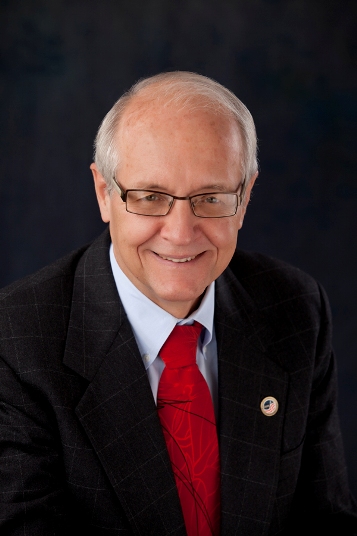
In a speech to the assembled community members, Mayor Clyde Haulman addressed the city’s past, its current challenges and its vision for the future.
“In a resilient city, deep relationships and partnerships, forged in our communal understanding of who and what we are and reinforced by the way we operate day-to-day, strengthen the city to face difficult challenges and even disasters,” Haulman said.
Haulman said changing financial realities would pose challenges to the city and its institutions. The lingering effects of the Great Recession, which hit the U.S. economy in 2008, have forced Colonial Williamsburg and the College of William & Mary to develop new business models and put additional stress on government services — including an increase in city residents who take part in the Supplemental Nutrition Assistance Program — while limiting its resources to do so.
Haulman also pointed to an gaining infrastructure and increased income gap between families as challenges that must be faced in the coming years.
Haulman then addressed the current state of the city’s finances, and its economic, physical and human resiliency.
The city’s fund balance currently stands at $31 million, which Haulman said proves the city lives within its means.
Haulman said the city must grow its economy in order to maintain that comfortable financial situation. A decline in overnight stays has hit the region’s tourism industry hard, Haulman said, with lodging tax collection down 30 percent from their peak during the Jamestown 2007 celebration.
Reversing that decline in tourism dollars would require the combined efforts of public and private interests, including the Greater Williamsburg Chamber & Tourism Alliance, the Williamsburg Hotel-Motel Association, Colonial Williamsburg and Busch Gardens. The city would also do its part, Haulman said.
“Where a helping hand is needed, the city will continue to assist redevelopment and repurposing of underused properties as seen most successfully in the case of the old Lord Paget motel, which will become Copper Fox Distillery, but more needs to be done,” Haulman said.
Some efforts by city government have already paid dividends, Haulman said. Infrastructure improvements, including the burying of above-ground power lines and the installation of new sidewalks contributed to economic revival in certain areas of the city, particularly along Second Street.
Haulman said future projects, including the realignment of Longhill Road at Richmond Road, the widening of Monticello Avenue and the reconstruction of the Capitol Landing-Bypass roads intersection would also contribute to economic growth.
The city would also pursue the creation of a new statistical area, incorporating the entirety of Hampton Roads and stretching from Richmond to Virginia Beach, as a way to boost connections and commercial growth throughout the region.
While he pushed for civic involvement in boosting tourism, Haulman cautioned the city could no longer rely on the industry as an economic driver as much as it could in the past.
He pointed to several opportunities for new economic growth, including the impending sale of the Williamsburg Shopping Center, the development of 384 housing units and commercial space at Quarterpath at Williamsburg, and the continuing expansion of the Prince George Street corridor, including the Griffin Arms and Prince George Commons buildings.
Haulman said there were bright spots in the current economic climate, with property values rising by 6.2 percent from last year, and sales and prepared food taxes increasing to $10.6 million from a low point of $9.3 million in 2008 during the recession. In total, Haulman said $130 million in restaurant business was transacted in the city annually.
“Williamsburg is a resilient city, strong and sustainable; its ‘state’ is good,” Haulman said. “We are the envy of communities across the commonwealth and across the nation.”
Related Coverage:
- City Boards to Council: Focus on Capitol Landing, Monticello Corridors
- Williamsburg EDA Talks Economic Growth, Transportation Needs
- Residents Name Housing, Economic Development Important Goals for Williamsburg’s Future
- City Staff Offers Monticello, Capitol Landing, Ironbound Road Projects as Priorities for 2015-2016
- City Leaders Talk Economy, Transportation at Fall Retreat
- Fall Retreat Gives Council Members Chance to Talk City Goals
- City OKs Incentives Policy to Attract Businesses, Resolution on Williamsburg Shopping Center
- EDA: City Should Guide Williamsburg Shopping Center Redevelopment
- City On Track to Complete 60 Strategic Goals Set for 2013-2014
- City Leaders Brainstorm Goals to Create Long-Term Vision
