


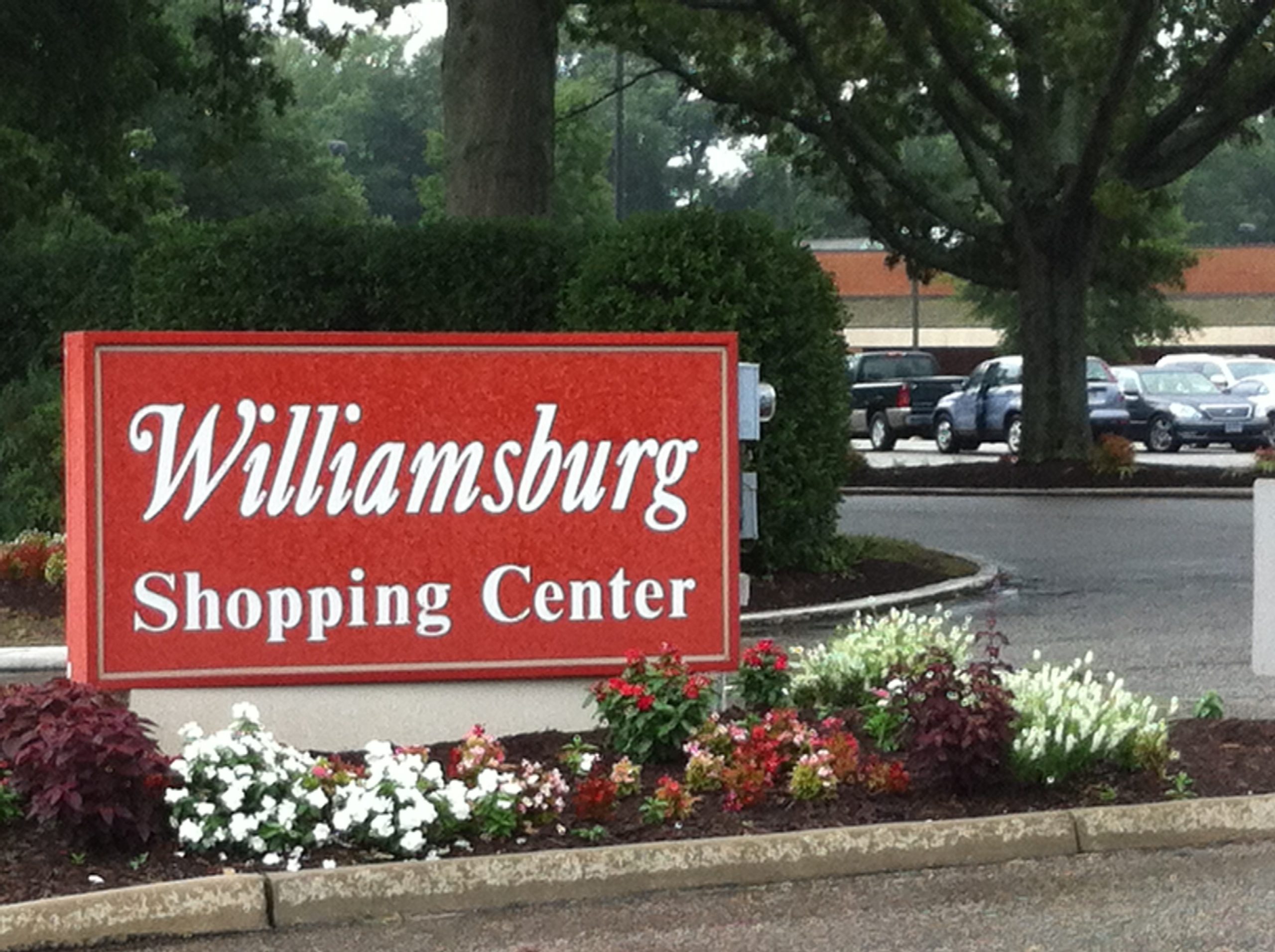
 The Williamsburg Economic Development Authority will send a report to City Council on how best to encourage the redevelopment of the Williamsburg Shopping Center at its meeting Wednesday.
The report consists of 10 actions the City of Williamsburg could take to influence the direction of redevelopment at the struggling shopping center, which was sold at a foreclosure auction Aug. 12.
A day after the sale, the EDA drafted a resolution calling for the City Council to take necessary steps to “control” the redevelopment of the shopping center. The group established a subcommittee to investigate different means by which the city could incentivize the redevelopment of the shopping center.
The subcommittee was guided by four goals laid out in the city’s 2013-2013 Goals, Initiatives and Outcomes: character of the city, economic vitality, transportation, and recreation and culture.
EDA member Rick Overy, who worked on the subcommittee, said the group met with members of City Council and city staff to determine the scope of their work.
“They really want the EDA to be a sounding board for ideas that come forward, to meet with developers, understand what their goals are and then report back to this group with specific recommendations,” Overy said. “Focus on incentives to encourage private redevelopment of the shopping center — we see that as the highest goal.”
The subcommittee’s report included 10 actions the city could take to incentivize such redevelopment. Several actions included construction, either funded or undertaken by the city. Street and infrastructure improvements that could benefit the property — such as the widening of Monticello Avenue — could be postponed until a developer submitted a “favorable redevelopment plan.” The subcommittee also suggested the creation of a parking garage incentive, whereby the city would cover up to 25 percent of the costs of building a parking garage on the site.
Instead of assisting with construction, the subcommittee also considered expanding the city’s demolition grant program, which provides zero-interest, forgivable loans to developers to demolish unused commercial properties. The current limit on the program is $20,000, but subcommittee members suggested raising that limit to encourage redevelopment beyond the current physical design of the shopping center.
Another idea called for the assignment of an ombudsmen to assist a developer through the city processes over the course of a redevelopment project.
The other six ideas involved grants and zoning changes to be enacted by the city. One grant would cover the cost of a consultant study to be commissioned by a redeveloper to determine the “best use” of the parcel in terms of the city’s GIOs, while another would match a redeveloper’s expenses for including “pedestrian, bicycle and mass transit friendly components” into a redevelopment. Both grants would have maximum limits to be determined in the future. And a third suggestion called for establishing Tax Increment Financing, a tax incentive for developers, on the property.
The remaining suggestions would alter the zoning of the parcel. The shopping center is currently zoned Urban Business District B-3, which allows businesses including “churches, funeral parlors, day care centers, [and] private clubs.”
“Theres no guarantee that we’ll get to our desired outcome,” EDA Chairman Tom Gillman said. “The only thing that can stop the changing of keys is zoning.”
Although the subcommittee suggested changing the zoning to limit the possibility of undesirable businesses, like tattoo parlors, from springing up at the shopping center, the EDA was divided as to whether that was the best use of the zoning incentive.
Vice Mayor Paul Freiling, the city council’s liaison to the EDA, said the city should provide developers with more leeway for redevelopment, rather than limiting them. Specifically, Freiling said the city should consider offering developers exemptions for heights and densities that would not normally be allowed in a B-3 zone.
Gillman said the zoning restrictions served an important purpose and could prevent an undesirable outcome for the redevelopment effort.
“They’re written toward people who want to buy the keys and run it to the low end of the zoning regulations,” he said.
Although the discussion largely addressed the incentives developed by the subcommittee, several EDA members mentioned items that could be included in a redeveloped shopping center, including a boutique hotel.
The EDA voted to send the report to the City Council for consideration at its meeting 2 p.m. today in the third floor conference room of the Municipal Building, 401 Lafayette St.
Related Coverage:
