


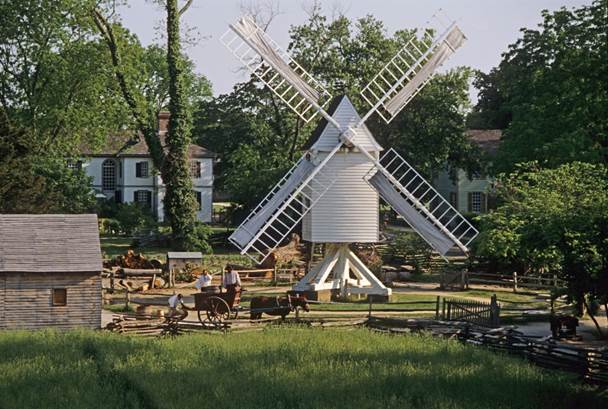
More than 10 years after closing to the public in 2003, the Windmill of Colonial Williamsburg is slated to return to a new home at Great Hopes Plantation.
The windmill was built – based on the 1636 Bourn Mill in England – in 1957 in celebration of Jamestown’s 350th anniversary. It ceased operation in the 1990s, closed in 2003 and was removed from the historic area four years ago.
Thanks to a contribution from David McShane of Bucks County, Pa., the windmill will be restored through an eight-month process starting this fall.
“Once completed, the windmill will stand taller, more visibly — and I daresay, more proudly — above the Colonial Parkway, at the Visitor Center entrance to Great Hopes,” said Colonial Williamsburg Foundation President and CEO Colin Campbell in a news release. “We look forward to welcoming back the local community to rediscover this gem of the Historic Area.”
The windmill, known as Robertson’s Windmill, spent 53 years behind the Peyton Randolph House. While records indicate 18th century lawyer William Robertson owned a windmill in the 1720s, it was located south of the Randolph house.
The modern-day windmill conflicted with the re-created 1770s town, but that was not its complete undoing. The 17th-century windmill design was flawed, and that coupled with wear caused the machine to erode.
Lynchburg-based B.E. Hassett Millwrights Inc. has prepared plans to improve the windmill’s stability.
“We’ll be able to make the structure more reliable and easier to maintain, while including elements elsewhere that will add to its historical authenticity,” said Matt Webster, director of the Grainger Department of Architectural Preservation.
Once the windmill is back in operation, visitors will “once again be able to explore the inner workings of the mill, which will operate on a limited basis,” Campbell said.
As part of its operations, grain will be milled as part of the Historic Foodways Program.
“This project provided a great opportunity to make a contribution that will both enrich visitors’ visual experience and help them better appreciate colonial life,” McShane said.
