



Since the Regency Room in the Williamsburg Inn opened in the early 1970s, no major changes have been made to its interior design.
Recent updates in the space and on the menu are bringing the restaurant into the 21st century, but visitors can rest assured it is not change for change’s sake.
The project has been in the planning phases for more than a year before renovations began in February. Colonial Williamsburg’s interior designer Cheryl Griggs worked closely with Executive Chef Travis Brust to create a space that is both practical and delectable.
“I gave [Griggs] what I needed to be functional, and she made it look good,” Brust said.
Those alterations include new serving stations that come from the same hand-crafter in Richmond who created the stand that greets guests when they enter the space. With green marble surfaces, the buffets will have a hard top for preparing food that also taps into the history of the inn – the same stone surrounds the fireplace original to the lobby.
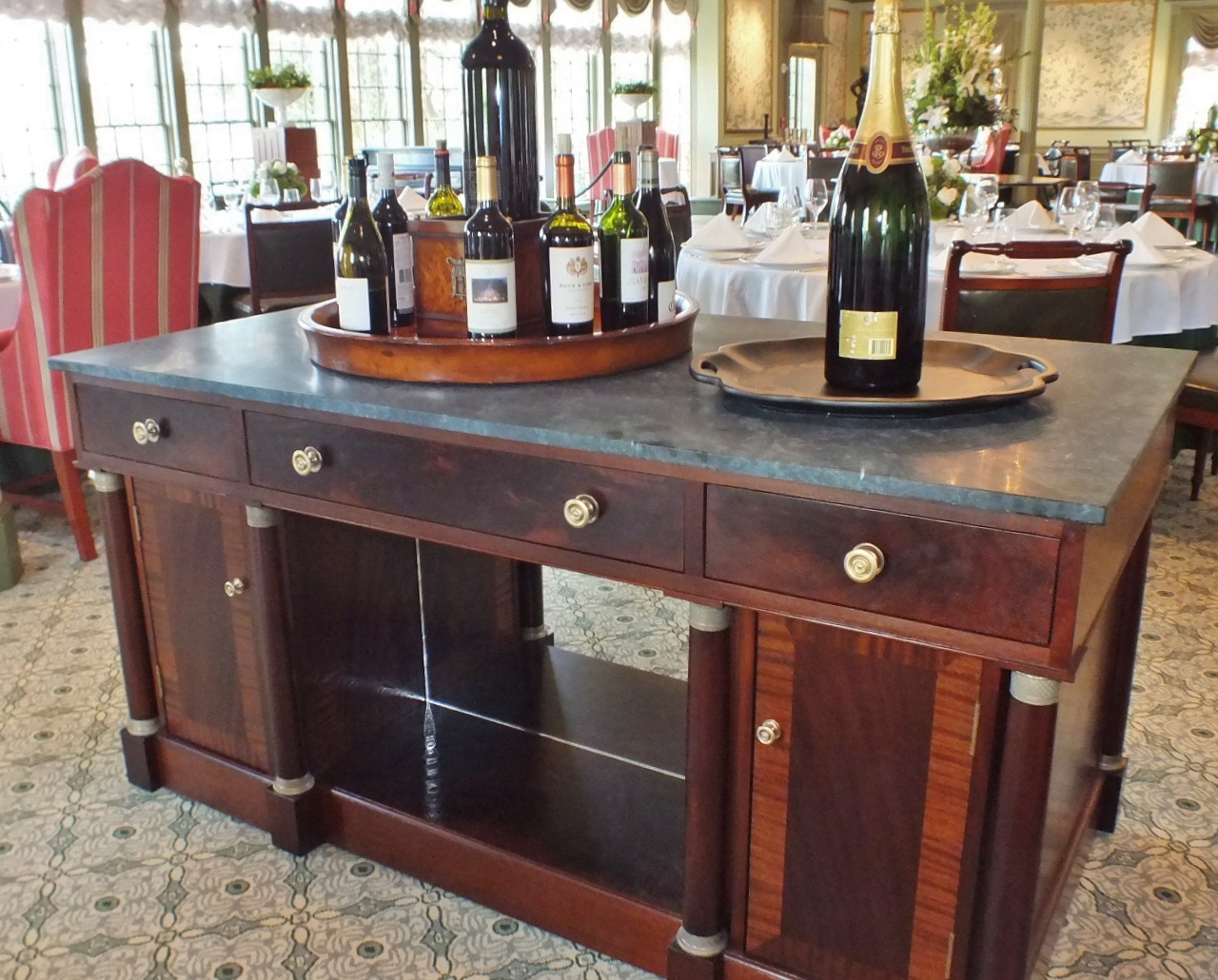
They will also be more elegant than skirted tables and at a more suitable height for food demonstrations and omelet-making when the Regency Room serves buffet breakfasts. Castors will allow them to roll out of the way if space is needed for larger functions.
There will also be new serving stations in the dining room to keep bread and coffee warm, as well as carts where culinary students can serve an amuse bouche — small, complimentary appetizer meant to get diners salivating for the meal — or dessert truffles while interacting with patrons.
“They get to have a chef experience at the table, which is huge. … We’re bringing the chef to the table,” Brust said.
Overall, the aesthetic changes work to giver diners a more intimate, inviting experience.
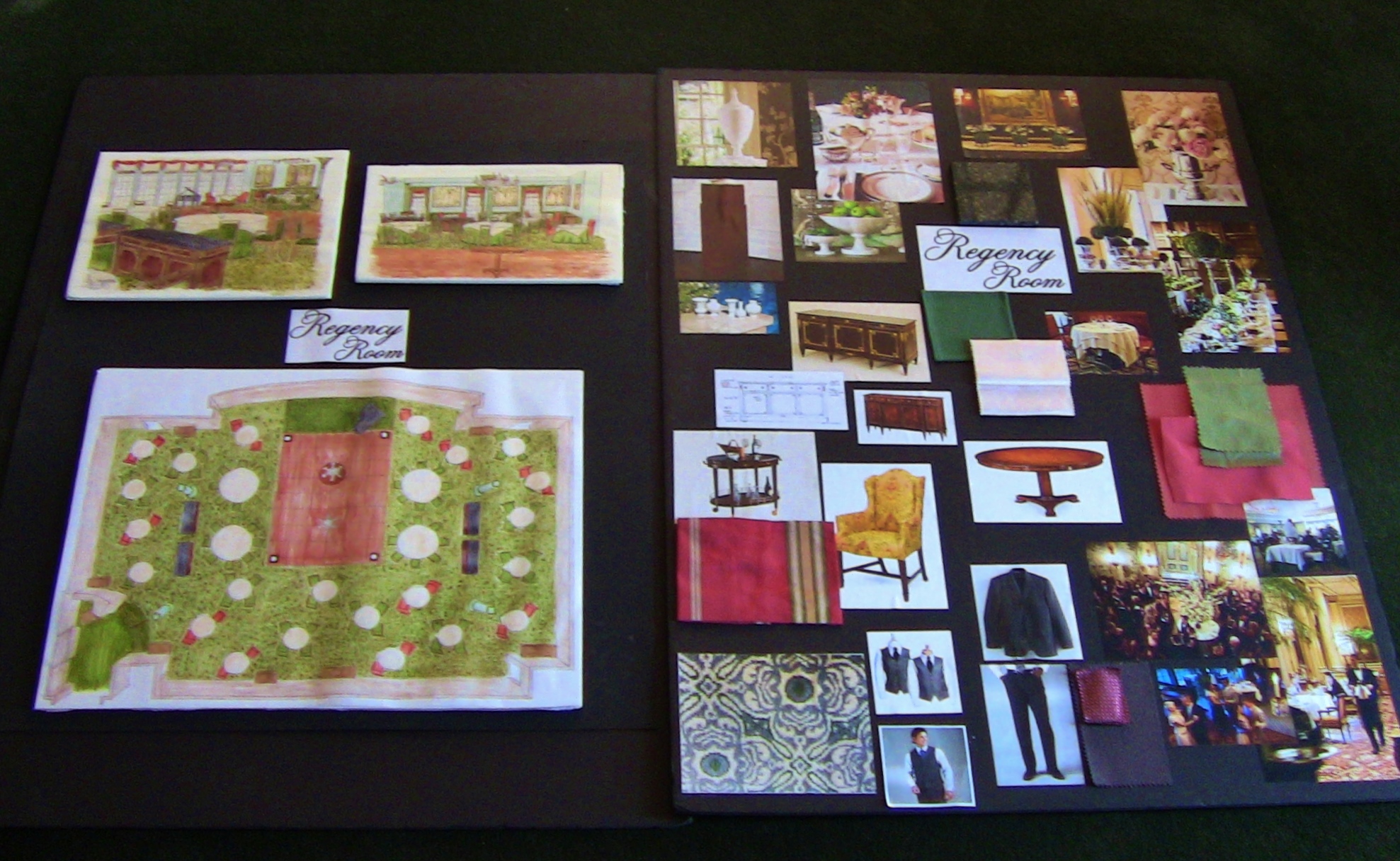
Griggs said she walked a fine line to add new touches without compromising the feel and legacy of the Regency Room. Drawing inspiration from the building’s architecture, she aimed for a design that added to or slightly tweaked – not overhauled – the existing motif.
New custom seats styled after wing chairs will warm up the space in an orange fabric at tables for two, and complement the existing green chairs that will stay for larger groups of diners.

The capacity of the restaurant will be smaller, but Brust said it is better to earn a reputation as an exclusive venue and focus on quality on the smaller scale. Part of the impetus for the update was fewer people frequenting it on weekdays.
Short columns topped with urns at the corners of the dance floor will add dimension and break up the large room to feel cozier, as will the buffet tables between them.
The table coverings have also changed, from green and white to green and diamond-patterned cream. The carpet is new but in the same pattern as before, hailing all the way from Ireland, and drapes too will stay the same.
“They’re part of our tradition,” Griggs said.
The shifts are subtle – like changing a salmon-colored rose in centerpiece to white blooms – but ones regular guests observe, said Colonial Williamsburg’s Communications Manager Barbara Brown.
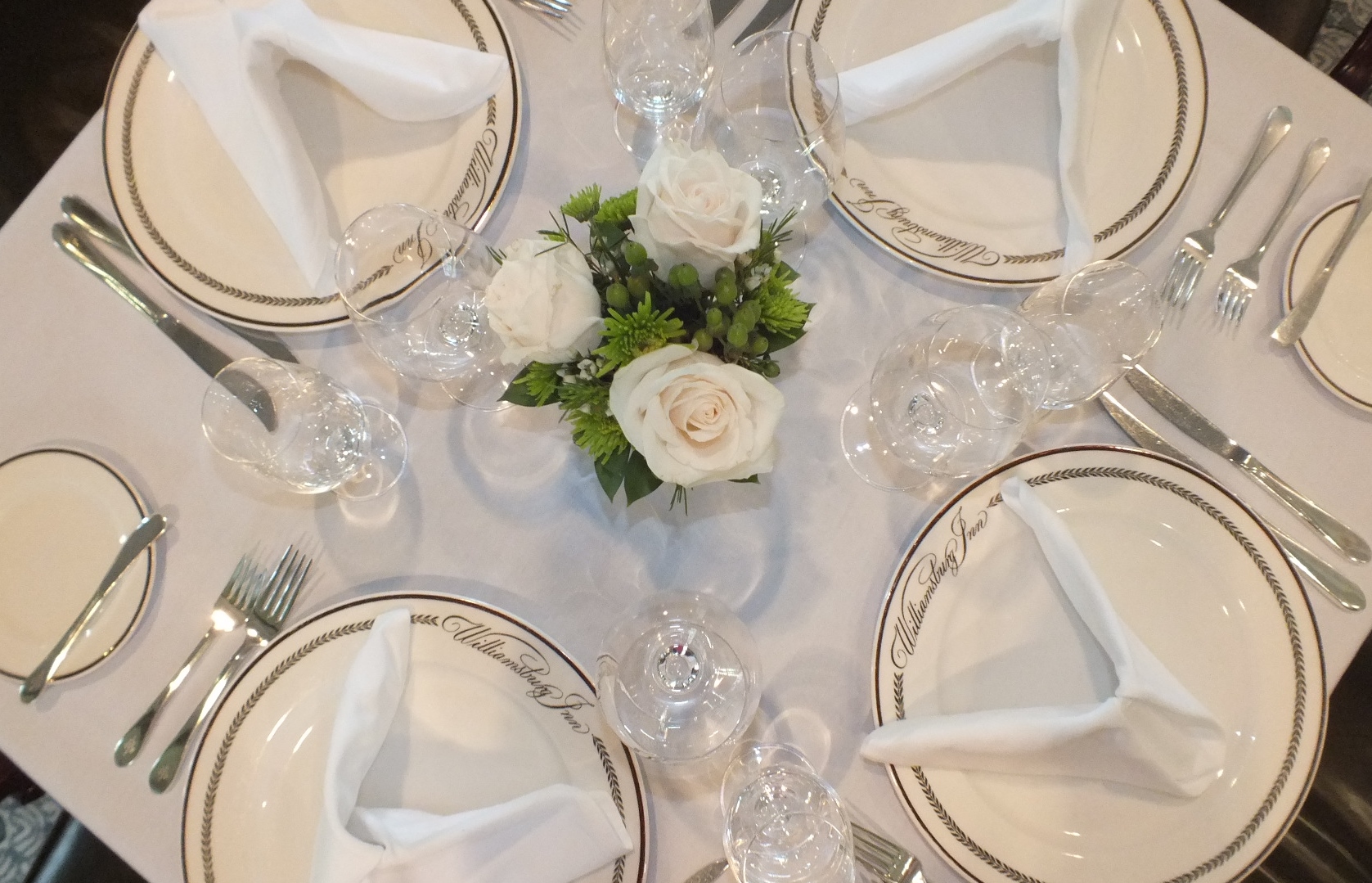
“They’re going to notice the flowers on the tables,” she said.
Perhaps the most monumental edit is in dress code: Jackets are no longer a requirement for diners, and waiters have switched from a modified tuxedo to a gray shirt with vest, tie and jacket.
“We don’t want to be stuffy,” Griggs said, to which Brust added there will still be an impressive elegance to the experience.
Some adjustments are a feast for the palate as well as the eyes.
Brust, who is coming up on his decade milestone with the inn, has been on a years-long quest to update the menu. He echoed Griggs, noting the classics will still be available but new techniques are slowly being introduced.
“I’ve been coming here since I was 12 years old, and I remember these flavors,” Brust said. “New age foodies” would not be impressed, he believes, but he is not ready to lose signature dishes altogether.
As a solution, Brust has introduced an avant-garde side of the menu where he used a modified technique to create food that is still rooted in the room’s tradition of French cuisine. There he can explore molecular gastronomy — the food science branch that uses chemistry and physics transform ingredients — but still must ensure that old and new dishes look cohesive on a table together.
Rather than the standard horseradish sauce with meat, Brust has extracted the horseradish into a stock that he then foams on top of the protein for an intense pop of flavor.
He said it brings a new experience to guests, and one they appreciate. When modern techniques were incorporated into menu last fall, they sold better than the Regency Room classics.
“There’s a lot of speechless guests,” Brust said.

He recognizes a three-and-a-half hour dinner is not something most guests are interested in anymore, and the younger generation or eaters shy away from a formal setting. He said changes draw a happy medium to allow to Regency Room to appeal to a broader audience.
They want to remain a destination for special occasions, Griggs said. In addition to those who come for weddings, anniversaries and birthdays, she hopes the inn will attract a whole new market for its unique setting steeped in history.
“We don’t want to look like a chain hotel,” Brown said, “because that’s not who we are.”
