


Editor’s Note: This story contains graphic details regarding this case. It is not suitable for all readers.
On Sept. 12, 2001, an Eastern European woman working at Busch Gardens on an exchange program told police she was raped by an unknown man in a wooded area in Williamsburg near Capitol Landing Road.
Williamsburg Police were not able to identify a suspect for 11 years and it took another 12 months for the case — developed with DNA evidence and technology not available when the rape occurred — to come to trial. Jurors didn’t need more than two hours to reach their decision: Guilty.
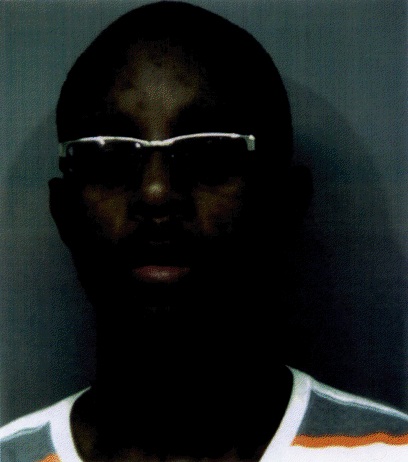
Tyrone Lamont Holloway, a 37-year-old South Carolina man, was sentenced Wednesday to 33 years in prison by a jury — made up of six men and six women — shortly after they convicted him of raping and abducting the woman with the intent to defile her. Unless substitute Judge Ray Grubbs decides to lessen the sentence, Holloway will remain behind bars until he is 70 years old.
Holloway’s time in court may not be over. He is also facing charges over the 2002 attempted rape of a College of William and Mary student, who said a man grabbed her as she walked home around 2 or 3 a.m. A jacket with blood belonging to the attacker in that case was recovered near the scene. Williamsburg-James City County Commonwealth’s Attorney Nate Green said Wednesday he has yet to decide if he will bring that case to trial.
Victim Tells Jury About Rape in Wooded Area
The victim in the case traveled thousands of miles to testify Wednesday. In her testimony she said she was living in the International Housing Village — a Busch Gardens-owned apartment complex where students working for either Water Country USA or Busch Gardens live during their work and travel program — in September 2001. She had been in the country working for Busch Gardens for a few months at that point.
She told the jury she went out shortly before dark Sept. 12 to visit a nearby Food Lion. She eventually reached Parkway Drive, a side street that runs from Bypass Road down to its terminus at Penniman Road, one block past Second Street. While walking on a poorly lit stretch of that road — the area was less developed in 2001 than it is now — she said she heard someone behind her.
She said she turned around and saw a man about 20 feet behind her. She began walking faster, moving toward the center of the road. Before she could make it too far, she said the man grabbed her from behind, placing hands over her mouth and over her forehead and eyes. She said she tried to yell for help, but the man told her to “shut up.”
The woman told the jury she tried to escape, but that it was impossible. The man dragged her into the wooded area, telling her “shut up” repeatedly. He asked her for her shoes and then her pants. She said those items were taken from her and that she was forced to the ground on her back. The man then raped her.
The man took a fanny pack from her — later revealed to contain about $800 and some identifying documents like her passport — and then left her in the woods. She said she sat there for a few minutes.
“I didn’t dare turn back,” she said.
She then put her pants back on and ran to a house a few hundred meters away. A person in the house took her in and called the authorities, who quickly responded to the site.
After eliciting the story from the victim, Williamsburg-James City Commonwealth’s Attorney Nate Green then used several witnesses — including officers from the Williamsburg Police Department, a nurse from Williamsburg Community Hospital who was working the night of the rape and officials from the Virginia Department of Forensic Science’s State Crime Lab — to establish a chain of evidence for the DNA that was found on her body.
Williamsburg Police Investigator Lang Craighill, a patrol officer at the time of the offense, said he responded to the residence where the victim ran after the attack. He told the jury he found the victim cuddled on the floor, crying, with dirt on her clothing and red marks and scratches on her hands, arms and neck. He then accompanied the victim to the hospital. He said police went to the scene of the rape, where they found the victim’s underwear in the woods.
Donna Rose, a nurse at Williamsburg Community Hospital, said she was the Sexual Assault Nurse Examiner — a specially trained nurse who stays with a victim of sexual assault until DNA evidence is successfully collected, sealed and prepared for transport — who handled the victim’s case. A DNA sample was found on the victim’s body, which was then given to the police, who then sent it to the State Crime Lab.
Prosecution Uses DNA to Make Case
George Li, a forensic biologist with the Virginia Department of Forensic Science, testified he received the sealed sample and ran tests on it. The sample was good enough to obtain a complete DNA profile of the offender, however no matches existed in the state’s DNA database. Li said samples without matches in the state database are run each week until a match is found or until the investigating agency says to stop.
Craighill then took the stand once more, saying the case eventually went inactive as police exhausted all leads they had. He said the Division of Forensic Science then contacted Williamsburg Police in 2012 with a new lead, which led them to Holloway.
None of the investigators went into detail about what led them to investigate Holloway. When asked after the trial, Green said he would not release that information until after he decides whether to pursue a trial in the 2002 attempted rape case.
Though it was not mentioned during the trial, investigators from the Williamsburg Police Department testified at a hearing Dec. 9 how they got Holloway’s DNA to match. Craighill testified at that hearing that in October 2012, they pursued the Holloway lead to South Carolina, where Holloway lived and worked at the time.
Police were unable to secure a DNA sample during that trip. They returned in December 2012, staking out Hollway’s home in Marion, which is about an hour northwest of Myrtle Beach. On Dec. 7, Craighill and Maj. Greg Riley of the Williamsburg Police Department watched Holloway get into his 1991 Ford Escort and leave his neighborhood.
They watched Holloway go through the drive-thru at a Zaxby’s restaurant near his home. After he got back on the road, Craighill and Riley said they lost him. They drove to Holloway’s workplace and waited for him. After he arrived, Craighill said he approached the vehicle and eventually saw two large boxes on the back seat but no fast food bag. Both boxes were marked “Essential Home Garment Rack.”
The two officers then went to a nearby Pizza Hut for dinner. They asked their waitress if she knew where to find that brand of garment rack, and she suggested they look at a nearby Big Kmart where she worked. The two went to the store and saw trash cans near the front door, where they said they eventually found a Zaxby’s bag that contained a box from the meal and a receipt from just before 5 p.m. that day.
Craighill said surveillance footage from the Kmart showed Holloway shopping during the time they had “lost him” in traffic.
Robert Scanlon, a forensic biologist with the State Crime Lab, testified Wednesday he analyzed the sample from the Zaxby’s bag, which matched the sample collected from the victim. He said the analysis tested both sets of DNA at 16 separate points to confirm a match, and that the chance of finding someone on the street with an identical DNA profile is more than one in 6.5 billion.
Officers from the Philadelphia Police Department arrested Holloway on Dec. 23. He was in Pennsylvania to watch a Washington Redskins-Philadelphia Eagles game. He was extradited to Williamsburg on Jan. 9.
Holloway Says Sex Was Consensual
Scanlon’s testimony concluded Green’s case. Holloway’s attorney, Patrick Kelley, then called Holloway to the stand.
He testified he was working at Williamsburg Community Hospital in September 2001. He said on Sept. 12 he went to meet up with his friend Christopher Chestnutt with the intention of going to a club in Newport News. Following Holloway’s testimony, Chestnutt — who is currently incarcerated at Virginia Peninsula Regional Jail on a slew of charges — testified to many of the same details presented by Holloway.
Holloway said the two decided to go to the International Housing Village to meet with some girls he had previously met at the 7-Eleven on Capitol Landing Road. When they arrived, they found the victim and a friend of hers. The victim got in the front seat of the car, but her friend did not. Chestnutt, who is white, testified the victim’s friend said she did not like white guys.
The three then drove to a car wash on Second Street, Holloway said. Upon arrival, Holloway said Chestnutt got out of the car and smoked some cigarettes while Holloway and the victim had consensual sex in the front seat. He said the victim then began asking him to pay her for the sex, to which he said he does not pay for sex.
Chestnutt testified he went back to the car after about 30 minutes, where he saw the victim use her shirt to mop up any residue left from the sex. Holloway said the three then drove to the Food Lion in James-York Plaza. He said he gave the victim $20 and told her to go get some beer, and that once she was out of the car, he drove off and left her there.
Holloway said he and Chestnutt then went and bought beer and then returned to his parent’s house, where he saw to his daughter who suffers from several complicated medical problems. After that, Holloway said he and Chestnutt sat outside and drank some beers and talked about the Sept. 11 attacks, which occurred the day before.
During cross examination, Holloway said the victim knew him as “T” from when they met at the 7-Eleven. Green then asked Holloway if he was saying that even though the victim knew details about his name and identity that she chose to withhold them from investigators until DNA evidence could be secured, to which Holloway said “Yes.”
When Chestnutt was on the stand, Green asked him several questions about his background. Chestnutt testified a psychiatrist said he suffers from “grandiose illusions.” Green then asked him about several things, including his belief that he worked as an undercover informant for the Drug Enforcement Agency for 20 years and that he tore up a $176 million winning lottery ticket because he was concerned that his wife was trying to have him killed for an insurance payout.
Jury Sides with Prosecution After Approximately Two Hours of Deliberation
Green then made his closing argument, telling the jury the case is a matter of credibility.
“It’s up to you to determine the credibility of those two,” he said during his brief remarks.
Kelley’s closing remarks were also brief. He brought up the fanny pack with the money, asking the jury why the victim would leave her home with $800 cash and walk through a dark area to go to a store that’s farther away than the 7-Eleven near her home.
“Does it really make sense that you’re going to go out carrying all that money to get a $5 phone card?” He asked.
He said the one thing nobody can dispute is the two had sex.
“He’s told a totally credible version,” Kelley said of Holloway’s testimony. He conceded Chestnutt was “a little bit out there” but that didn’t make him unable to tell a credible story.
The jury then took the case. They emerged two hours later with their verdict. On the abduction charge, they could give Holloway a sentence of 20 years to life; they elected to give him 20. On the rape charge, they could give him a sentence of five years to life; they elected to give him 13.
Grubbs will hold a sentencing hearing for Holloway on Feb. 19. At that date, he may give Holloway the full 33 years or shave some of the sentence off. He will also decide whether Holloway should serve the sentences at the same time or one after another.
“I’m grateful to be able to offer some closure to the victim,” Green said to WYDaily after the sentence was handed down. He said that though the case “took a sideways turn” on him, going from an “identification case” to a “what happened?” case, he was happy the prosecution was able to prevail.
The next hearing for the March 2002 attempted rape case has yet to be set.
Related Coverage:
- DNA Evidence Collected Secretly; Judge OK’s Use at Rape, Abduction Trial
- Man Charged with Attempted Rape to Undergo Mental Evaluation
- WJCC Judge Moves Forward 2002 Attempted Rape Case
- Man Accused of 2001 Rape Will Next Appear in WJCC Court in May
- Man Extradited to Williamsburg in Connection to 2001 Rape Case
