


The Williamsburg-James City County School Board approved Tuesday the 2013-14 budget, including a revised plan to allow current nursing students to graduate next year.
The $115.8 million budget includes a request of $3.3 million in additional funding from the city of Williamsburg and James City County. The division’s new expenses include an average 3 percent salary increase for all employees, a 1.14 percent base pay increase to offset an additional 1 percent employee contribution to the Virginia Retirement System and an increase of $2.4 million for health care.
More funding is also proposed to add teachers, increase special education funding, pay the local share for New Horizons Regional Educational Center, add a new technology position and reinstate after-school remediation programs.
The initial budget proposal recommended $1.2 million in cuts, including the Lafayette School of Practical Nursing and the Adult Education General Educational Development (GED) program. The combined cuts would have eliminated three full-time positions. Concerns from the community and the board pushed the administration to revisit the proposals, however, and the approved budget includes adapted versions of both programs. (Read more about the changes to the GED program here).
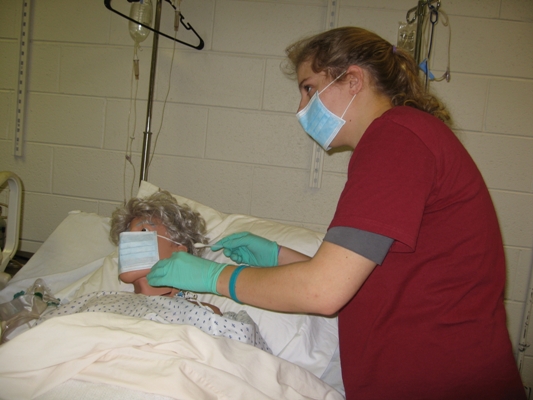
As nursing students and their family members watched Tuesday, Senior Director for Accountability, Quality & Innovation David Gaston presented a new option to keep the LPN program long enough to graduate the current class of first-year students in 2014.
The total cost for the program in 2013-14 would be $119,770. The amount WJCC pays will depend on how many students choose to enroll for the second year; the higher the enrollment, the less WJCC will have to pay because the tuition revenue will offset the costs. If 20 students enroll, WJCC will pay $26,770; if only 10 students return, WJCC will pay $48,770.
The program’s account, including scholarship funds, will have an estimated balance in June 2013 of $49,000. The division contacted scholarship donors, who indicated they plan to provide support for one more year.
The program’s staff will be cut back to one full-time employee, who will instruct all required courses for the second year of the program. Students will be asked to pay a $1,000 increase in tuition, divided into payments of $500 per semester; the full tuition cost for the second year will be $2,200.
During a public comment period before Gaston’s presentation, LPN student Virginia Bell said she was open to paying higher tuition because the program would still be the most affordable option in the region.
In the second year, students are required to complete a minimum of 400 hours of clinical hours. Supervision will be provided through a partnership with area RNs, working in cooperation with the program coordinator. Students will be able to meet the certification requirements to become LPNs, and the program will be able to satisfy the state Board of Nursing’s mandated clinical hours.
Looking at graduating classes from 2009 to present, an average of 10 students have completed the program. Currently, 21 first-year students have signed written commitments to return for the second year, but the exact enrollment for 2013-14 won’t be clear until they’ve completed exams.
Addressing the audience of nursing students, school board member Jim Kelly said he did not want to see the class reduced in half in the second year. The students nodded, some saying, “That won’t happen!”
Board Chair Ruth Larson said she had heard from a doctor’s office that has hired many WJCC LPN graduates and did not want to see the program cut short.
“We needed the community to help us and I appreciate the fact that they did,” she said. Looking at the students, she teased, “Don’t forget me now if I come into Urgent Care!” Once the budget was approved, several students embraced Gaston, thanking him for helping them finish what they started.
The budget was approved by five of the seven School Board members; Heather Cordasco was absent and Joe Fuentes voted against the budget.
Fuentes said he was not comfortable with making changes to the adult GED program, saying he did not believe the division would realize any real cost savings since much of the program is funded by grants. The administration has said the division would save $89,630 in salary and benefits.
Fuentes said adults need to have opportunities to earn high school diplomas because more educated workers leads to a stronger tax base and better family engagement in schools.
“This was never brought up at our budget retreat, and I’m just not comfortable with it,” he said.
Fuentes also said the board should have been briefed earlier in the process about several other budget items, including the Capital Improvements Plan, which he said the board received last week.
Before voting, Larson said WJCC is lucky to have two supportive local governments, but would like to see the state fund its educational mandates.
“This budget is not without pain. I am sorry for that, but I appreciate the efforts that have been made,” she said. “I look forward to a time when we’re talking about new and exciting programs we’re introducing to our schools, and not just cutting ourselves to bare bones once again. I don’t think that’s any way to run public education.”
The budget moves to the James City County Board of Supervisors and the City Council for approval. Both boards must approve their appropriation for the schools system by May 15. After determining the schools appropriation, the school board will make adjustments to the budget for final approval.
