


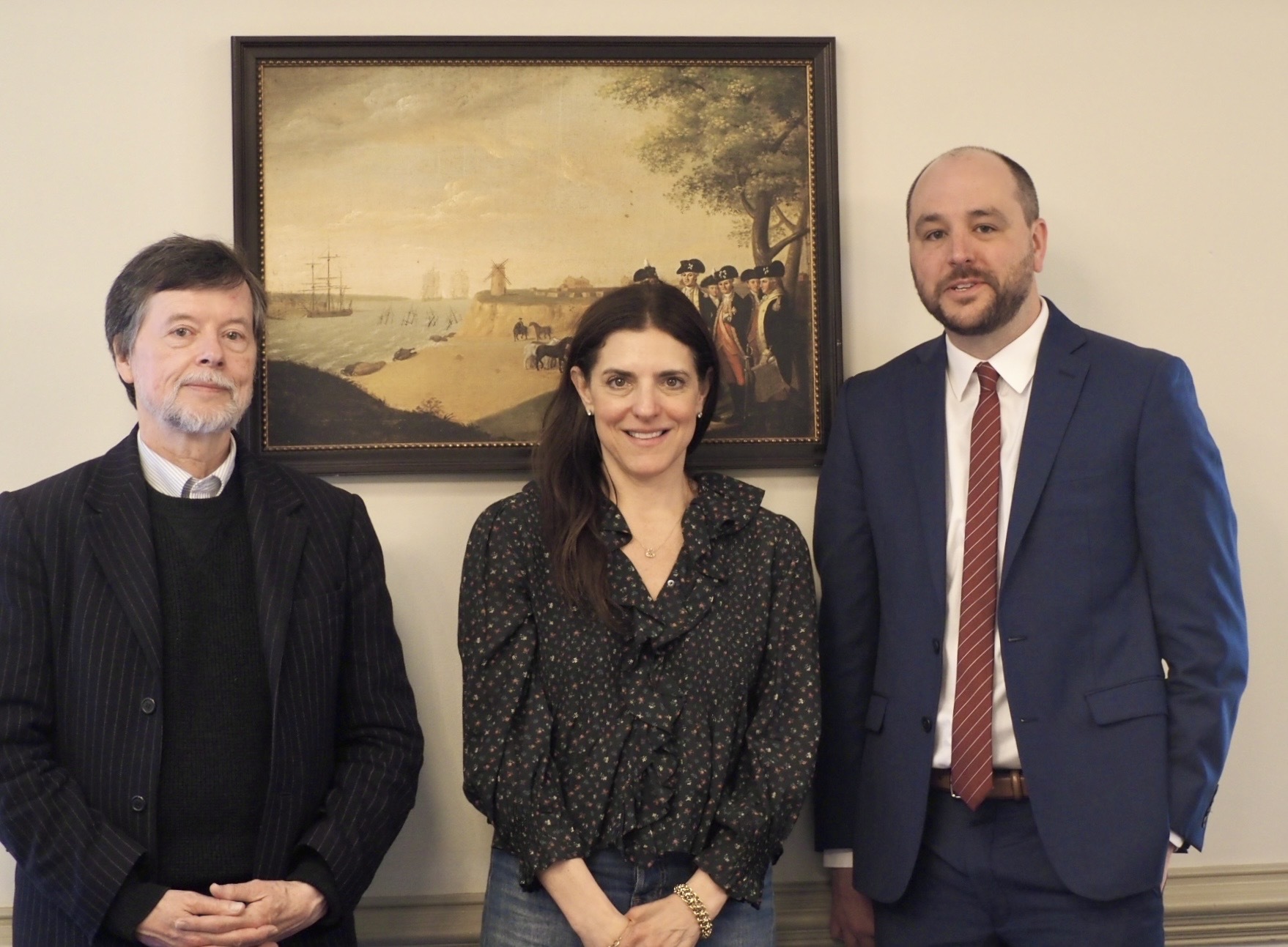
WILLIAMSBURG — On March 25, award-winning filmmaker Ken Burns offered the Historic Triangle a sneak peek at his newest documentary, “The American Revolution.”
An expansive look at the virtues and contradictions of the war and the birth of the United States of America, the film follows dozens of figures from a wide variety of backgrounds.
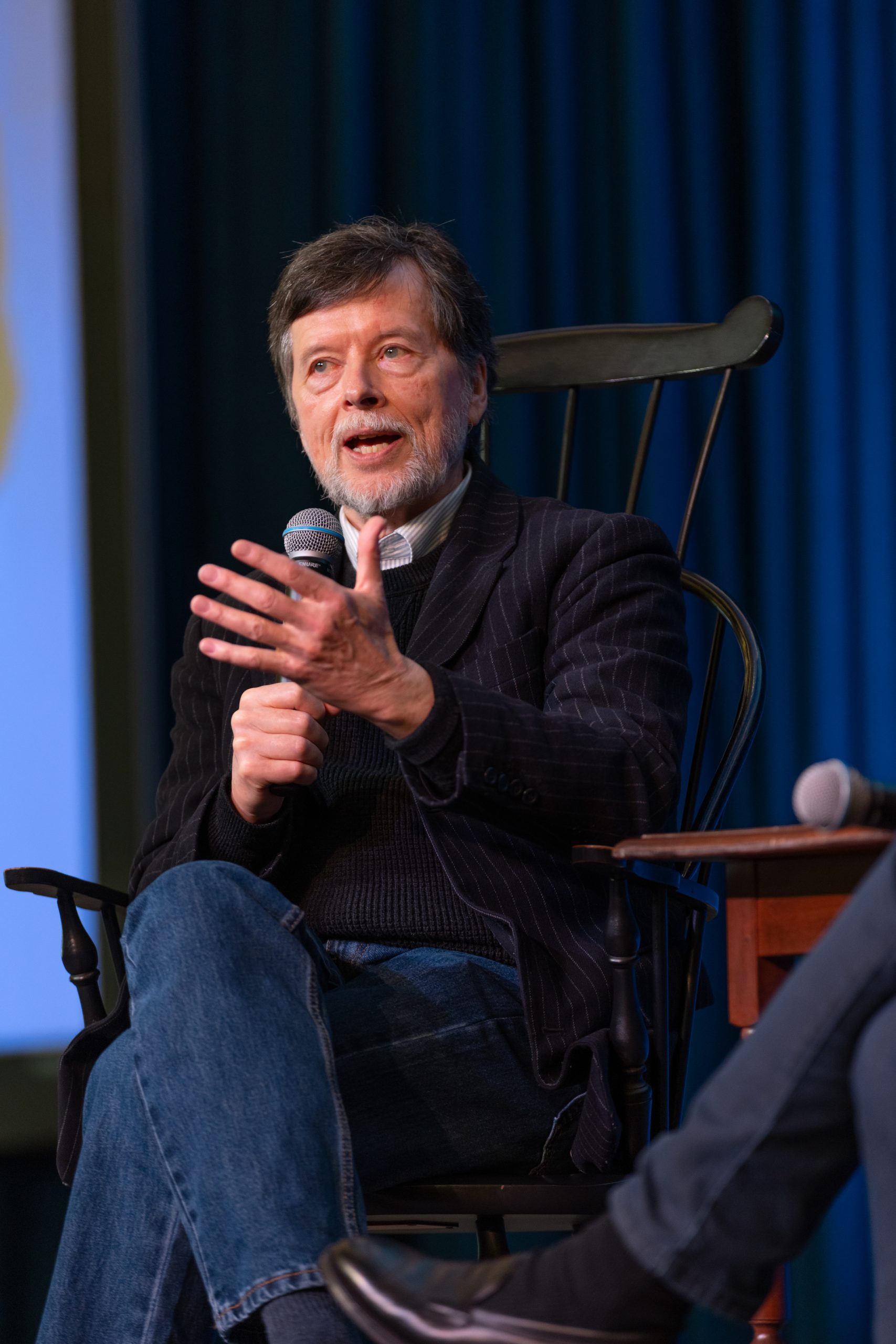
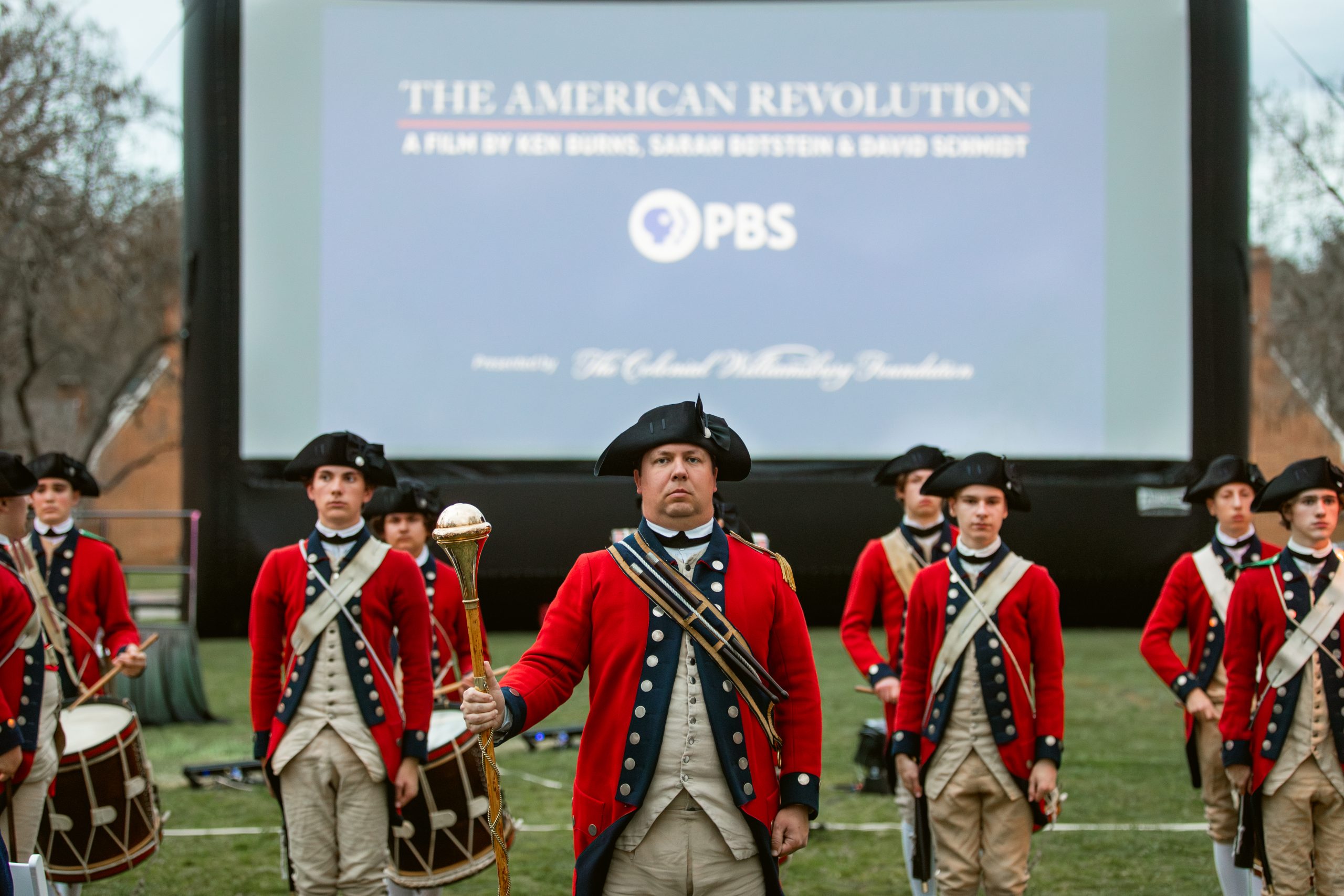
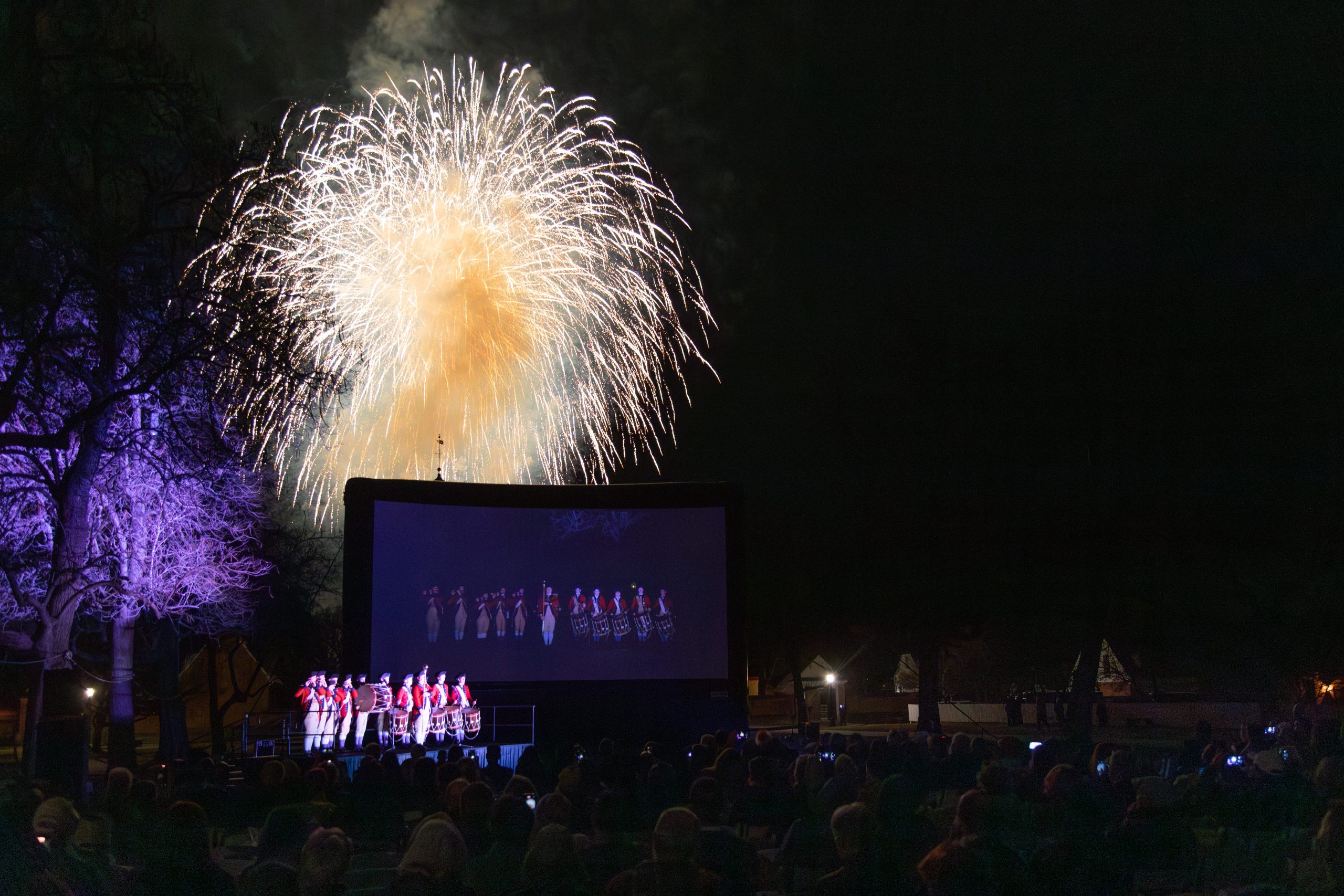
The free public preview took place in front of the Governor’s Palace in Colonial Williamsburg’s Historic Area. Hosted by The Colonial Williamsburg Foundation and the Virginia American Revolution 250 Commission, Burns kicked off the event with live remarks about the project before previewing excerpts from the film on an outdoor screen.
The series, which is set to premiere on PBS in November, has been in production for eight years and was shot at nearly a hundred locations, including Colonial Williamsburg’s Historic Area.
Local viewers will recognize Colonial Williamsburg landmarks including Raleigh Tavern, the grounds of the Governor’s Palace, the Capitol, the blacksmith shop and nearly 20 additional Colonial Williamsburg locations, as well as the American Revolution Museum at Yorktown and Jamestown Settlement.
“It’s a thrill to share the film with Virginians, especially in Colonial Williamsburg, which appears many times in our film,” said Burns. “As the capital city of Virginia, Williamsburg played a critical role on the road to revolution and around 250 years later, it was an essential resource and filming location for us to capture the look and feel of colonial life.”
“We feel history is the greatest teacher. Mark Twain is supposed to have said that ‘history does not repeat itself — which of course it doesn’t — but it rhymes,’ so we are always interested in the way after we finish a film — we lift our heads up from our desk, the proctor says time and we put our pencils down — and then we see and are thrilled by the ways in which it rhymes,” he added.
Discussing how reflecting on events of the past can be used as a teaching tool for the future, Burns explained, “Generosity, but also greed in people, venality and virtue, selfishness and also selflessness — all those things occur and reoccur because human nature doesn’t change. If you tell good stories in the past, you don’t have to point a neon sign. We love the idea that these complicated stories — in this case about the American Revolution — are kind of a psychological trojan horse. They come in and explode like a fireworks display inside you — something deeply emotional. That’s where real teaching takes place, where you feel a connection.”
Series co-director and producer Sarah Botstein added, “I like to think of the past and history — in any film we make, in any work that we do and in all the things we do — as a teacher, a warning and an inspiration. So, you are taking from the past, I think it is always those three ideals. How do we use the past as a teacher to make a better future?”
“I like to think of history as a reminder that we are somewhere midstream in the great human drama. We are not at the end of anything, we are not at the beginning of anything, and if you can keep that in mind you recognize this is the time for us to make our impact on the Earth. The only thing that separates us from any generation that has ever lived is that we are alive right now,” reflected David Schmidt, co-director and producer.
Schmidt, who grew up in the Williamsburg area and worked at The Colonial Williamsburg Foundation as a volunteer youth interpreter and member of the iconic Colonial Williamsburg Fifes & Drums, spoke at the evening preview.
“Colonial Williamsburg is very special to me, and I’m grateful for this full-circle moment to bring our film back home, to this extraordinary place that inspired my love for history,” said David Schmidt. “CW also means a lot to our film. As filmmakers, we’ve been fortunate to find natural partners in The Colonial Williamsburg Foundation, which shares a mission with us to bring our shared history to as many people as possible.”
The new six-part, 12-hour documentary series will premiere on Sunday, November 16 and air for six consecutive nights through Friday, November 21st on PBS. The full series will be available to stream beginning Sunday, November 16 at PBS.org and on the PBS App.

