


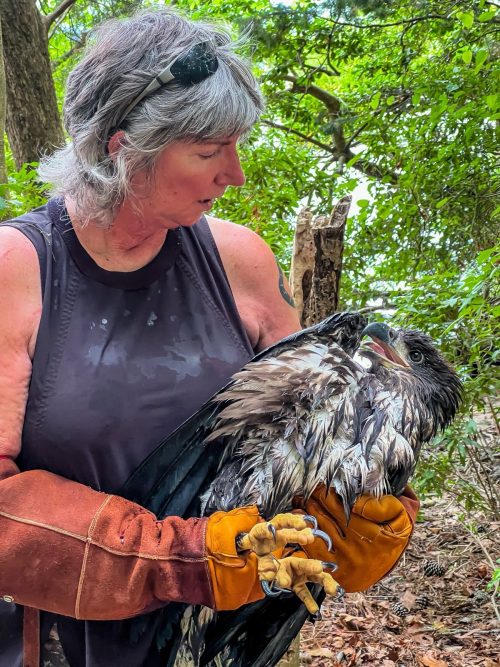
WILLIAMSBURG — Bird rescuer and rehabilitator Julie Wobig, who has been working with local birds for years, has no plans of stopping anytime soon.
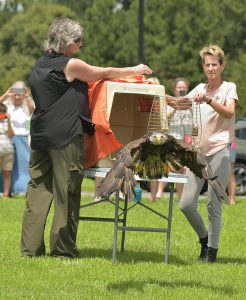
A rescuer for seven years, she typically works with birds such as eagles that, due to federal laws and regulations, the average person can’t touch.
Recognizing a Need
It was through her work for Eastern Virginia Wildlife Rescue (formerly Tidewater Wildlife Rescue) answering the dispatch line that she noticed many of the songbird rehabbers were retiring, and no one was trained to take their place. Wobig said that would have left just one 75-year-old woman in all of eastern Virginia to answer the call.
“The reason why I joined songbirds was because they needed it. Otherwise, no one would be caring for them,” Wobig explained.
Currently, Wobig said she is the only person this side of the Hampton Roads Bridge Tunnels who works with songbirds, with the help of her team. This includes baby bird feedings that require 20 minutes to half an hour of time, work she performs on top of her day job.
Category IV rehabbers assist her with feedings when she is working. According to the Virginia Department of Wildlife Resources, a category IV rehabilitator is a care provider who can provide direct care and come into contact with wildlife at a category I, II, or III facility without direct supervision.
The Call Process
For Wobig, the call process begins via text so that she can get a photo or video of the bird to verify its species. From there, she determines the caller’s location and decides the best course of action.
Wobig said she likes to see a picture so she can verify the age of the bird and address any confusion that can occur in songbird nesting situations. By doing so, she can help direct those who found the bird, including making sure a nestling is warm or identifying if a fledgling is injured, or is just on the ground.
She emphasized the importance of “Active Watching,” a term she used to describe watching a bird over time, taking note of behavior, as well as whether the parents might return.
The Reward
A reward for Wobig is in the release, and particularly taking a bird from the egg all the way through to release.
“That’s pretty rewarding, because that’s six weeks of work at minimum,” Wobig said.
She added the work can be intense, baby season in particular, coming as early as the end of February and extending through summer. Currently, she has approximately 60 birds in her care. This excludes raptors, geese or other injured birds she may receive during the season. She said she often can only hold onto a bird for a short time before passing them along to others, as she has so many songbirds in her care.
DWR has published information online about caring for injured and orphaned birds. It also outlines the process to obtain a permit to become a wildlife rehabilitator.
To learn more about Eastern Virginia Wildlife Rescue, visit its Facebook page.

