


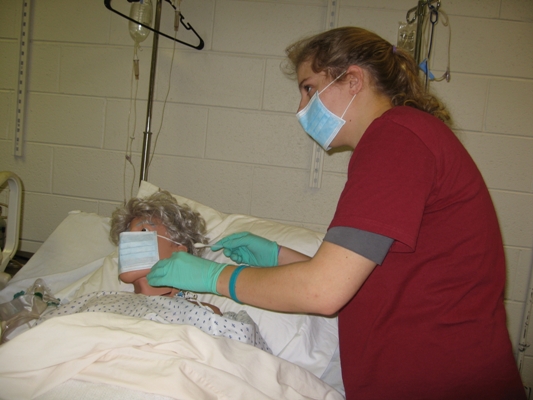
While many plan how to spend their tax returns on home repairs or vacations, Amber Muro decided to devote her return to self-improvement.
Muro put all of her tax money aside to pay two years’ worth of tuition for the Lafayette School of Practical Nursing, where she can graduate as a licensed practical nurse. It’s a gateway to a career for Muro, a single mother who works as a sales administrative assistant in the timeshare industry.
She shared her story March 5 when she asked the Williamsburg-James City County School Board to consider keeping the nursing program one year – long enough for current first-year students to graduate. Superintendent Steve Constantino suggested eliminating the program in his proposed 2014 budget, released in February.
Forty years ago, the Williamsburg community had a need for licensed practical nurses (LPNs). With money from the former Williamsburg Community Hospital, the Lafayette school opened in 1973.
School leaders say running the school simply costs too much. The division pays $208,630 to operate the program, which currently enrolls 21 first-year students and 10 second-year students. The program typically graduates eight to 10 LPNs, according to WJCC Senior Director of Accountability, Quality & Innovation David Gaston. Constantino said the division considered finding ways to reduce the overhead costs, but if staffing was reduced, the program would lose accreditation.
Students living in the district pay an annual tuition of $1,200 plus fees, while out-of-district students pay $2,400. To bring the school closer to self-sufficiency, the administration estimates the tuition would have to rise to at least $5,500, which might be cost-prohibitive. The program does not receive any outside funding through grants or sponsorships, but donors do contribute regularly to grant scholarships for deserving students.
Trends in Nursing Education
The Lafayette School of Practical Nursing is one of the last programs training LPNs in the region. Suffolk City Schools is closing its Sentara Obici Hospital School of Practical Nursing this year, and New Horizons Technical School’s last class graduated in 2012.
The closure of so many LPN programs doesn’t necessarily indicate LPNs are no longer in demand. “There’s a market, but it’s rather spotty,” Gaston said. “It depends on where the need is. Most LPNs are hired in non-acute care: nursing homes and home and healthcare facilities.”
That market has begun to favor hiring Certified Nursing Assistants, who are generally paid less than LPNs. Some of the students who enter the Lafayette School of Nursing are already CNAs who were hoping to take the next step toward better pay.
On the other end, hospitals currently hire RNs and the industry is trending toward requiring nurses to have Bachelor’s of Nursing degrees. In 2003, a University of Pennsylvania study published in the Journal of the American Medical Association linked rates of patient mortality to nurses’ education levels, finding death rates were higher at hospitals where nurses lacked bachelor’s degrees. Since then, a growing body of research has reinforced the belief.
In September 2012, a group of five national nursing and community college associations issued a joint statement endorsing academic progression in nursing. The statement shows the organizations agree nurses should be supported in efforts to pursue higher levels of education.
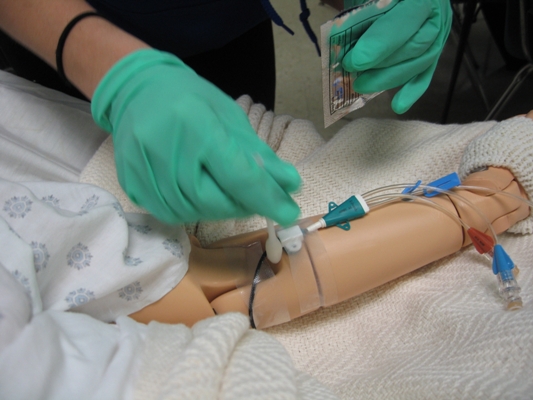
Thomas Nelson Community College does not offer an LPN training program, but offers an RN program and a “bridge” program designed to help certified LPNs become RNs. The Historic Triangle campus only offers an RN program, which currently has 57 students enrolled. Its classes are capped to 30 students, and Provost Bill Travis estimates about 50 percent of applicants are accepted into the program. Students pay nearly $125 per credit hour. Through its workforce development programming, TNCC also offers a Certified Nursing Assistant track.
Riverside School of Health Careers offers an LPN program in its School of Professional Nursing, located in Newport News. The program offers a day division, which includes three 13-week terms in one calendar year, and a night division, which includes three 20-week terms. Currently, 30 students are enrolled in the day division and 24 in the evening and weekend classes. Riverside students pay $12,750 for the entire program.
ECPI’s Newport News campus also offers a practical nursing program. Its total cost for tuition, fees, books and supplies is $35,319.
Debbie Sullivan-Yates, director of the LPN and RN nursing programs at Riverside, said the enrollment caps are based on historical data of graduates’ employment. Seventy-six percent of LPN graduates in December 2011 have found employment as nurses.
LPNs Needed for Aging Population
LPNs are still needed, but there’s been a shift in where they are being hired, Sullivan-Yates said.
“They are a large part of the workforce for long-term care,” she said. “With the fact baby-boomers are going to be aging, I think we’ll see they’ll play a vital role in long-term care and anything related to senior services.”
Trisha Holden, a 2010 graduate of the Lafayette School of Practical Nursing, is employed at Williamsburg Landing and Morningside in Newport News. Despite the lack of openings at hospitals, she found a “huge demand” for LPNs when she finished the program.
“I had job offers before I graduated,” she said.
Holden was a senior at Warhill High School when she entered the Lafayette School of Practical Nursing, which made the WJCC program an easy choice. But even if it had not been easily accessible, she said she would have chosen WJCC’s program, which boasts a 2012 pass rate of 100 percent on the licensure exam and was the most affordable option.
“My dad is disabled and I knew I didn’t have the means to pay for college myself and my parents couldn’t help me,” she said. “The price was affordable and I could pay for it myself.”
For students like her, she said, there is not money to spend on gas for commutes to Newport News.
She is currently completing pre-requisites to apply for TNCC’s RN program in the fall. She credits her instructors at Lafayette with inspiring her to pursue further education.
“That program has been such a blessing for me. I would not be where I am now … I wouldn’t have had the means to go back to school,” she said. “I know cuts have to be made, but I don’t feel like this should have even been a consideration because of how it serves the community.”
After the March 5 meeting, Gaston said the administration knows the enrolled students are frustrated.
“We want the public to realize this isn’t an arbitrary decision, and we’re exploring the options to see what we can do to help,” he said.
The School Board would like to see some of those options include counseling services to guide current students to reaching their goal, albeit in different programs. Constantino said the division would like to at least refund the tuition spent by first-year students so far.
Elise Emanuel suggested going a step further, and offering tuition assistance for students that are able to transfer into other area programs. WJCC administrators are scheduled to meet at TNCC later this week to discuss transfer options.
The program was funded by a hospital that no longer exists and the program is not in the division’s core mission, said board member Jim Nickols.
“On the other hand, I feel an obligation to help the students who are currently in the program realize their vision for themselves,” he said.
