


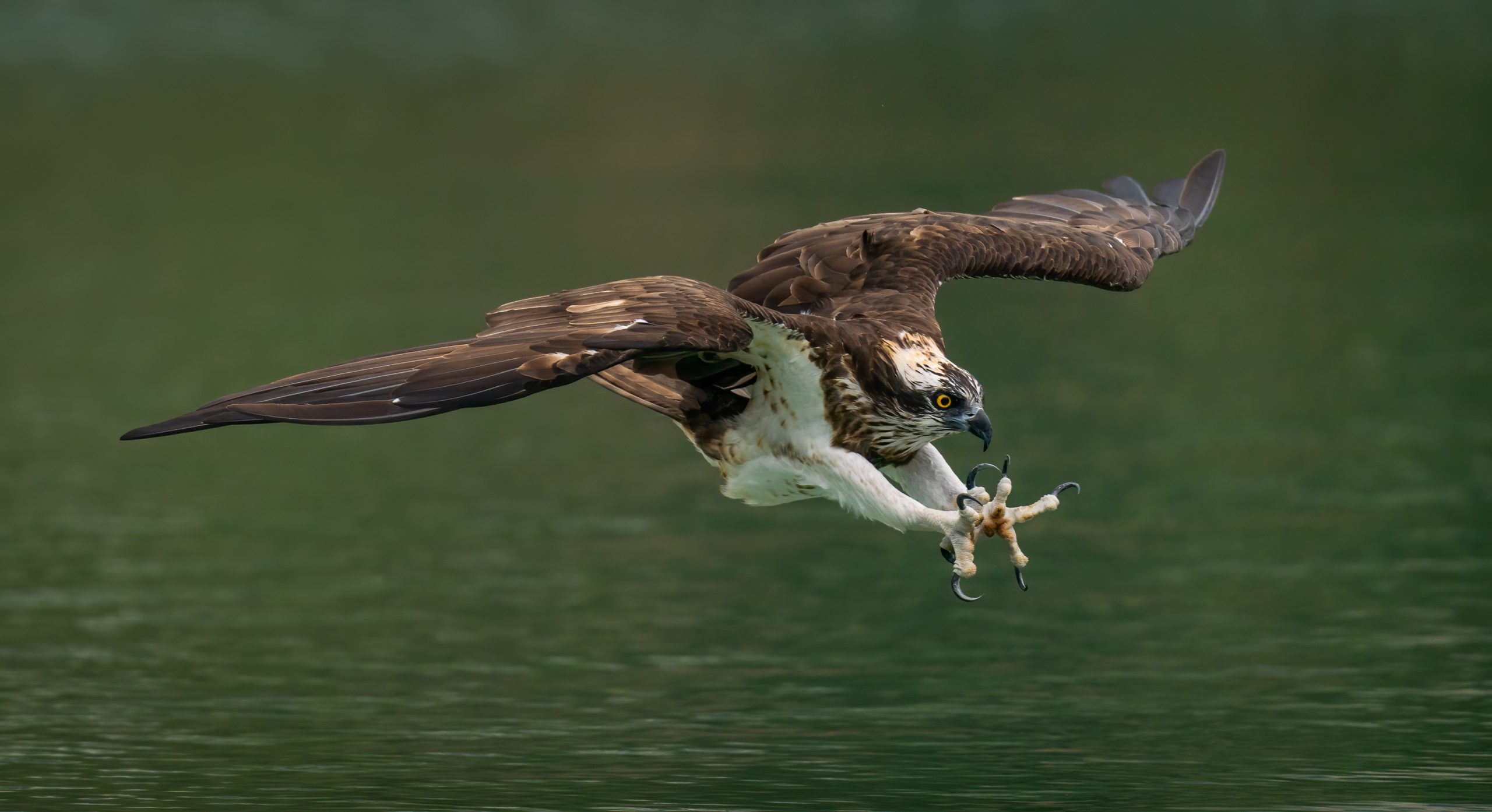
WILLIAMSBURG — Osprey populations on Virginia’s Delmarva Peninsula have declined drastically, according to a new report that warns the species may face a population collapse in the region.
The report by the Center for Conservation Biology at William and Mary found a 90% decline in the number of nesting pairs of osprey on the peninsula. In 1987, researchers observed 83 nesting osprey pairs, but this year, they spotted only nine.
Center director Bryan Watts said osprey rely heavily on Atlantic menhaden for food — and access to food might be the culprit for such a major decline.
“The pattern that we’re seeing suggests that it may be a food-stress or prey-availability problem,” he said. “Osprey specialize on fish, and that’s all they use, so they’re a very good indicator for fish stocks.”
Watts said the research didn’t include studying the diets of the osprey on the peninsula. He added that osprey are at the top of their food chain, and dips in their population can be attributed to broader ecological problems.
According to the Chesapeake Bay Foundation, Atlantic menhaden populations dove drastically in the 1990s and have stayed low for 20 years.
“If something is happening within the food chain, they are usually one of the best indicators of that,” Watts said. “So, I’m less concerned about osprey going away. Osprey are very resilient. I’m more concerned about what the declines have to say about the health of the underlying ecosystem.”
Virginia is the only state that still allows industrial-scale menhaden fishing on the East Coast.

