



As William & Mary works to illuminate and discuss its history of slavery and reconcile past wrongs against African Americans, another piece of the puzzle has slid into place.
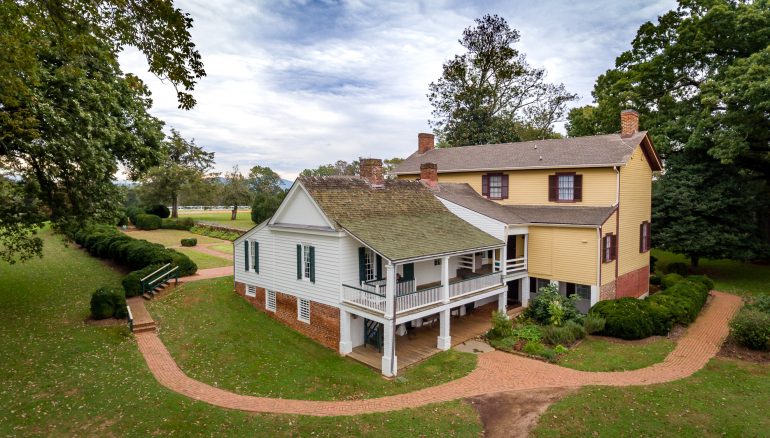
William & Mary has secured a $1 million grant from the Andrew W. Mellon Foundation that will help the university examine the legacies of slavery at William & Mary and James Monroe’s Highland, a former presidential residence and division of William & Mary in Charlottesville.
The university announced the receipt of the $1 million grant in a news release late Wednesday night.
The grant will fund a project called Sharing Authority to Remember and Re-Interpret the Past for five years starting July 1 this year.
“The Andrew W. Mellon Foundation grant supports William & Mary’s commitment to partnering with our wider region and communities to illuminate our shared history,” said university President Katherine Rowe. “By sharing authority to re-interpret the past with descendants of those who lived and were enslaved at Highland, we are taking a new approach to how we tell that history. We believe we will be able to tell a fuller story this way, and one with more consequence, today.”
The project
The project will include research, teaching and community engagement, efforts of which will be ongoing at both William & Mary and Highland, according to the news release.
James Monroe, an alumnus of the university and a U.S. president, lived on the Highland property, as did enslaved men and women.
Some of that research — involving oral histories told by the descendants of the enslaved that built and maintained the William & Mary main campus — will be incorporated into a Memorial to African Americans Enslaved by William & Mary on campus.
The oral history part of the project will also carry over to Highland, where oral histories will be used in conjunction with archaeological and archival research to design new exhibits. That initiative will include narratives of a dozen or more descendants of those enslaved at Highland.
“The descendants, some of whom live just miles away from Highland, will collaborate on research and interpretation, as well as guide and assess Highland’s treatment of race and its role in history,” the news release said.
The research on those who lived at Highland will be used for course development at the university. Those courses will be created through William & Mary’s University Teaching Project and will use teams of faculty to convey the project’s work to the community about questions of race, immigration, veterans’ issues and the rights of indigenous populations, as well as connect students with community stakeholders.
Half of the courses funded by the Mellon grant will be new, others will be modifications to current courses offered by William & Mary.
First Africans and the Lemon Project
The start of the Mellon Foundation-funded project comes during the 400th anniversary of the arrival of the first recorded Africans in the New World.
Throughout 2019, historical and archaeological organizations are putting together exhibits and commemorative events to honor several pivotal events that occurred in 1619.
Those events include the arrival of the first Africans, the creation of the first representative legislative assembly in the New World, the recruitment of women to join the men at Jamestown and create a more permanent colony and the first official Thanksgiving in North America.
On its own, William & Mary has also worked to acknowledge and reconcile its history of enslavement and treatment of African Americans through the Lemon Project, which started in 2009.
“This project will unite the Lemon Project on main campus with the research and interpretation that we do on the Highland campus into a single initiative,” said Sara Bon-Harper, executive director of James Monroe’s Highland. “In addition, involving communities outside the university is an innovative way to approach history.”
Sharing Authority to Remember and Re-Interpret the Past will be executed under the Lemon Project, according to the news release.
A Lemon Mosaic Diversity post-graduate fellow will co-design and teach the on-campus part of an interdisciplinary course based at Highland under the Sharing Authority to Remember and Re-Interpret the Past project.
That fellow will also offer a free class on genealogical research to Greater Williamsburg residents.
Another course will start in the second year of the grant, and be led by a post-doctoral fellow who will involve undergraduate students in the research and outreach efforts at Highland and in Williamsburg.
Part two of that class will be taught by another post-doctoral fellow and will engage up to 40 Monroe scholars over four years to digitize and disseminate research from Highland and the William & Mary campus, according to the news release.
“One of our goals is to understand the African American experience at William & Mary from slavery through the Jim Crow and Civil Rights era,” said Jody Allen, assistant professor of history and Lemon Project director. “This funding will have a great impact by allowing us to conduct significant genealogy work. Through this genealogy research we will be able to better understand the university’s connections to the African American community and they will in turn help us fill in some pieces of the story that we have not yet been able to uncover.”

