


The City of Williamsburg will not follow through on a proposal to install the first speed humps on a city street.
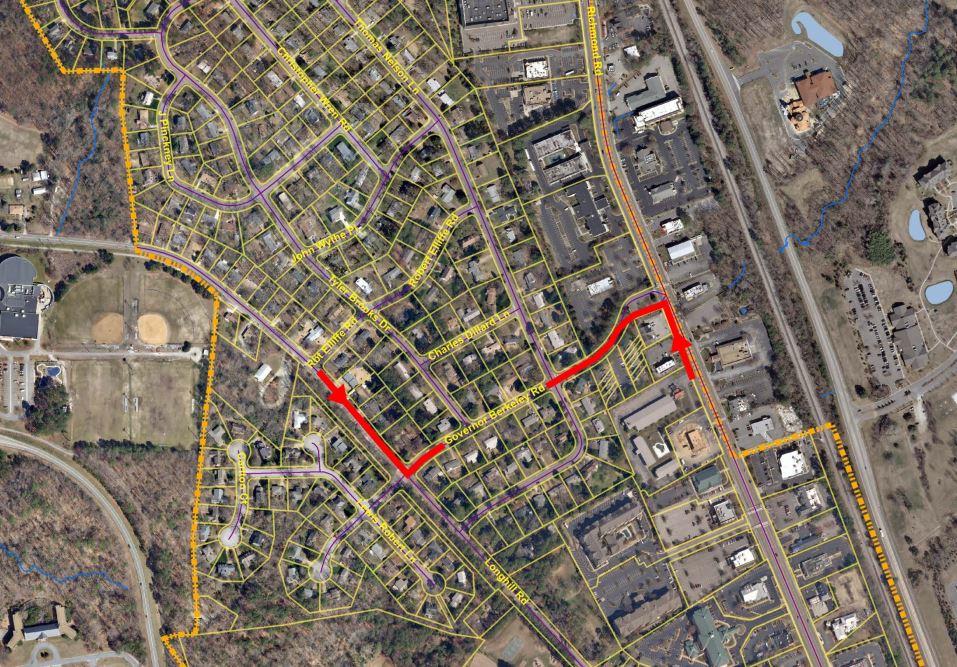
With a 2-2 vote at its meeting Thursday, the Williamsburg City Council did not pass a resolution that called for the installation of two speed humps on Gov. Berkeley Road, which runs between Richmond and Longhill roads near Kiwanis Park.
Mayor Clyde Haulman and Councilwoman Judy Knudson represented the no votes. Councilman Scott Foster was not present for the meeting.
Speed humps are a traffic control measure used to slow down the speed of traffic. Speed humps are wider than speed bumps by several feet and allow for higher traffic speeds compared to speed bumps.
The city does not currently use speed humps on any street.
The speed humps were the latest request by residents of Gov. Berkeley Road for additional traffic control measures on the residential street. In October, the City Council designated the road as an augmented fine street, allowing for normal speeding fines to be increased by up to an additional $200.
Residents of Gov. Berkeley Road requested city staff examine the possibility of installing speed humps on the street both before and after the City Council’s October decision.
While the city acknowledged Gov. Berkeley Road is commonly used by drivers as a cut-through between Richmond Road and Longhill Road, residents argued the street also had a speeding problem, necessitating more traffic calming measures.
Director of Public Works and Utilities Dan Clayton said the city’s traffic consultant, Kimley-Horn, reviewed the residents’ request and studied the traffic patterns on the street.
The city has established criteria for installing speed humps as a traffic calming measure, which includes demonstrating a speeding or cut-through problem on the road.
The city defines a speeding problem as the 85th percentile of traffic traveling at seven or more mph above the speed limit. A cut-through problem consists of 40 percent of street traffic over a two-hour period being cut-through traffic, or 40 percent in one hour with a minimum of 150 cut-through trips.
The report indicated 85 percent of traffic on the street traveled at 26 mph or slower, and the average speed was about 20 mph.
The speed limit for Gov. Berkeley Road is 25 mph.
Clayton said previous studies indicated a cut-through problem did exist on the street. Sixty percent of cars turning onto Gov. Berkeley Road from Longhill Road and 45 percent turning on from Richmond Road use the street as a cut-through, Clayton said.
Clayton said a feasibility study indicated Gov. Berkeley Road could be a viable location for a pilot project on speed humps in the city. City policy requires residents to cover half the cost of speed hump installation – about $5,000 per hump. Clayton said the City Council could waive that fee as part of the pilot project.
Council members were not convinced the speed humps were the best solution.
“I’m inclined to stay with the policy and not regard this as a special case,” Knudson said.
Haulman said he was not sure installing speed humps would do anything to address the cut-through issue.
“There’s certainly not a speeding problem,” Haulman said. “I’m just not convinced this is the traffic calming measure that will result in what the residents want to happen on that street.”
Knudson added reconfiguring the intersection of Longhill and Ironbound roads during the construction of the new middle school at the James Blair administrative offices could help alleviate traffic on Gov. Berkeley Road by making left turns easier.
Haulman said the city would remain in conversation with the residents to address the perceived traffic issues.
Related Coverage:
