


The historians and researchers at Colonial Williamsburg spend their days working to ensure everything in the re-created historic city is accurate to the time period being portrayed.
Colonial Williamsburg today is portraying life in the late 1770s, when the Revolutionary War was in full swing. Using paint analyses that have been worked on since the 1980s, some buildings are being repainted to match their 18th-century counterparts.
“The reason for the change is we know a lot more about paint color in the 18th century,” said Matt Webster, director of the Grainger department of architectural preservation for Colonial Williamsburg.
As buildings, and sites where buildings once stood, are examined, paint flecks are uncovered. Beginning in the 1980s, microscopic analyses of the paint flecks afforded historians the opportunity to catalog the layers of paint over time. Looking at the paint on a microscopic level revealed data about when buildings were painted certain colors, unlocking more information about which color buildings were painted in the 1770s.
Each fleck of paint is an archaeological site revealing details of years past, said Ed Chappell, director of architectural and archaeological research for Colonial Williamsburg.
Through the analyses, historians and scientists could discern the colors – and the shades of each color – and whether the paints were mixed with oils or lime for a thick paint or a color wash.
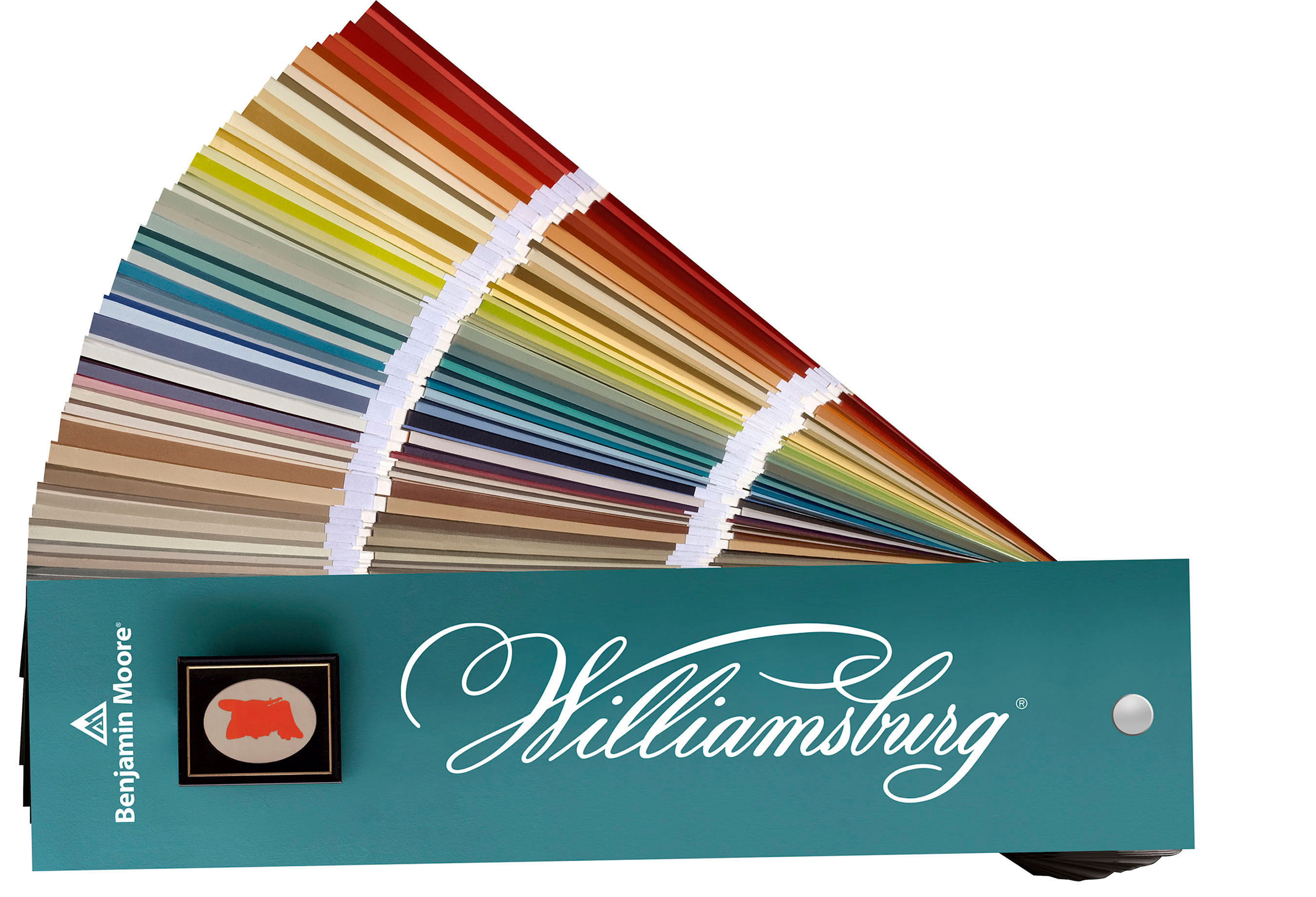
Armed with this information, Colonial Williamsburg partnered with Benjamin Moore to launch the 144-color Benjamin Moore Williamsburg Color Collection in May 2013. The buildings are being repainted using the line because it provides the correct colors and does not require Colonial Williamsburg staff to mix them. The buildings are typically repainted every seven years – the typical lifespan of exterior paint – so staff waited for the previous paint lifespan to expire before changing the colors.
Before going ahead with painting the new colors, Colonial Williamsburg sought approval from the City of Williamsburg’s Architectural Review Board, which was granted March 11 and 25.
In some instances, Colonial Williamsburg staff does not have the required time to grind and mix a new paint — a process that takes about a day per coat of paint — and Benjamin Moore does not produce the exact color. In those cases, pigments may be ground and spread on a board, which is then taken to a paint store for color matching.
When Colonial Williamsburg staff grind paints or pigments, the colors are produced using the same products used in the 18th century. Earth colors — gray, brown, red-brown and cream — were produced using different iron oxides, lead and carbon, Webster said. Shades of cream are now re-created using oil instead of lead.
The exterior and interior colors of houses differed. Colors like blue and green were not typically used outside, because the colors changed over a few short years to brown or black. In the years prior to the in-depth paint research, historians thought interior paint colors could be used on the exterior of buildings, as well. Buildings were sometimes painted using interior colors.
Exterior colors typically reflected the owner’s status: Red or brown paints were cheaper and showed lower class, while cream and yellow showed higher status.
“Colors in town aren’t just aesthetic; they’re telling you an important story about the people who live there and the status of the structure,” Webster said.
The Nicholson Store on East Duke of Gloucester Street had been red-brown for a long time, but now it is being changed to yellow. Webster said the building was well-kept, in good condition and owned by a prominent person.
The John Crump house, also on East Duke of Gloucester Street, is changing to red-brown from the current cream color. By the 1770s the house was not well-kept and the color would reflect its condition.
“I find it pretty interesting how color is one of the contributing elements in kind of assembling a refined house or a house more publicly accessible to others,” Chappell said.
The buildings being repainted will all come from the Benjamin Moore Williamsburg collection:
- The Prentis House at 401 East Duke of Gloucester St., and its shop, east privy, west privy, dairy, stable, smokehouse and well are being painted using combinations of Prentis Cream, Harvest Brown, Raleigh Sorrel –a deep brown — and Harwood Putty.
- Chowning’s Tavern, 109 East Duke of Gloucester St., is being repainted Coffeehouse Tan with Coffeehouse Chocolate doors, Raleigh Sorrel door sills and a Harwood Putty fence.
- Russell House at 403 East Duke of Gloucester St. is being repainted Brush Beige with Charlton Brown, Raleigh Sorrel and Harwood Putty accents. The Russell House smokehouse, privy and well will all be Charlton Brown.
- Edinburgh Castle Tavern at 427 East Duke of Gloucester St. is being painted Cornice Tan with Reid Brown doors and shutters, Raleigh Sorrel porch floors and steps and Harwood Putty fence.
- The Nicholson Store at 423 East Duke of Gloucester St. is being painted Sweeney Yellow, with Raleigh Sorrel, Mopboard Black and Harwood Putty accents. The Nicholson Shop is being painted Nicholson Red with Raleigh Sorrel and Mopboard Black accents.
- The William Randolph Lodgings House — a house available for College of William & Mary student lodging at 406 East Nicholson St. — is being painted Bracken Biscuit with Tucker Chocolate, Raleigh Sorrel and Harwood Putty accents.
- The Pasteur & Galt Apothecary Shop — a shop at 421 East Duke of Gloucester St. where colonial doctors prepared and sold medicines — is being painted York Gray with Coffeehouse Chocolate and Raleigh Sorrel accents.
- The John Crump House at 425 East Duke of Gloucester St. is being painted Nicholson Red with Harwood Putty and Raleigh Sorrel accents.
- The Coke Garrett Storehouse at 465-G East Nicholson St. is being painted Harwood Putty with Tarpley Brown doors.
- The David Morton Shop at 109-C South Waller St. is being painted Reid Brown with Raleigh Sorrel on the porch and stairs.
- The George Pitt Stable and garage at 301-F East Duke of Gloucester St. is being painted Reid Brown.
- The Governor’s Palace east and west advance at 300 Palace Green St. are being painted Capitol White with Reid Brown doors.
- Hunter’s Tenement at 305-H East Duke of Gloucester St. is being painted Harwood Putty with Tarpley Brown and Raleigh Sorrell accents.
- The James Moir Shop Stable at 525 East Francis St. is being painted Palace Arms Red.
- The John Blair Kitchen at 311-C West Duke of Gloucester St. is being painted Harwood Putty with Tarpley Brown and Raleigh Sorrell accents.
- The Ludwell Paradise House at 207 East Duke of Gloucester St. is receiving Mystic Gold, Raleigh Sorrell, Harwood Putty and Tarpley Brown accents. The kitchen is being painted Harwood Putty with Palace Arms Red and Raleigh Sorrel accents.
- Powell’s Tenement at 104 North Waller St. will be painted Harwood Putty with Palace Arms Red trim. The privy, wellhead and storehouse will be painted Palace Arms Red; the wellhead will receive Raleigh Sorrell accents.
- The Chiswell Bucktrout Stable storehouse at 416 East Francis St. will be painted Harwood Putty with Tarpley Brown and Raleigh Sorrell accents.
