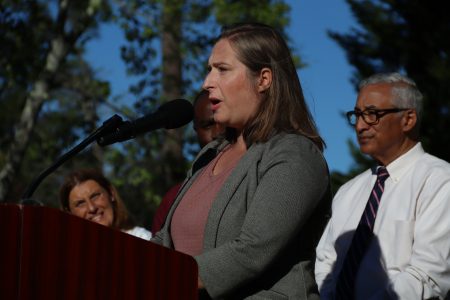


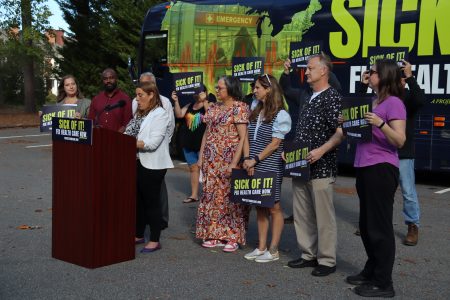
WILLIAMSBURG — Elected officials and health care advocates gathered at Quarterpath Park on Monday to discuss how federal funding cuts and changes to insurance subsidies could affect Virginians’ access to affordable care during a stop on Protect Our Care’s national bus tour.
The “Sick of It! Fix Health Care Now” tour is visiting 15 states over four weeks, with 35 stops planned to highlight the effects of federal health care policy changes on families, providers and rural communities. Williamsburg was the tour’s eighth stop.
Speakers included Protect Our Care Virginia State Director Katie Baker, Dels. Jessica Anderson and Mark Downey, Congresswoman Jennifer McClellan, Congressman Bobby Scott, Secretary of Health and Human Resources Marvin Figueroa and two Virginians who shared their personal experiences with the health care system.
“Our healthcare system has been broken for years … and we are sick of it,” Baker said.
The bus, named Care Force One, will make 35 total stops in 15 states across four weeks. This was their eighth stop. Protect Our Care is calling on lawmakers to restore the tax credits, reverse Medicaid cuts and expand Medicare’s ability to negotiate lower prescription drug prices, according to Baker.
Baker said more than 100,000 Virginians had dropped their Affordable Care Act marketplace plans, and 300,000 were at risk of losing Medicaid coverage and 13 rural hospitals in the state were at risk of closing.
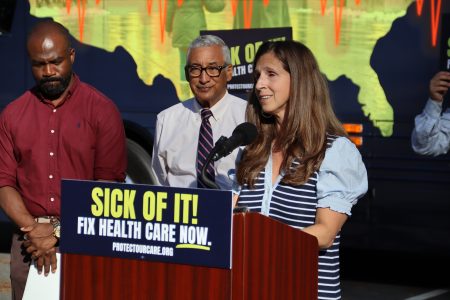
Speakers criticized federal legislation passed last year that cut Medicaid funding by nearly $1 trillion. Millions are expected to lose health care coverage, according to the American Medical Association.
Scott noted that the legislation affects more than just those on Medicaid and who receive aid from the Affordable Care Act.
“When they don’t pay, the next person that comes in gets charged a little extra,” he said, describing the practice known as cost shifting. “Some will lose insurance altogether and go bankrupt if they get sick; others will pay higher premiums and higher copays because of the cost shifting of that care that wasn’t paid for.”
He said rising health care costs would also add to the financial pressure families already face from housing, groceries, gas prices and other necessities.
Downey, who is the only medical doctor in the General Assembly, spoke about his experience as a pediatrician and echoed Scott’s sentiments about the healthcare landscape pre-Affordable Care Act.
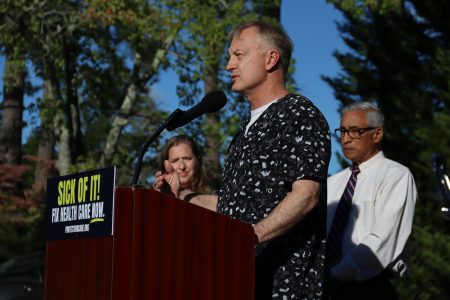
“Parents were begging me not to diagnose their children with asthma because if they lost their employer and they had to go to another employer, they wouldn’t be able to get their children’s health care covered [because of] my diagnosis,” he said.
Both Scott and McClellan pointed to the impact these cuts have had on rural communities: three health clinics in the Shenandoah Valley shut down last year and a Farmville hospital closed their labor and delivery department. McClellan said the latter had forced pregnant women to travel about an hour to receive care.
“As someone who gave birth by emergency C-section nine weeks early, I would not have survived an hour-long drive to an emergency room that had a labor and delivery specialist,” she said. “If these rural hospitals close, people will die.”
Figueroa highlighted the $350 million Virginia had invested to help offset federal cuts and the work being done to help families maintain coverage, but said state action could only do so much.
“Virginia cannot replace every dollar Washington is taking away,” he said.
Both Anderson and McClellan said that people without insurance may end up delaying treatment until it becomes an emergency, which will only increase costs for both the patients and the health care system.
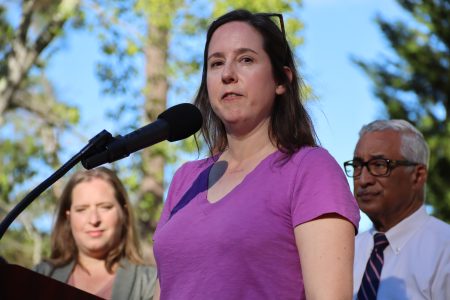
“Just over a decade ago, I was a newly single mom of three kids under the age of 10 [and] Medicaid pretty much saved my life,” Anderson said. “I know the fear of not knowing how I’m going to pay for healthcare; I dealt with emergency services that I paid out of pocket.”
Laura Packard, a small-business owner and cancer survivor from Alexandria, said Affordable Care Act insurance covered her chemotherapy and radiation treatment after she was diagnosed with cancer in 2017. She said her health insurance for the same plan as last year went up 21% this year and it will only continue to increase.
“As a cancer survivor, I can’t go without health insurance,” she said. “I have to pay whatever it costs me.”
Kathleen Winters, a birth doula and lactation consultant who operates a small business in the Newport News area, said her family switched to a higher-deductible insurance plan after its monthly premiums increased by $300 following Affordable Care Act budget cuts. The family now pays $655 per month for coverage with a $7,000 deductible, she said.
“Paying nearly $8,000 in premiums for a year and still rationing our care … is not what living in the greatest country in the world should look like,” Winters said.