


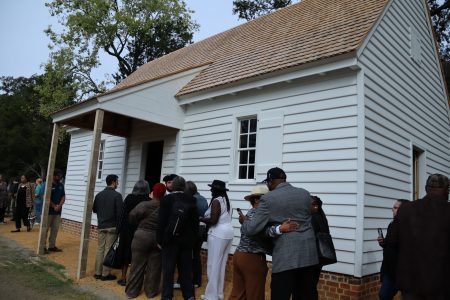
WILLIAMSBURG — Hundreds attended the dedication ceremony for the newly reconstructed African Baptist Meeting House and Burial Ground Friday on South Nassau Street in Colonial Williamsburg. The ceremony was part of a four-day celebration of the church’s 250th anniversary, which concludes on Sunday.
Speakers included local religious and community leaders, Colonial Williamsburg Foundation staff and state representatives. The Nassau Street Remembrance Choir, local gospel singer Mildred Taylor Walker and the Let Freedom Ring Celebration Choir sang hymns.
The site is the original location of the First Baptist Church – which has been located on Scotland Street since 1956 – one of the earliest African American congregations in the United States. Colonial Williamsburg and the Let Freedom Ring Foundation began an investigation into the original Nassau Street site in March of 2020, which uncovered over 78,000 artifacts and 62 burial shafts. Colonial Williamsburg broke ground on the construction site in 2025. While completion was projected for this month, staff said they expect the church to be ready by Grand Illumination in December.
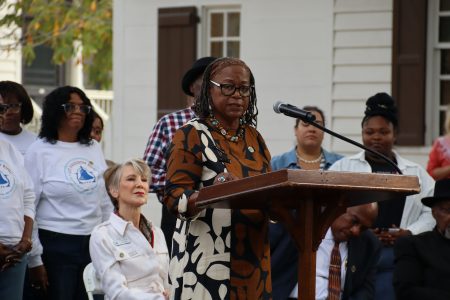
“The First Baptist Church is a congregation whose legacy is not only central to the story of the city, but to the story of Virginia and the nation,” Sen. Mamie Locke said. “Two hundred and fifty years ago, long before freedom was secured in law, long before equality was recognized in policy, a group of enslaved and free Black worshippers gathered in secret to claim something no one could deny them — their faith.”
Janice Canaday, Colonial Williamsburg Foundation’s community engagement manager, compared the “modest” early African meeting houses to the works of gospel musician and composer Thomas Dorsey, known as the father of gospel music.
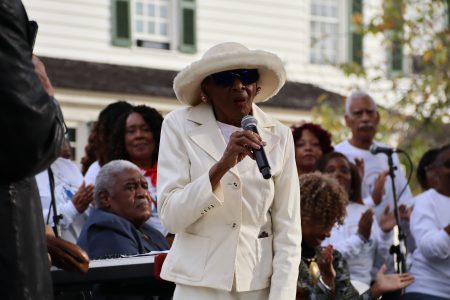
“Just as he took the raw, earthly structures of the secular blues and built a sacred home for gospel music, the creators of the meeting house took simple timber to build … a sacred sanctuary for their community,” she said. “Both represent transforming humble, hard-fought resources into something divine.”
Speakers emphasized the building’s importance, not only for the community, but for the nation as a whole.
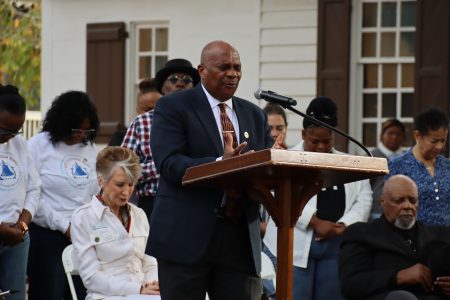
“This building is more than brick and mortar — [it is] a symbol of our shared history and the ongoing commitment to tell the nation that Black history is American history,” said the Rev. Reginald Davis of The Historic First Baptist Church. “Regardless of the present effort to push Black history into invisibility and erase our contributions, we are still here, and we are not going anywhere.”
Sen. Locke echoed Davis’ sentiments and implored attendees to “carry forward the example… of courage, conviction and unwavering commitment to one another” set by those being honored.
Several speakers said they never expected to see the event happen, including former Colonial Williamsburg Gowan Pamphlet interpreter James Ingram. Pamphlet was an enslaved man who built the original First Baptist Church on modern-day Nassau Street.
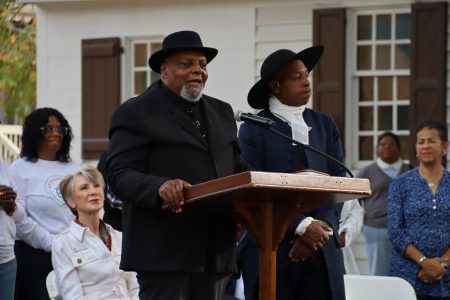
“This is not only a dream come true, but an honor and a privilege to see this day,” said Ingram. “You couldn’t believe how many years I’ve sat right over there at that door of that meeting house and dreaming that this thing would happen.”

